





Description
Product Introduction
The Autronica GL-90 is a heavy-duty, non-contact microwave radar level gauge specifically designed for cargo tank level monitoring on chemical tankers, product carriers, and oil crude vessels. Mounted directly on the cargo tank deck flange, it emits a frequency-modulated continuous wave (FMCW) radar signal toward the liquid surface to calculate exact tank ullage without touching corrosive or hazardous media.
Unlike legacy mechanical float gauges or pressure transmitters that clog from viscous cargoes like bitumen or heavy crude, the GL-90 has zero moving mechanical parts exposed to liquid. Its antenna geometry and specialized PTFE seal isolate internal microwave electronics from hostile chemical vapors, tank washing jets, and sloshing forces. For marine engineers managing aging cargo systems, replacing a drifting or damaged GL-90 head ensures accurate custody transfer readings and prevents costly tank overfills during loading operations.
Key Technical Specifications
| Parameter | Specification |
|---|---|
| Manufacturer | Autronica / Kongsberg Maritime |
| Model Family | GL-90 (GL-90/2, GL-90/4 Series) |
| Measurement Principle | Non-contact FMCW Microwave Radar (X-Band ~10 GHz) |
| Primary Application | Cargo tank level monitoring (Ullage measurement) |
| Measuring Range | 0.5 m up to 35+ m (Tank height dependent) |
| Accuracy | ±5 mm to ±10 mm (Custody transfer grade accuracy) |
| Explosion Protection | Ex ia IIC T4 (Intrinsically Safe for Zone 0 inside tank) |
| Housing & Antenna Material | 316L Stainless Steel housing with PTFE radar window / horn assembly |
| Process Connection | Standard Deck Flange (DN150 / DN200 or custom marine deck sockets) |
| Signal Output / Bus | Proprietary Autronica serial data bus / 4-20mA current loop to central rack |
| Operating Temperature | -40°C to +80°C deck temperature (up to +120°C tank vapor temp) |
| Ingress Protection | IP66 / IP67 Weatherproof deck-housing enclosure |
Application Scenarios & The “Trench” Experience
The Cargo Officer’s 2 AM Emergency
You’re loading chemical cargo on a product tanker in Rotterdam at 02:30. Suddenly, Cargo Tank 3 Starboard starts reading erratic ullage jumps—jumping from 12 meters to “Sensor Error” on the cargo control room console. The radar transmitter head on deck suffered seal failure after a heavy tank-cleaning cycle, allowing moisture into the microwave horn assembly. Loading on Tank 3 must stop immediately, risking demurrage fines and port delay penalties. You don’t have time to recalibrate complex third-party transmitters or alter deck piping. You need to swap in a tested, pre-calibrated GL-90 replacement head, seal the deck flange, reconnect the intrinsically safe cable, and resume loading safely.
Key Field Applications
- Chemical Tankers: Measuring corrosive or volatile liquids (acids, solvents, aromatics) where contact sensors fail.
- Crude Oil & Product Carriers: Continuous tank level monitoring during loading, discharge, and Butterworth tank washing.
- Offshore FPSO / FSO Units: Heavy-duty storage tank monitoring subject to continuous vessel motion and harsh marine atmospheres.
- Asphalt / Bitumen Carriers: High-temperature liquid level gauging using extended antenna standoffs.
Transparency SOP: Quality Assurance & Testing
Radar level transmitters used in hazardous marine spaces require absolute bench precision before field installation. We don’t just ship boxes; we test them on dedicated test rigs.
- Inbound Visual & Housing Audit: Comprehensive check of deck flange sealing surfaces, antenna horn geometry, PTFE window integrity, and terminal housing threads for corrosion.
- Pressure & Leakage Verification: Pressure-testing the transmitter housing and antenna seal to ensure full weather-tight and vapor-proof isolation.
- Bench Distance & Target Accuracy Test: Energizing the transmitter on a calibrated target rail to verify radar sweep linearity, target reflections, and distance accuracy across full range.
- Intrinsically Safe (IS) Circuit Checks: Testing internal surge protection diodes and power supply rails to ensure full EX safety compliance.
- Marine Packaging: Sealing the PTFE antenna assembly in protective soft wrapping, vacuum-sealing the housing, and boxing in wooden crating to withstand rough sea transport.
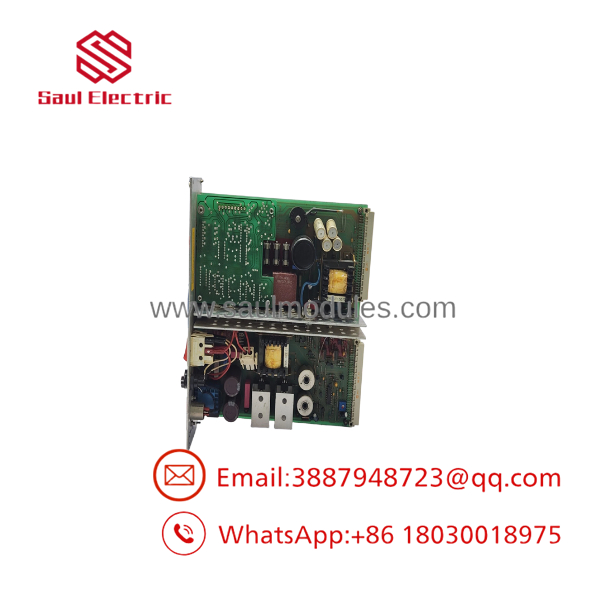
GL-90
The Veteran’s Tech Trap Guide (Crucial Value-Add)
⚠️ Inspect the PTFE Antenna Cone Before Mounting The delicate PTFE cone/window inside the bottom antenna horn is what keeps dangerous tank vapors out of the radar electronics. Never lay a GL-90 transmitter head down directly on a dirty steel deck. Scratching or cracking that PTFE window lets cargo fumes inside, which will ruin the microwave circuit board within weeks.
❗ Watch Out for Waveguide Condensation & Vapor Deposits If you get a sudden loss of echo or “fixed level” freeze after tank washing or discharging heavy oil, don’t replace the transmitter immediately! First, unbolt the deck inspection cover and check if heavy wax, rust, or water droplets have built up on the antenna horn base. Cleaning the PTFE window with a soft, non-abrasive solvent rag often cures the issue instantly.
⚠️ Double-Check Intrinsic Safety (IS) Barrier Cable Polarity The GL-90 connects back to safety barrier racks inside the ship’s cargo control equipment room. Reversing cable leads or bypassing the Zener barrier during wiring checks can blow the internal microwave diode bridge on the transmitter board. Always measure loop voltage at the junction box before landing wires.
Frequently Asked Questions (FAQ for Conversion)
Q: Can I replace an older Autronica GL-90 head with a newer Kongsberg radar gauge without modifying deck flanges? A: Kongsberg took over the legacy Autronica marine cargo line. Newer gauge models often require mechanical adapter flanges or signal converter boxes. Installing a direct-replacement GL-90 head is the simplest way to maintain original fit-form-function without structural deck modifications.
Q: Is the GL-90 gauge suitable for highly aggressive acid cargoes? A: Yes, provided the internal PTFE antenna seal and 316L flange are intact. The non-contact design means no metal sensor parts sit submerged in liquid, preserving transmitter longevity against harsh chemicals.
Q: How do I calibrate zero-point ullage on the GL-90 transmitter? A: Calibration parameters are adjusted either at the central GL-90 processing cabinet in the Cargo Control Room (CCR) or via handheld service units, entering exact mechanical flange-to-tank-bottom height measurements.
Q: Why purchase refurbished or surplus GL-90 units instead of ordering new from the factory? A: Original GL-90 series transmitters carry extended factory lead times or are flagged as legacy hardware. Sourcing pre-tested surplus or reconditioned GL-90 units gets your vessel sailing immediately at a fraction of OEM replacement costs.
Q: What warranty coverage comes with your surplus GL-90 radar gauges? A: Every Autronica GL-90 radar transmitter we supply—whether factory surplus or fully bench-tested reconditioned stock—is backed by our full 12-month replacement warranty.

 Start Chat


