





Description
Product Introduction & Engineering Value
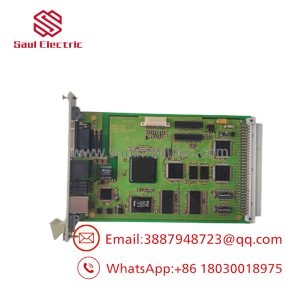
X-SB01 is a system-level component of the HIMA HIMax safety platform. It is not an analog or digital field I/O module. Its job is to establish the system-bus path between HIMax system modules through the baseplate and associated connector boards.
That distinction matters during replacement. A common procurement mistake is to classify X-SB01 as an ordinary I/O card. It is a system bus module, and its correct slot position, redundancy arrangement, baseplate configuration, and associated connector-board wiring must be preserved.
Technical Specifications
| Parameter | Specification |
|---|---|
| Manufacturer | HIMA |
| Model | X-SB01 |
| Part Number | 985210207 |
| System | HIMax |
| Module Type | System bus module |
| Supply Voltage | 24 VDC |
| Maximum Input Current | 0.65 A |
| Protection Class | IP20 |
| Permitted Baseplate Slots | Slot 1 or Slot 2 |
| System-Bus Configuration | Mono or redundant |
| Installation | HIMax baseplate |
| Primary Role | System-bus communication |
| Associated Hardware | HIMax baseplate and connector boards |
The published technical information specifies 24 VDC supply and a maximum current input of 0.65 A. It also states that X-SB01 can only be inserted into baseplate slots 1 and 2.
Redundancy matters
With one X-SB01 installed, the HIMax configuration operates with a single system bus. With two modules installed in the designated positions, the system can use two redundant system buses. HIMA documentation recommends redundant operation where the system architecture requires increased availability.
Field Application & the “Trench” Experience
A maintenance team is troubleshooting an HIMax cabinet after intermittent communication faults appear across several system modules. Individual I/O cards test normally. The temptation is to replace the I/O hardware one card at a time.
That is the wrong place to start.
When multiple modules exhibit bus-related behavior, the system-bus path should be investigated first. X-SB01, the baseplate, connector boards, supply wiring, and the second bus channel in a redundant configuration all become relevant.
A replacement X- should therefore be tested as part of the HIMax system architecture, not merely powered on at a bench.
Niche application scenarios
- Emergency shutdown system: redundant HIMax system-bus architecture supporting safety I/O and logic modules.
- Burner management system: centralized safety processing with multiple safety I/O modules.
- Turbomachinery protection: system-bus connectivity between HIMax processing and safety-related I/O assemblies.
- Process safety controller: redundant communication path where loss of a single bus should not unnecessarily interrupt system availability.
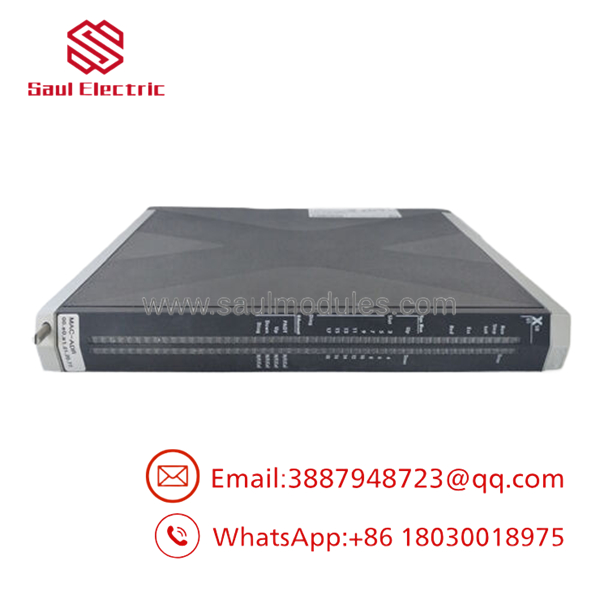
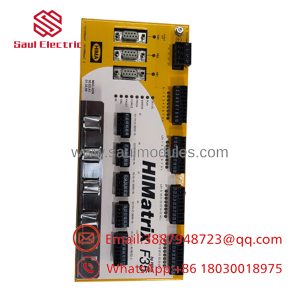
X-SB01 985210207
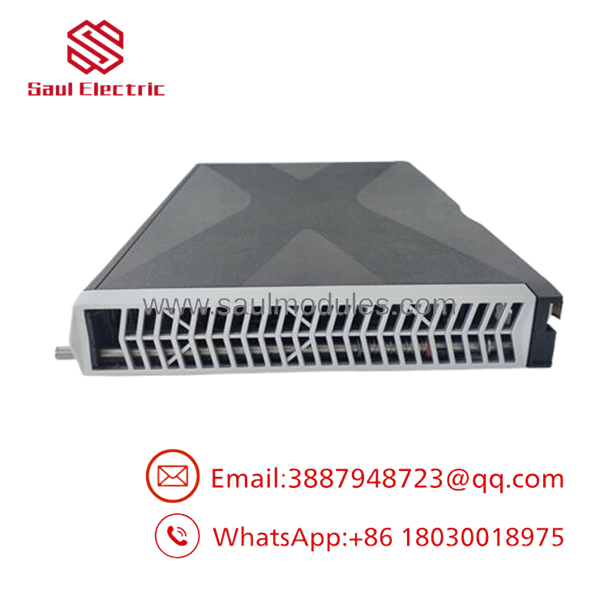
X-SB01 985210207
Transparency SOP: QA & Testing
For New Surplus or Refurbished X- 985210207 inventory, use a system-oriented inspection:
- Identity verification — Confirm the actual module is marked X- and/or 985210207.
- Mechanical inspection — Examine the housing, PCB, connectors, module contacts, and mounting surfaces.
- Supply test — Verify operation from the specified 24 VDC supply using current-limited equipment.
- Diagnostic check — Check module status indications in a compatible HIMax environment.
- Bus communication test — Install in an appropriate test baseplate and verify system-bus communication.
- Redundancy test — Where applicable, verify operation in a two-X- configuration.
- System-module test — Confirm communication with representative HIMax system modules.
- QA documentation — Record the part number, hardware markings, test configuration, results, and warranty.
A bench power-up is not sufficient evidence that a system-bus module is serviceable. Bus-level testing is the meaningful test.
The Veteran’s Tech Trap Guide
⚠️ Trap #1 — Installing X- in the wrong slot
The available technical documentation identifies the permitted positions as baseplate slots 1 and 2. It is not a free-position module.
PRO TIP: Photograph the complete HIMax baseplate before removing the failed module. The slot arrangement matters.
⚠️ Trap #2 — Confusing X- with an I/O module
X- is a system bus module. It does not replace X-DI, X-DO, X-AI, or X-AO field I/O modules.
⚠️ Trap #3 — Ignoring redundant bus architecture
If the existing system uses two X- modules, replacing only one and leaving the second bus path unverified can leave the system in a degraded configuration.
The redundancy should be checked as part of commissioning.
⚠️ Trap #4 — Believing the part number alone proves compatibility
985210207 identifies the hardware, but the complete installation still depends on the HIMax baseplate, connector boards, system configuration, and required redundancy arrangement.
Dynamic FAQ
What is HIMA X- 985210207?
X-, part number 985210207, is a HIMax system bus module used to provide the system-bus interface within a HIMax programmable electronic safety system.
Is X- an I/O module?
No. It is a system bus module, not a conventional analog or digital I/O card.
Where is X- installed?
The available technical documentation specifies that X- can be installed in baseplate slot 1 or slot 2.
Can two X- modules be installed?
Yes. Two X- modules can provide redundant system-bus operation. A single module provides mono operation.
What supply voltage does X- use?
The published specification identifies a 24 VDC supply with maximum input current of 0.65 A.
How should New Surplus X- be tested?
At minimum, verify the physical identification and perform a controlled power-up. For meaningful qualification, test the module in a compatible HIMax baseplate and verify actual system-bus communication. If the plant uses redundant buses, test the redundant configuration as well.
What should I request when buying X- 985210207?
Request photographs of the actual module, confirmation of X- / 985210207, hardware identification markings, condition classification, HIMax bus-level test results, and written warranty terms.
Is X- still used as a HIMax spare?
The part number continues to appear in industrial spare-parts references and trade records as a HIMax system bus module. For a legacy HIMax installation, maintaining a tested spare is preferable to discovering a bus-module failure during an operating event.

 Start Chat


