





Description
Key Technical Specifications
| Parameter | Value |
|---|---|
| Manufacturer | ABB |
| Part Number | BSD0750 |
| Product Family | BSD Series brushless servodrive |
| Power Class | 750 W class / 1.0 kW in some family tables |
| Input Voltage | 200 to 230 V AC |
| Input Phase | Single-phase or 3-phase references in listings |
| Rated Current | About 4.5 to 4.8 A |
| Frequency | 50/60 Hz |
| Servo System Type | Brushless servo drive |
| Country of Origin Seen in Listing | Japan |
| Condition Seen in Market | New / used / refurbished appear in different listings; verify before purchase |
Product Introduction & Supply Chain Strategy
ABB BSD0750 is a compact servo drive in the BSD family, used for motion control in brushless servo applications. ABB’s documentation and market listings place it in the 750 W to 1 kW class with 200 to 230 V AC input and around 4.5 A rated current.
For procurement, this is a spare that should be held only if the machine platform is still in service. New Surplus makes sense when you need OEM condition without OEM list pricing, and it reduces the risk of stock-outs versus relying on refurb-style inventory.
Installation & Configuration Guide
Stage 1: Pre-Installation
- Apply lock-out/tag-out and confirm the drive bus is fully discharged.
- Use an ESD strap and document all motor, encoder, and control wiring.
- Photograph any DIP switches, jumpers, or parameter labels.
- Verify the motor nameplate and drive rating before replacement.
Stage 2: Removal
- Remove power and wait for discharge.
- Disconnect motor, encoder, and control cables in a documented order.
- Remove retaining hardware and slide the drive out carefully.
- Inspect the cabinet for dust, heat damage, or loose terminals.
Stage 3: Installation
- Confirm the replacement is the exact BSD0750.
- Reconnect wiring exactly as documented.
- Restore parameter settings, motor feedback settings, and command source.
- Secure the drive and check cabinet airflow before energizing.
Stage 4: Power-On & Testing
- Check input and motor circuits for shorts before power-up.
- Energize the drive and confirm status LEDs or display indications.
- Verify encoder feedback and motor rotation at low speed.
- Run a controlled motion test before returning the machine to production.
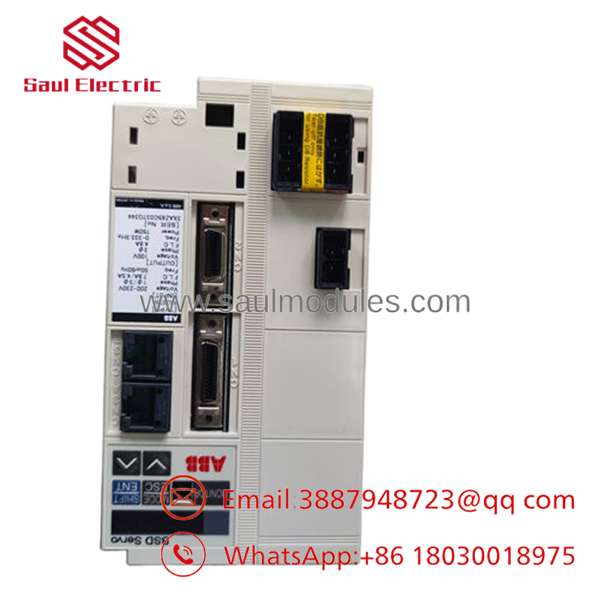
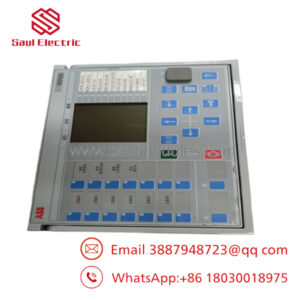
- BSD0750
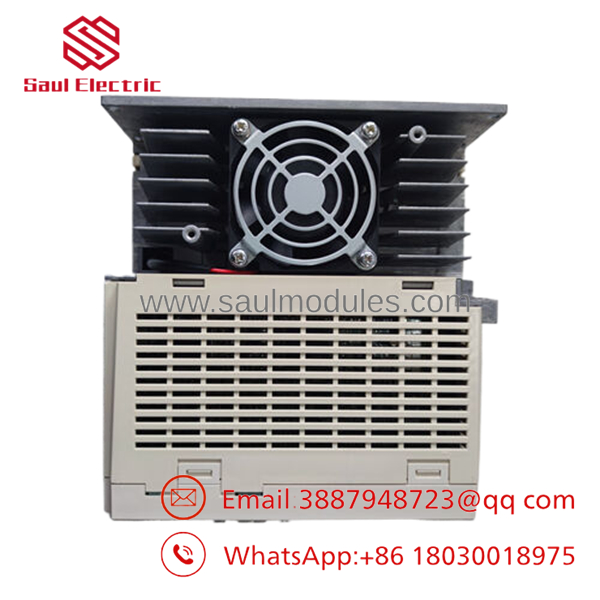
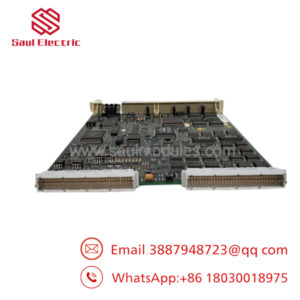
- BSD0750
Firmware/Software Versions & Upgrade Notes
ABB’s BSD documentation shows the drive as part of a family that uses configuration and parameter matching to the motor and system.
Keep the existing parameter set and control baseline unchanged during replacement unless the machine documentation explicitly requires a change.
Do not upgrade or downgrade firmware during the swap unless you have a validated commissioning plan, because motion drives are sensitive to parameter and version mismatches.
Frequently Asked Questions (FAQ)
Is this really new? Public listings include new, used, and refurbished offers, so condition must be verified carefully before purchase.
Why is it cheaper than OEM new but higher than a used or refurbished offer? New Surplus usually sits between OEM list pricing and lower-trust inventory because it preserves genuine OEM condition while avoiding full factory pricing.
Is this part obsolete or EOL? It belongs to an older BSD servo family, so treat it as lifecycle-sensitive and plan buffer stock only if the machine is still in active service.
Can I hot-swap it? No. This is a servo drive, so isolate power fully before removal or installation.
Will the programming be retained automatically? Not by the hardware alone. Back up the drive parameters, motor data, and feedback configuration before replacement.
What warranty should I expect? Market listings vary, but 12-month coverage is common on service-channel offers.
How should I stock it? Keep 1 unit on site for a critical motion platform, and use last-time-buy planning if the drive family is no longer standard in production.

 Start Chat


