





Description
Key Technical Specifications
| Parameter | Value |
|---|---|
| Manufacturer | ABB |
| Model | DSAI146 (3BSE007949R1) |
| Product Type | Analog Input Unit |
| System Compatibility | ABB Advant OCS, MasterPiece 200/1, AC460 |
| Input Type | Pt100 RTD (Three-wire) |
| Input Channels | 31 Measurement Channels + 1 Reference Channel |
| Resolution | 12-bit + Sign |
| Temperature Ranges | -100 to +320 °C or -200 to +640 °C (configuration dependent) |
| Connection Unit | DSTA145 |
| Interface Cable | DSTK229SL3 |
| Total Power Dissipation | 3.8 W |
| Current Consumption | +5 V: 0.25 A, +24 V: 0.11 A |
| Typical Weight | Approximately 0.4–0.5 kg |
Product Introduction & Supply Chain Strategy
The ABB DSAI146 is a high-density analog input unit designed for acquiring temperature signals from multiple Pt100 RTD sensors in ABB Advant OCS and MasterPiece automation systems. It delivers accurate multi-channel temperature monitoring for power generation, chemical processing, oil and gas, pulp and paper, and other continuous-process industries.
This product is a Brand New Surplus unit. It is not used, not pulled from a decommissioned plant, and not refurbished. All modules undergo rigorous quality verification to ensure OEM-level reliability. Because the Advant OCS platform is in the mature stage of its lifecycle, maintaining 1–2 spare DSAI146 modules as buffer stock and implementing a last-time-buy strategy reduce lead time variability, lower Total Cost of Ownership (TCO), and eliminate the reliability risks associated with refurbished electronics.
Installation & Configuration Guide
Stage 1: Pre-Installation (Prep & Safety)
- Apply Lock-Out/Tag-Out (LOTO) procedures.
- Isolate controller and field power.
- Wear a grounded ESD wrist strap.
- Photograph:
- Terminal wiring
- RTD channel assignments
- Cabinet layout
- Module location
- Record channel scaling and engineering configuration before removal.
Stage 2: Removal
- Disconnect the field wiring from the DSTA145 termination unit.
- Release the retaining mechanism.
- Remove the module straight from its guide rails.
- Inspect connectors for bent pins or contamination.
Stage 3: Installation (Clone & Seat)
- Verify the replacement part number.
- Install the module securely into the rack.
- Reconnect the DSTK229SL3 cable and field wiring.
- Confirm all Pt100 channels correspond to the original wiring schedule.
- Verify the termination unit remains firmly seated.
Stage 4: Power-On & Testing
- Restore system power.
- Verify normal module status indications.
- Confirm controller communication.
- Check all RTD channels using calibrated temperature references.
- Compare displayed values with field instruments before returning the system to operation.
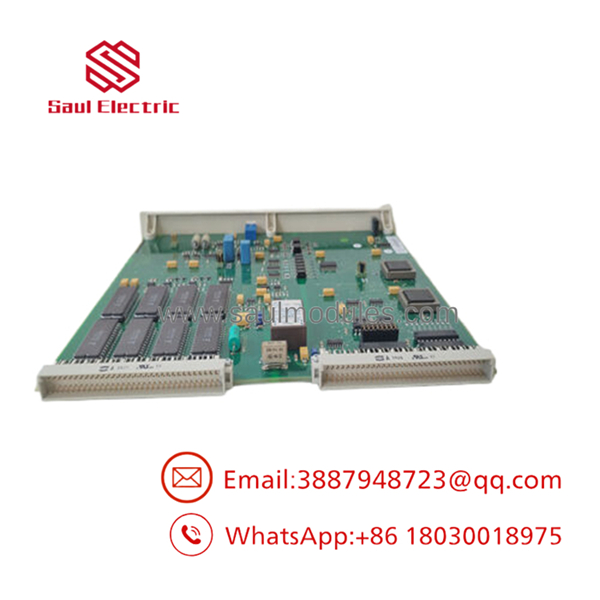
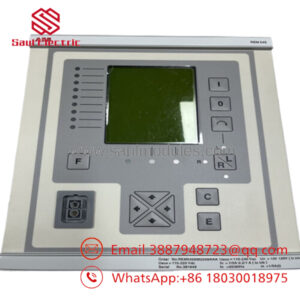
- DSAI146
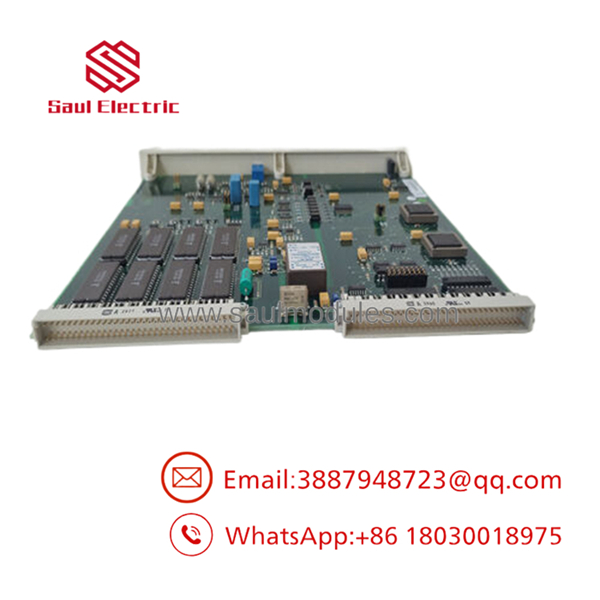
- DSAI146
Firmware/Software Versions & Upgrade Notes
- The DSAI146 primarily relies on controller configuration rather than onboard firmware.
- Verify that the Advant OCS controller software recognizes the installed hardware revision.
- Preserve the original engineering database and channel configuration before replacing the module.
- Avoid controller software upgrades during emergency hardware replacement unless the complete system has been validated.
- Confirm compatibility between the , DSTA145 connection unit, and associated system software before commissioning.
- Maintain backups of configuration files, calibration records, and channel assignments to accelerate recovery after maintenance.
Frequently Asked Questions (FAQ)
Q1. Is this module genuinely new?
Yes. This is a New Original / New Surplus ABB module. It is not used, repaired, or refurbished. Every unit completes OEM serial verification, electrical inspection, functional testing, communication verification, and ESD-safe packaging before shipment.
Q2. Why is New Surplus priced below OEM factory supply but above refurbished modules?
New Surplus inventory is sourced through genuine OEM supply channels and preserves original component integrity. While it typically costs more than refurbished equipment, it avoids hidden component aging, uncertain repair quality, and unexpected failures that can result in costly process interruptions.
Q3. Is the considered an obsolete product?
Yes. The belongs to the legacy ABB Advant OCS platform, and worldwide inventory continues to decline. Plants relying on this hardware should maintain 1–2 spare modules, monitor lifecycle status, consolidate suppliers, and execute a planned last-time-buy before availability becomes more limited.
Q4. Can the be hot-swapped?
Hot-swapping is generally not recommended. Follow ABB maintenance procedures and de-energize the I/O system whenever required to prevent controller communication faults or invalid temperature measurements.
Q5. Will replacing the module require engineering changes?
Normally, no. If the replacement module has the same hardware revision and identical channel configuration, the existing control strategy and application software remain unchanged. Verify RTD wiring and channel mapping before commissioning.
Q6. What quality verification is completed before shipment?
Each New Surplus follows a documented quality process including:
- OEM serial number verification
- Traceability inspection
- Power-on diagnostics
- RTD channel functional testing
- Electrical insulation and continuity verification
- Communication interface testing
- QC inspector approval
- ESD-safe packaging
- Heavy-duty export shipping preparation
Q7. What inventory strategy provides the lowest Total Cost of Ownership (TCO)?
For facilities operating ABB Advant OCS or MasterPiece systems, classify the as an A-Class critical spare. Maintain 1–2 modules as buffer stock, implement vendor consolidation, share inventory across multiple plants where practical, and execute a planned last-time-buy before end-of-life inventory is exhausted. This strategy minimizes lead time variability, reduces stock-out risk, and lowers long-term Total Cost of Ownership (TCO).

 Start Chat


