





Description
Key Technical Specifications
| Parameter | Specification Value |
| Manufacturer | ABB |
| Model Designation | SA811F |
| Order Number / Product ID | 3BDH000013R1 |
| Supported Controller Substructures | PM 802F / PM 803F (AC 800F Baseplates) |
| Nominal Input Voltage | 115 V AC / 230 V AC (Auto-ranging) |
| True Input Voltage Range | 85 V AC to 264 V AC |
| Mains Frequency Limits | 47 Hz to 63 Hz |
| Output Voltage Baseline | 24 V DC \pm1% regulated |
| Maximum Output Current | 10 A |
| Maximum Output Power | 240 W |
| Efficiency Rating | Exceeds 89% typical |
| Mains Buffering Hold Time | Minimum 20 ms power-failure hold time |
| In-rush Current Profile | \le15 A at 230 V AC input |
| Protection Array | Overvoltage, short-circuit, and thermal overload |
| Operating Temperature | −20 °C to +60 °C |
| Ingress Protection Class | IP20 |
Product Introduction & Supply Chain Strategy
The ABB SA811F (3BDH000013R1) is the core switch-mode system power supply module engineered for the Freelance AC 800F distributed control system (DCS) architecture. Attaching directly onto the controller baseplate line, this module converts incoming plant AC grid mains into highly filtered, tightly regulated 24 VDC power. It is explicitly designed to drive sensitive CPU modules (such as the PM 802F or PM 803F), fieldbus communication interfaces, and backplane logic networks while maintaining strict galvanic isolation to intercept harmonic spikes and field-side electrical anomalies.
Maintaining an active pool of ABB SA811F modules as New Surplus inventory is an essential operational countermeasure for facilities utilizing legacy Freelance DCS nodes. Because power supplies face constant thermal cycling and dielectric breakdown within industrial enclosures, refurbished alternatives are prone to sudden, unprovoked output voltage degradation or ripple faults. Securing factory-fresh, unenergized New Surplus units mitigates the risk of sudden backplane voltage drops, protects complex processor logic from raw data corruption, and lowers your overall Total Cost of Ownership (TCO) by providing a reliable 10-to-15-year operational runway.
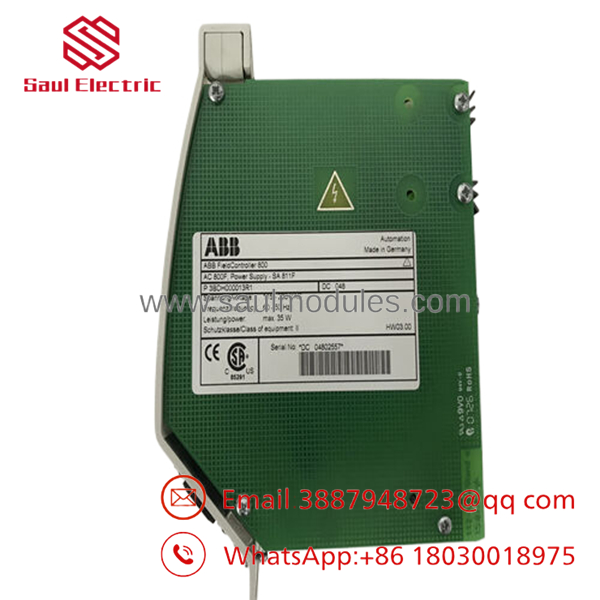
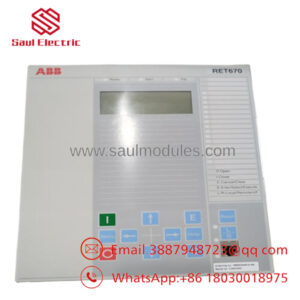
- SA811F
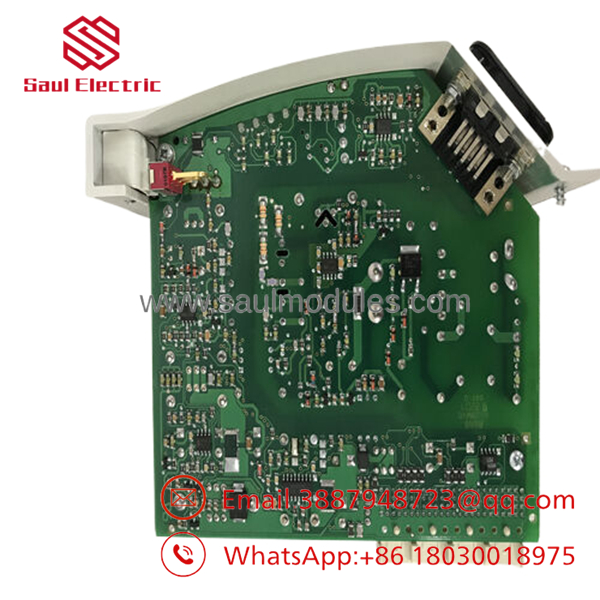
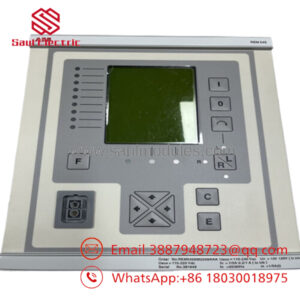
- SA811F
Installation & Configuration Guide
Stage 1: Pre-Installation (Prep & Safety)
- Circuit Isolation: Implement strict lock-out/tag-out (LOTO) protocols on the primary AC breaker feeding the power rail destination.
- Static Suppression: Fasten a grounded ESD wrist strap to prevent static discharges from entering the exposed baseplate interconnection pins.
- Firmware Baseline: Ensure your existing system configuration runs Freelance Software V7.1 SP2a or higher, as this is mandatory for matching processor modules like the PM 803F when paired with this specific hardware revision.
Stage 2: Removal
- Disconnect the input AC wire terminals using an insulated screwdriver.
- Loosen the integrated module locking screws situated on the front and top profiles of the SA811F casing.
- Carefully unseat the power module from the controller backplane socket, pulling it perfectly perpendicular to the baseplate to prevent bending the critical interface pins.
Stage 3: Installation (Clone & Seat)
- Inspect the backplane interface pins on the New Surplus ABB to confirm zero physical distortion or corrosion.
- Align the module housing parallel with the vacant power supply slot on the AC 800F controller baseplate.
- Push the module steadily inward until the internal backplane connector snaps completely home.
- Hand-tighten the physical retaining screws to anchor the module against vibrational stress.
- Terminate the input AC lines into the screw terminal housing block, adhering strictly to the Line, Neutral, and Ground designations.
Stage 4: Power-On & Testing
- Re-verify that the input mains feed rests within the acceptable 85–264 VAC operational window.
- Re-energize the primary AC circuit breaker.
- Monitor the front-panel visual array: the green “POWER” or system indicator must glow steady. If it remains off or blinks, immediately shut down the breaker to investigate potential downstream short circuits on the 24 VDC bus lines.
- Verify via the Freelance engineering toolset that the controller diagnostics menu registers the power supply node as healthy with stable voltage telemetry.
Firmware/Software Versions & Upgrade Notes
While the ABB is fundamentally an analog-to-digital power conversion interface, it interacts directly with the software baselines governing the attached field controller CPUs. For seamless integration without platform faults, the host system must run Freelance Software V7.1 SP2a or higher.
When inserting this New Surplus module into an older control rack running legacy engineering software, you run the risk of generating unrecognized hardware diagnostic flags or protocol timeout alarms within the central diagnostics viewer. Do not attempt to modify or downgrade the firmware of the associated PM modules during the physical power supply replacement; preserve the running system logic state until baseboard power stability is fully confirmed.
Frequently Asked Questions (FAQ)
A: Power supplies are the most vulnerable failure point in any DCS rack due to the aging profiles of electrolytic capacitors under constant thermal load. A refurbished unit has already used up a portion of its thermal lifecycle, and its internal components are prone to sudden breakdown under load. Our New Surplus units have never been energized, storing pristine internal capacitor structures that guarantee original OEM operational life. The small price premium completely eliminates the risk of an unplanned $50,000 facility outage.
A: No. The unit features an active auto-ranging input circuit capable of handling any voltage between 85 VAC and 264 VAC automatically. It requires no physical jumper adjustments, internal slide switch modifications, or manual software parameters to adapt to your local utility standard.
Q: Can I use this power supply module to power external 24 VDC field instruments or loops?
A: The is expressly optimized to power the internal logic, backplane circuits, and communication modules of the AC 800F controller assembly. Diverting its 240 W power reserves to run long, external field loops risks introducing external electrical noise, lightning surges, or field short circuits directly into the sensitive CPU backplane, which can compromise the entire rack. Use separate, isolated DIN rail power units for external field loops.
Q: What happens if an overcurrent situation occurs on the system side?
A: The module features an integrated overcurrent and short-circuit protection matrix. If a fault causes the system to draw excessive current, the internal PWM control circuit limits the output current instantaneously or triggers a latching shutdown to protect adjacent processor and fieldbus cards from catastrophic thermal destruction.
Q: Does this unit include a power failure warning system to help with redundancy switching?
A: Yes. The provides a dedicated power-failure signal output with a minimum mains buffering hold time of 20 ms. This gives the control system enough time to execute a clean data state backup or trigger an automated failover sequence to a redundant controller partner node before the DC rail drops below the operational threshold.
If you are currently setting up an inventory rotation schedule for your Freelance AC 800F system controllers, I can map out an optimal minimum/maximum stocking strategy based on your node density and plant run hours. Would you like to review those stocking levels?

 Start Chat


