





Description
Product Introduction
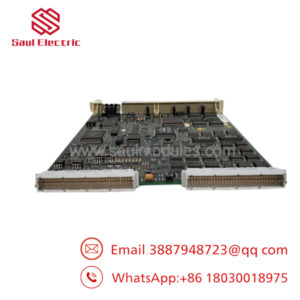
The ABB Bailey IMRIO02 is a Remote I/O Slave Module engineered for INFI 90 and Net 90 Distributed Control Systems (DCS). It serves as a high-speed communication bridge, allowing primary controller modules—such as the IMMFP03 or IMMFP01—to interface with remote I/O racks located across plant floors. Industrial process facilities depend on this board to consolidate field signals from distributed cabinets back to central control racks without sacrificing scan execution speed.
Unlike local expander cards, the IMRIO02 manages dedicated serial communication links over the Slave Expander Bus. Onboard processing offloads data packet assembly and error-checking tasks from the main controller CPU, reducing communication overhead. This architecture enables clean, deterministically timed process control for large-scale facilities with sprawling field footprints.
Key Technical Specifications
| Parameter | Specification |
| Module Type | Remote I/O Slave Communication Module |
| System Compatibility | INFI 90, Net 90, Symphony DCS (works with IMMFP01/02/03) |
| Bus Interface | Slave Expander Bus / I/O Module Bus |
| Backplane Power | +5 VDC @ 1.45 A (typ) / 1.80 A (max), +15 VDC @ 20 mA, -15 VDC @ 20 mA |
| Addressing | Configurable via onboard DIP switches |
| Status Display | Front panel LED status and fault indicators |
| Form Factor | Single-slot insertion into INFI 90 MMU (Module Mounting Unit) |
| Mounting Hardware | Captive screws for secure MMU faceplate retention |
| Operating Temperature | 0°C to 55°C (32°F to 131°F) |
Application Scenarios & The “Trench” Experience
It is 1:30 AM on a freezing night. An offshore platform loses telemetry from a remote compressor rack 400 feet away because an aging remote I/O bus card dropped its handshake signal. The primary processor triggers a communication loss fault, dropping the compressor safety interlocks. The instrument tech climbs down to the remote equipment shelter, spots the red fault LED on the failed IMRIO02 board, sets the address DIP switches on a pre-tested spare, slides it into the MMU rack, and restores the bus link in minutes before the wellhead pressure spikes.
- Oil & Gas Offshore Platforms – Remote Wellhead & Compressor Monitoring – Connects isolated deck racks back to central process controllers over long cable runs.
- Power Generation – Balance of Plant (BOP) Control – Links distant water treatment and coal handling I/O enclosures to main turbine control suites.
- Chemical Processing – Tank Farm & Loading Rack Automation – Manages high-density remote I/O loops spread across large outdoor storage facilities.
- Steel Mills – Rolling Mill Remote Hydraulic Control – Handles high-speed field feedback signals from dirty, high-vibration remote cabinets.
Transparency SOP: Quality Assurance & Testing
We don’t just ship boxes; we test them on actual ABB Bailey MMU racks.
- Inbound Inspection: Physical audit checking edge connector gold fingers, PCB trace health, transformer isolation components, and DIP switch condition.
- Live Rig Testing: Inserted into an INFI 90 MMU backplane linked to a powered IMMFP controller. Verified through full boot-up and communication handshake sequences.
- Bus Traffic & Load Testing: Driven under simulated multi-channel remote I/O polling to confirm signal integrity, packet transmission, and zero packet drop under load.
- Firmware & Address Logic Verification: DIP switches tested across multiple slave address ranges to ensure clear address selection without logic latching errors.
- ESD Packaging: Cleaned, sealed in static-shielding bags, and cushioned in custom-molded foam shipping boxes.
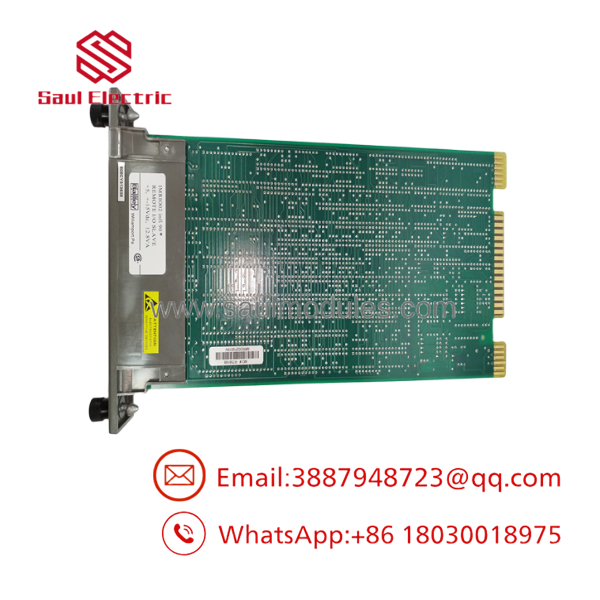
- IMRIO02
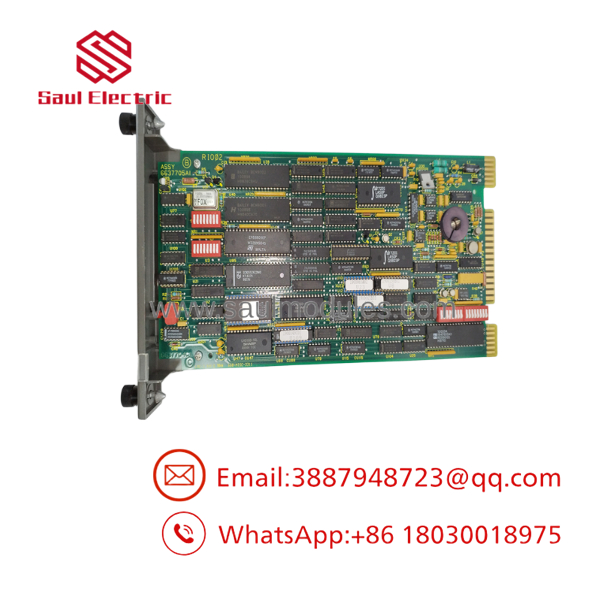
- IMRIO02
The Veteran’s Tech Trap Guide (Crucial Value-Add)
- ⚠️ De-Energize Power Before Adjusting DIP Shunts or Switches!
Never attempt to adjust or insert backplane DIP shunts or address switches on the MMU while power is applied. You risk arcing the bus lines or corrupting the slave bus address logic permanently. Disconnect rack power first.
- ❗ Verify Hardware Address Settings BEFORE Slotting the Replacement
The IMRIO02 relies on physical onboard DIP switches to set its slave address on the bus. If you insert a replacement card with default factory switch positions, it will conflict with another node or go unseen by the master processor. Take a clear photo of the old card’s switches before pulling it.
- ⚠️ Beware of RFI Disruptions Near Open Cabinets
The communication circuitry on legacy remote I/O cards like the is susceptible to high Radio Frequency Interference (RFI). Avoid operating two-way hand radios or mobile transmitters directly in front of an open cabinet while replacing this card, as it can cause temporary bus communication glitches.
- ❗ Inspect Cable Shields and Grounding Connections
If your replacement card repeatedly drops communication after installation, check the remote bus cable shielding. Loose shield drains or ground loops between remote cabinets will cause continuous bus retry errors, blaming the card when the real issue is field noise.
Frequently Asked Questions (FAQ for Conversion)
Q: Is the hot-swappable?
A: No. Removing or inserting an module while the backplane is energized can cause signal disruption across the slave expander bus and potentially trip linked process loops. Place controlled loops in manual and isolate power before servicing.
Q: What is the primary difference between IMRIO01 and ?
A: The is an upgraded version offering enhanced noise rejection, updated onboard timing logic, and improved compatibility with higher-speed processing modules like the IMMFP03.
Q: Can this module operate without a master processor in the same rack?
A: No. The operates strictly as a slave communication module. It requires a master processing unit (such as an IMMFP controller) to drive its polling cycles and manage memory mapping.
Q: Are these units brand new from the original manufacturer?
A: ABB discontinued the Net 90 / INFI 90 series. Our stock consists of high-grade New Surplus (unused plant spares) and fully refurbished units pulled from decommissioned systems and bench-tested under full bus load.
Q: What warranty coverage do you provide?
A: Every card carries a full 12-month replacement warranty. If the card experiences communication faults or hardware failure within one year of delivery, we ship a replacement directly from our inventory.

 Start Chat


