





Description
Product Introduction & Engineering Value
Maintaining stable web tension is often the difference between consistent product quality and costly scrap. The ABB PFSK151 (3BSE018876R1) is engineered to process extremely low-level signals from ABB Pressductor® load cells while rejecting the electrical noise commonly found around large motors and drives.
Rather than functioning as a general-purpose I/O module, the PFSK151 is a dedicated signal conditioning unit for force and tension measurement. It converts raw sensor signals into stable process values, making it a common choice in steel, paper, aluminum, and strip processing lines where measurement stability directly affects production quality.
Technical Specifications
| Parameter | Specification |
|---|---|
| Manufacturer | ABB |
| Model | PFSK151 |
| Order Number | 3BSE018876R1 |
| Product Type | Signal Processing Module |
| Power Supply | 24 VDC (Backplane Powered) |
| Sensor Type | ABB Pressductor® Load Cells |
| Excitation Method | High-frequency AC excitation (approximately 330 Hz) |
| Signal Input | Differential AC measurement signal |
| Typical Accuracy | Better than 0.1% Full Scale |
| Isolation | 500 VDC galvanic isolation (typical) |
| Power Consumption | Approximately 5–8 W |
| Operating Temperature | 0°C to +55°C |
| Installation | ABB controller subrack/module slot |
Note: Certain electrical characteristics may vary depending on hardware revision and application package. Always verify compatibility with the installed Pressductor® tension measurement system before replacement.
Field Application & The “Trench” Experience
An aluminum rolling mill began experiencing inconsistent strip thickness despite stable drive speeds. Operators initially suspected the automatic gauge control system, but diagnostics showed fluctuating tension feedback from one side of the mill stand.
After replacing the PFSK151 and recalibrating the Pressductor® load cells, tension readings became stable across the operating range. Product thickness variation returned to specification without modifying the drive control algorithms.
Typical application scenarios include:
- Cold rolling mill strip tension measurement
- Paper machine unwind and rewind tension control
- Continuous galvanizing line web tension monitoring
- Aluminum foil processing and slitting systems
- Steel pickling and coating line tension regulation
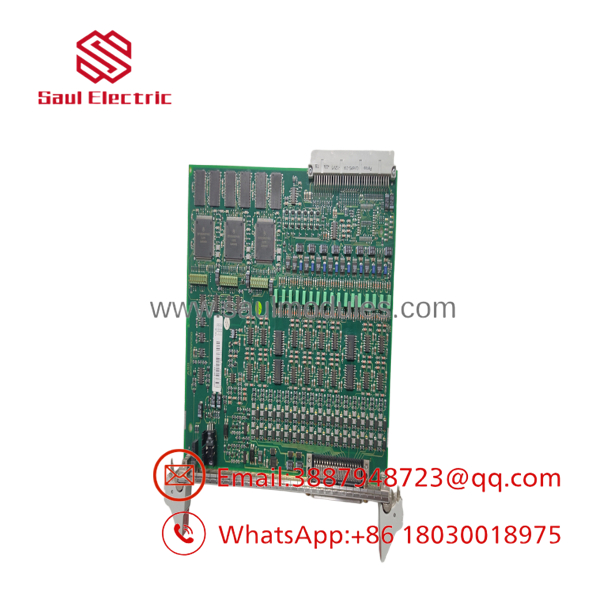
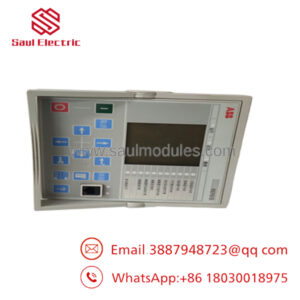
- PFSK151 3BSE018876R1
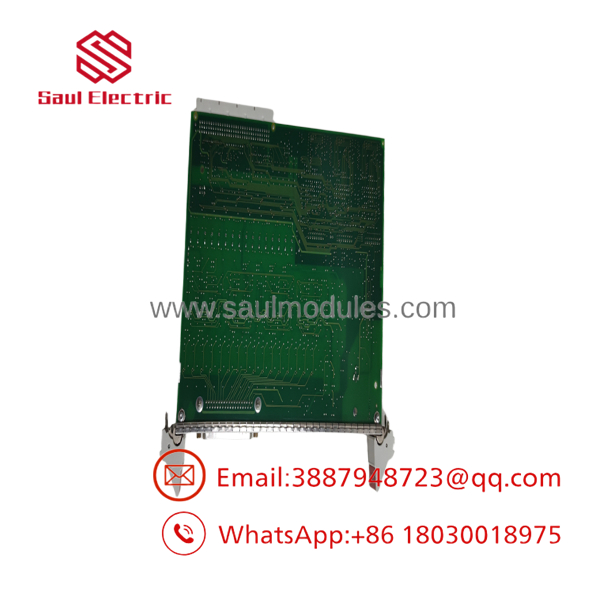
- PFSK151 3BSE018876R1
Transparency SOP: QA & Testing
Each New Surplus or professionally Refurbished undergoes a documented inspection procedure before shipment.
- Verify ABB model number and order code (3BSE018876R1).
- Inspect PCB, analog circuitry, connectors, and solder joints.
- Validate excitation output for compatible Pressductor® sensors.
- Simulate differential sensor inputs using calibrated signal generators.
- Confirm signal conditioning accuracy across the operating range.
- Check isolation performance and power consumption.
- Package in ESD-safe materials with full traceability documentation.
The Veteran’s Tech Trap Guide
⚠️ Don’t replace the signal processor before checking the load cells. Mechanical damage, loose mounting bolts, or cable shielding problems often produce unstable readings that resemble module failures.
⚠️ Never skip recalibration after installation. Even when replacing with the identical hardware revision, zero balance and span verification should be performed before returning the production line to service.
PRO TIP: Route sensor cables separately from motor power cables. Although the includes filtering and isolation, severe electromagnetic interference can still degrade measurement quality.
PRO TIP: Compare left and right load cell outputs during commissioning. A large deviation often points to a mechanical issue rather than an electronic fault.
Dynamic FAQ
Q1. What is the primary function of the ABB ?
The is a signal processing module that excites ABB Pressductor® load cells, conditions their low-level signals, and supplies accurate force or tension measurements to the automation system.
Q2. Which industries commonly use the ?
It is widely deployed in paper production, steel rolling, aluminum processing, converting lines, and other continuous web-handling applications where precise tension control is required.
Q3. Can the operate with standard strain-gauge load cells?
It is primarily designed for ABB Pressductor® technology. Compatibility with conventional strain-gauge sensors depends on the overall measurement system and should be confirmed before installation.
Q4. What symptoms typically indicate a faulty ?
Common symptoms include unstable tension readings, excessive signal drift, inaccurate force measurements, or intermittent process alarms despite healthy field wiring and properly functioning load cells.
Q5. How is New Surplus authenticity verified?
Each module is checked for correct part number, hardware revision, connector condition, excitation output, signal processing performance, and electrical integrity before shipment.
Q6. What warranty is normally provided?
Most industrial automation suppliers offer a functional warranty for New Surplus and professionally refurbished modules. The warranty period varies by supplier, but documented inspection and operational testing should accompany every shipment.

 Start Chat


