





Description
Key Technical Specifications
| Parameter | Value |
|---|---|
| Manufacturer | ABB |
| Model | PM866AK01 |
| Order Number | 3BSE076939R1 |
| Product Type | AC 800M CPU Controller |
| Processor | MPC866, 133 MHz |
| RAM Memory | 64 MB |
| Application RAM | 51.389 MB |
| Firmware Flash | 4 MB |
| Power Supply | 24 V DC (19.2–30 V DC) |
| Power Consumption | 210 mA Typical / 360 mA Maximum |
| Power Dissipation | 5.1 W Typical (8.6 W Max.) |
| Ethernet Ports | 2 × RJ45, 10 Mbps IEEE 802.3 |
| Serial Ports | COM3 RS-232C, COM4 Isolated Configuration Port |
| Controller Redundancy | Supported |
| Maximum CEX Modules | 12 |
| Maximum I/O Modules | 96 (Single CPU), 84 (Redundant CPU) |
| Minimum Program Cycle Time | 1 ms |
| Operating Temperature | +5 °C to +55 °C |
| Storage Temperature | −40 °C to +70 °C |
| Protection Rating | IP20 |
| Dimensions | 119 × 186 × 135 mm |
| Weight | Approx. 1.2 kg |
The PM866AK01 features a 133 MHz MPC866 processor, 64 MB RAM, dual Ethernet interfaces, and support for AC 800M redundancy within ABB System 800xA architectures.
Product Introduction
The ABB PM866AK01 (3BSE076939R1) is a high-performance AC 800M CPU controller designed for ABB System 800xA distributed control systems. It executes process control logic, manages communications, and coordinates distributed I/O across complex industrial automation applications.
Compared with earlier AC 800M controllers, the PM866AK01 provides increased memory capacity, fast execution performance, built-in dual Ethernet communication, and support for controller redundancy. It is commonly deployed in power generation, oil & gas, chemical processing, mining, and continuous manufacturing plants requiring high controller availability.
Troubleshooting Quick Reference
| Symptom | Possible Cause | Relevance to this Part | Quick Check Method | Recommendation |
|---|---|---|---|---|
| No Power LEDs | Missing 24 V DC supply | ❌ Low | Measure 24 V DC at controller supply terminals | Check PSU and wiring first |
| INIT LED remains active | Boot or firmware issue | ✅ High | Review controller diagnostics using Control Builder | Firmware recovery or CPU replacement may be required |
| Ethernet communication lost | Network configuration or hardware fault | ⚠️ Medium | Ping both Ethernet ports and verify switch status LEDs | Verify network before replacing CPU |
| Controller not synchronizing | Firmware mismatch in redundant pair | ✅ High | Compare firmware revisions of both CPUs | Match firmware versions before replacement |
| Download fails | CompactFlash or firmware incompatibility | ⚠️ Medium | Check firmware revision and memory status | Upgrade or reinstall firmware |
| Random watchdog trips | Power fluctuation or CPU hardware fault | ✅ High | Monitor 24 V DC stability and review event logs | Eliminate power issues before replacing |
| I/O offline | ModuleBus communication issue | ❌ Low | Check ModuleBus diagnostics and adjacent modules | Inspect I/O rack before replacing CPU |
Service Note
In field service, the PM866AK01 itself is rarely the first component to fail. More downtime is caused by unstable 24 V supplies, damaged Ethernet infrastructure, firmware revision mismatches, or configuration errors. Before ordering a replacement, collect LED photos, diagnostic logs, firmware versions, and event history. That information usually shortens troubleshooting considerably.
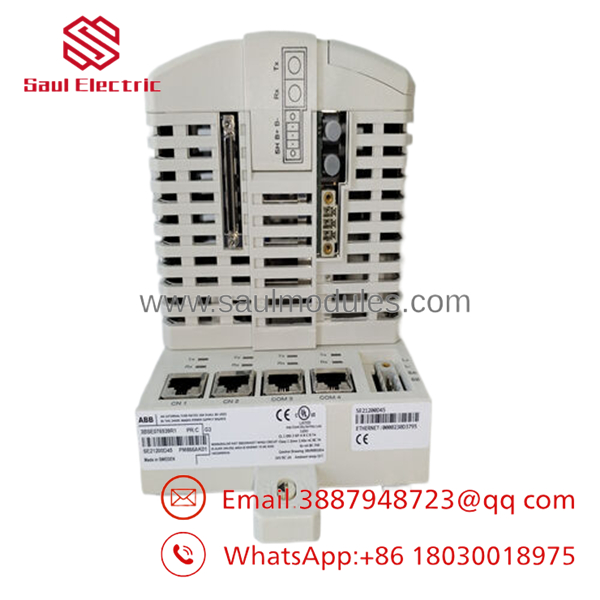
- PM866AK01
Frequently Asked Questions (FAQ)
Q1. Can I replace a without downloading the application again?
Usually no. Always create a complete backup of the controller project before replacement. After installing the new CPU, verify the firmware version and restore the application using ABB Control Builder if required.
Q2. Does the support controller redundancy?
Yes. The controller supports CPU redundancy together with redundant communication interfaces, CEX-Bus, and S800 I/O architectures used in high-availability System 800xA installations.
Q3. Can I hot-swap this CPU?
Generally, no. Unless your system architecture and ABB maintenance procedures specifically allow controlled replacement, remove power before replacing the controller. Hot-swapping the CPU can interrupt the backplane and stop the entire process.
Q4. Why do replacement CPUs sometimes refuse to synchronize?
The most common cause is a firmware revision mismatch. I’ve seen maintenance crews replace perfectly good hardware only to discover one controller was running a different firmware release. Record the firmware version before shutdown and request the same revision when purchasing a replacement.
Q5. Why is New Surplus inventory less expensive than buying directly from ABB?
New Surplus modules are unused OEM inventory from canceled projects, spare parts stock, or excess warehouse inventory. They have never been commissioned in the field but are sold outside the standard factory supply chain, resulting in a lower purchase price.
Q6. What should I check before installing the new controller?
Before installation:
- Record the existing firmware revision.
- Photograph all wiring and switch settings.
- Verify Ethernet IP addresses and Control Network configuration.
- Confirm compatibility with your installed 800xA software release.
- Calculate rack power consumption and maintain at least a 20% capacity margin.
- Wear a grounded ESD wrist strap during installation.
A five-minute inspection before removal often prevents several hours of commissioning delays.
Q7. How is each tested before shipment?
A professional quality control process should include:
- OEM part number and serial number verification
- Visual inspection for corrosion, connector damage, scratches, or repair marks
- Power-up testing on an ABB AC 800M controller rack
- Ethernet and serial communication verification
- CPU memory and diagnostic self-test
- Firmware version recording
- ESD-safe packaging with anti-static protection
- Final QC inspection and shipment documentation
Functional test reports, inspection photos, and startup videos should be available upon request from the supplier.

 Start Chat


