





Description
Key Technical Specifications
| Parameter: Value |
|---|
| Model: REF615C_C HCFFAEAGANB2BAN1XC |
| Product family: Relion® 615 feeder protection and control relay |
| Protection functions: Phase overcurrent (4 stages), earth-fault (4 stages), sensitive earth-fault, directional protection options |
| Measurement: Voltage, current, power, power factor, energy metering |
| Communication protocols: IEC 61850 (GOOSE, MMS), Modbus, DNP3, IEC 60870-5-103; Profibus via adapter |
| Time sync: IEEE 1588 v2 / optional GPS / SNTP |
| I/O: Mix of digital and analog I/O; configurable auxiliary inputs/outputs (model-dependent) |
| Mounting: Plug-in module for panel/rack installation (DIN/rack variants) |
| Operating temp: –25 °C to +55 °C (typical) |
| Front protection: IP54 (front) / IP20 (rear) (installation-dependent) |
| Power supply: Configurable auxiliary supply options (check nameplate and ordering code) |
| Weight: ~4 kg for main relay module (varies by configuration) |
| Diagnostics: Built-in event recorder, fault locator, self-tests, single-line display |
Product Introduction & Supply Chain Strategy
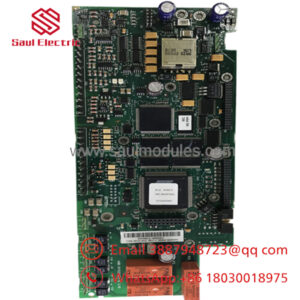
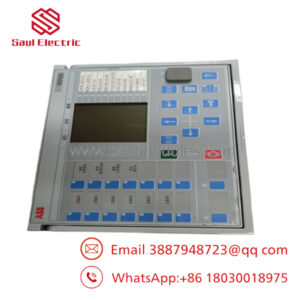
The ABB REF615C_C HCFFAEAGANB2BAN1XC is a numerical feeder protection and control relay in the Relion® 615 family designed to protect medium‑ and low‑voltage feeders with integrated protection, measurement, control, and supervision functions. It supports advanced protection schemes—multi-stage overcurrent, earth‑fault, fault location, and reclosing—while offering IEC 61850 and legacy protocol connectivity for digital substations and SCADA integration.
Sourcing this as New Surplus reduces Total Cost of Ownership by delivering OEM-fit hardware and verified serial traceability without full OEM lead-time premiums, while guarding against the higher failure and lifecycle risk of undocumented refurbished units; treat it as a Last‑Time‑Buy candidate where deployed widely, maintain buffer stock (1–2 critical units) and pursue vendor consolidation or frame agreements to reduce stock‑out incidents and lead time variability.
Installation & Configuration Guide
Stage 1: Pre-Installation (Prep & Safety)
- Apply lock‑out/tag‑out to associated feeders and control circuits and confirm de‑energized status using calibrated testers.
- Gather ESD strap, insulated tools, torque driver, cable labels, and the relay’s wiring diagram/setting export.
- Photograph existing relay front display, terminal wiring, IED serial, and DIP/switch positions; export current settings and event logs if possible.
Stage 2: Removal
- Remove supply to auxiliary and trip/control circuits, then unplug communications and I/O connectors in sequence.
- Release rack locking latches and slide module straight out; support the module to avoid bending backplane pins.
- Store removed unit in ESD bag and label with location and date for traceability.
Stage 3: Installation (Clone & Seat)
- Verify the replacement ordering code matches the original (HCFFAEAGANB2BAN1XC) and confirm firmware/extension card compatibility.
- Insert the relay module squarely into the rack until the latch engages; do not rock the unit—this prevents pin damage.
- Reconnect communications, auxiliary power, and I/O in the reverse order of removal, matching cable labels and shield terminations.
Stage 4: Power-On & Testing
- Energize auxiliary power only; confirm correct supply voltages and steady DC rails before enabling trip outputs.
- Check front panel self-test and status LEDs, review event and diagnostics for initial faults.
- Restore communications and upload the exported parameter set; perform low‑speed functional tests (trip, close, measurement comparison) and a controlled primary injection test if operationally allowed.
- Record final settings, firmware version, and serial number in CMMS for lifecycle tracking.
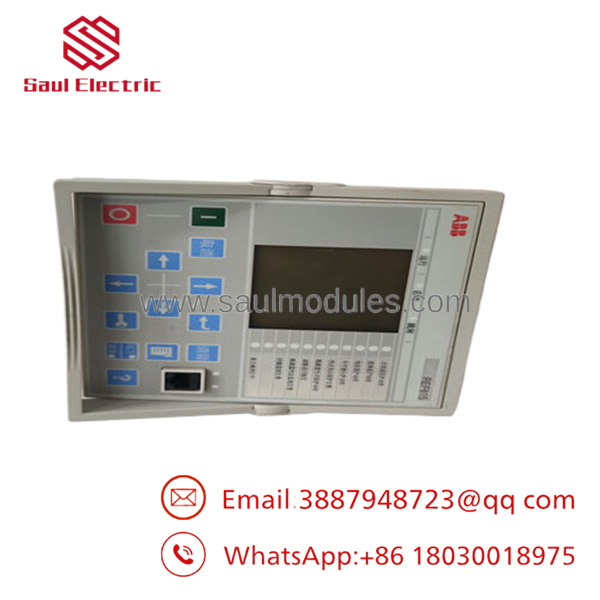
- REF615C_C HCFFAEAGANB2BAN1XC
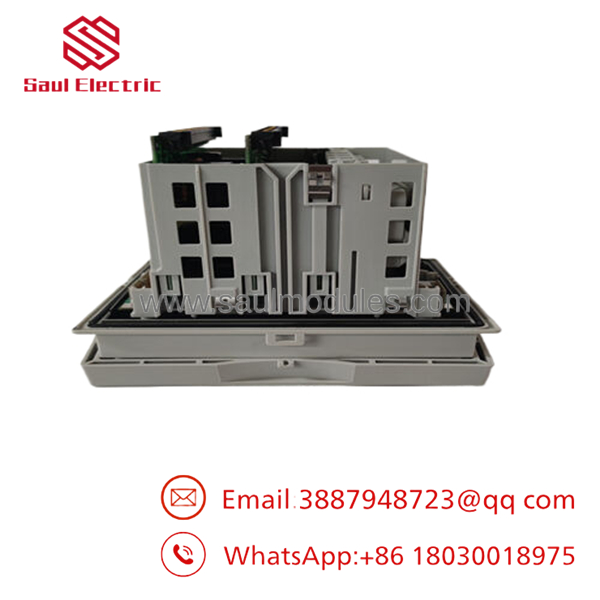
- REF615C_C HCFFAEAGANB2BAN1XC
Firmware/Software Versions & Upgrade Notes
- Recommended practice: Verify and document the relay’s firmware release and hardware option cards before swap; use the same firmware family validated in the station to avoid behavioral differences.
- Known compatibility: IEC 61850 dataset and logical node behavior can change between major firmware revisions—mixing firmware versions may alter GOOSE messaging or dataset mapping. Confirm compatibility before upgrading.
- Warning: Upgrading firmware during a live swap can change protection functions or default settings; always back up full setting files and event logs first and validate in a test environment where possible. Downgrading firmware may require a parameter conversion or reformat and can erase event/history logs.
Frequently Asked Questions (FAQ)
- Why is this offering priced lower than new-from-OEM but higher than cheap surplus?
Pricing reflects authenticated New Surplus sourcing, documented QC, and traceable serials; it avoids OEM list premiums while supplying lower lifecycle risk than undocumented surplus listings. - Are these units genuine ABB products?
The REF615C_C HCFFAEAGANB2BAN1XC is an ABB Relion® 615 series relay; verify OEM packing slips, serial numbers, and QC test reports on delivery for authenticity. - Is this model obsolete or supported?
REF615 is an established Relion product; however, individual ordering codes can be EOL-sensitive—treat widely deployed legacy configurations as candidates for last‑time‑buy and lifecycle tracking. - Can I hot-swap the REF615C relay in a running station?
No. Always remove power and isolate the relay before replacement; hot‑insertion risks backplane faults, comms collisions, and unreliable trip outputs. - Will settings and event history transfer automatically?
Settings must be exported and reloaded; event history and fault logs are not guaranteed to transfer and should be archived prior to swap. - What about warranty and QC?
For New Surplus stock, require OEM packing lists, serial verification, and a QC test report; warranty windows vary—confirm the specific warranty term at order placement. - How many units should I keep as buffer stock?
For mission‑critical feeders, keep 1–2 units on‑site as buffer stock to cover lead time variability and reduce stock‑out incidents; for multiple substations, implement cross‑site sharing and a centralized last‑time‑buy policy.

 Start Chat


