





Description
Product Introduction
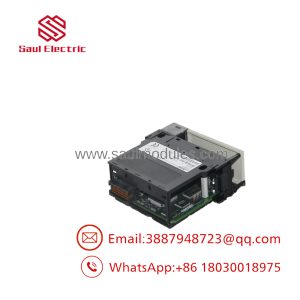
The Allen-Bradley 1746-NO8I is an eight-channel analog current output module designed for the SLC 500 PLC platform. It converts digital values from the controller into precise analog current signals for valve positioners, variable frequency drives, control dampers, and other field devices that rely on standard industrial current loops.
Compared with four-channel output modules, the 1746-NO8I doubles channel density without increasing chassis space. In our field experience, this module is frequently installed in legacy process systems where maintaining the existing SLC 500 architecture is more practical than performing a complete control system migration. Verify configuration and firmware compatibility before startup.
Key Technical Specifications
| Parameter | Value |
|---|---|
| Manufacturer | Allen-Bradley / Rockwell Automation |
| Catalog Number | 1746-NO8I |
| Product Family | SLC 500 |
| Module Type | Analog Current Output |
| Number of Outputs | 8 Single-Ended Channels |
| Output Signal | 0–20 mA, 4–20 mA, 0–21 mA, 0–21.5 mA (configurable) |
| D/A Resolution | 16-bit |
| Output Accuracy | ±0.1% FS @ 25°C |
| Output Step Response | 1 ms (0–95% FS) |
| Channel Update Time | 5 ms (Class 1), 10 ms (Class 3) |
| Recommended Load | 0–500 Ω |
| Isolation | 500 VDC Field-to-Backplane |
| Backplane Current | 120 mA @ 5 VDC, 250 mA @ 24 VDC (Rack Powered) |
| Installation | Any 1746 chassis slot except Slot 0 |
| Lifecycle Status | Discontinued (Engineering Replacement) |
Application Scenarios & The “Trench” Experience
It usually starts with a phone call at 2 AM.
The operator reports that every PID loop is healthy, but none of the control valves are responding correctly. The PLC is still running. Communications are normal. Hours later, maintenance discovers the analog output module has failed, leaving multiple process loops without valid control signals.
Typical applications include:
- Water & Wastewater – Controlling chemical dosing pumps and modulating control valves through standard 4–20 mA outputs.
- Chemical Processing – Driving valve positioners in pressure, flow, and temperature PID loops requiring stable analog control.
- Power Generation – Sending analog commands to boiler auxiliary equipment and combustion control devices.
- Food & Beverage – Regulating mixing systems, steam valves, and production line flow control.
- Oil & Gas – Controlling pump speed references and actuator positioning within legacy SLC 500 installations.
Field Case
A packaging facility experienced unstable filling accuracy across several production lines. Every transmitter reported correct measurements, yet valve movements became erratic.
After isolating the loops, technicians identified a failed 1746-NO8I that was intermittently driving incorrect output currents on multiple channels. A fully tested replacement module restored stable valve control during the same maintenance window, preventing an unplanned shutdown that would have delayed production into the next shift.
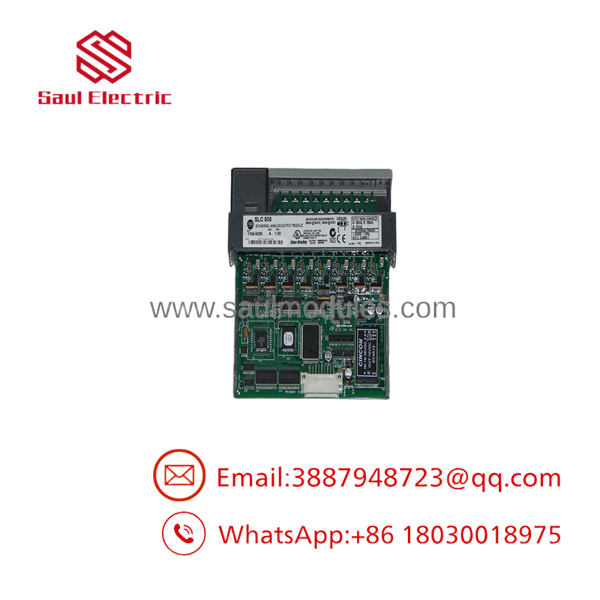
- 1746-NO8I
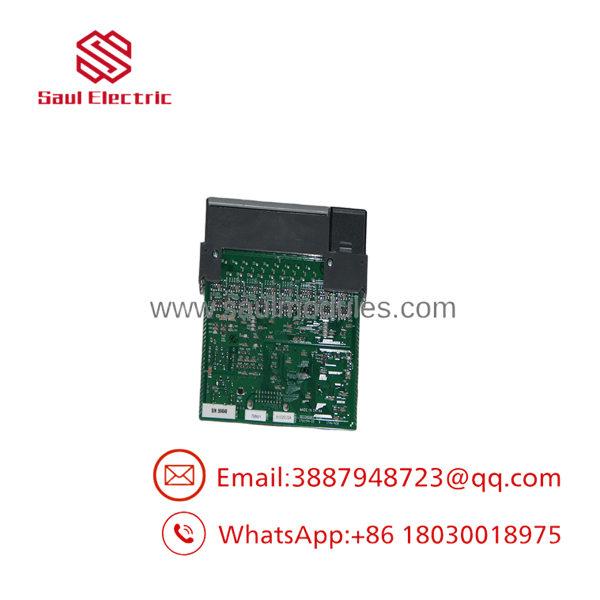
- 1746-NO8I
Transparency SOP: Quality Assurance & Testing
We don’t just ship boxes; we test them on actual Allen-Bradley SLC 500 racks.
- Inbound Inspection
- Verify catalog number, hardware revision, and product labels.
- Inspect connectors for oxidation, bent pins, or repaired traces.
- Screen for counterfeit markings and PCB damage.
- Live Rack Testing
- Install the module in a functioning SLC 500 chassis.
- Confirm processor recognition and module diagnostics.
- Exercise all eight output channels.
- Electrical Performance Verification
- Measure current output accuracy across multiple setpoints.
- Verify response time and channel stability under load.
- Confirm isolation integrity and power consumption.
- Firmware & Hardware Documentation
- Record hardware series and applicable firmware information.
- Verify compatibility with supported SLC 500 processors.
- Final QC & Packaging
- Perform final visual inspection.
- Clean edge connectors.
- Package in anti-static shielding with impact-resistant protection.
The Veteran’s Tech Trap Guide
⚠️ Don’t assume every channel uses 4–20 mA. Check the project configuration first. The 1746- supports multiple output ranges, and loading the wrong configuration can drive equipment to unintended positions.
❗ Never power the module from the chassis 24 V user supply. Rockwell specifically recommends using an external Class 2 power supply when external power is required. Ignoring this recommendation can lead to unstable analog outputs.
⚠️ Measure loop resistance before replacing the module. Excessive cable resistance or improperly sized loads often mimic module failures.
⚠️ Label every field wire before removal. Eight analog loops can become surprisingly confusing during a rushed outage. Five extra minutes with a marker can save several hours of troubleshooting.
Always verify terminal wiring, jumper settings, and output scaling against the official Rockwell documentation before energizing the system.
Frequently Asked Questions (FAQ)
Q1. Can the 1746- be hot-swapped?
No. The SLC 500 platform is not designed for live replacement of analog output modules. Removing the module under power can generate processor faults and unexpected field output conditions.
Q2. What analog output ranges are supported?
The module supports configurable current output ranges including 0–20 mA, 4–20 mA, 0–21 mA, and 0–21.5 mA, depending on channel configuration.
Q3. Is the 1746- still manufactured?
No. Rockwell Automation discontinued the 1746- on September 30, 2024. Existing installations typically depend on verified surplus inventory or professionally refurbished modules.
Q4. Will it work with all SLC 500 processors?
It is compatible with SLC 500 systems that support the 1746 I/O platform. Processor firmware, project configuration, and hardware revision should always be verified before installation.
Q5. Why is surplus inventory less expensive than buying directly from the OEM?
Since production has ended, most available modules originate from surplus inventories, plant decommissioning projects, or excess OEM stock. Market availability—not original list price—largely determines the selling price.
Q6. Are refurbished modules dependable?
They can be, provided they undergo live rack testing, channel-by-channel output verification, electrical inspection, and documented functional testing. Cosmetic appearance alone does not indicate reliability.
Q7. What warranty is typically provided?
Most reputable industrial automation suppliers offer a 12-month warranty on qualified new surplus and professionally refurbished 1746- modules, covering functional defects under normal operating conditions. Always confirm the warranty terms before purchase.

 Start Chat


