





Description
Product Introduction
The Allen-Bradley 1747-L532 is an SLC 5/03 processor designed for the SLC 500 modular PLC platform. It provides 16K words of user memory, integrated DH-485 and RS-232 communication ports, and supports both discrete and analog I/O for machine control and process automation. It became one of the most widely deployed processors in the SLC family because it balanced memory capacity, communication flexibility, and processing performance.
In our field experience, the 1747-L532 is still found in packaging lines, water treatment facilities, and OEM production equipment that continue to operate reliably decades after installation. One thing to watch out for is communication setup. The processor supports DF1 over RS-232 and DH-485, but incorrect driver configuration in RSLinx often gets mistaken for a hardware failure.
Key Technical Specifications
| Parameter | Value |
|---|---|
| Manufacturer | Allen-Bradley / Rockwell Automation |
| Catalog Number | 1747-L532 |
| Processor Type | SLC 5/03 |
| Product Family | SLC 500 |
| User Program Memory | 16K Words |
| Communication Ports | RS-232 (DF1) and DH-485 |
| Maximum Digital I/O | 4,096 Inputs / 4,096 Outputs |
| Maximum Analog I/O | 480 Points |
| Maximum Local Chassis | 3 |
| Maximum I/O Slots | 30 |
| Typical Program Scan Time | Approximately 1 ms per Kword |
| Typical I/O Scan Time | Approximately 0.225 ms |
| Memory Backup | Flash EEPROM and Battery-backed RAM |
| Backplane Current Draw | 500 mA @ 5 VDC |
| Operating Temperature | 0°C to +60°C |
| Lifecycle Status | Discontinued (March 31, 2024) |
Application Scenarios & The “Trench” Experience
Here’s one that catches even experienced technicians.
A replacement processor is installed during a planned shutdown. The CPU powers up normally. Status LEDs look healthy. Yet nobody can get online.
The processor isn’t defective.
The DF1 driver in RSLinx is configured for the wrong COM port after switching to a USB-to-serial adapter.
That mistake has delayed more startups than failed processors ever have.
Typical applications include:
- Packaging Industry — Coordinating conveyors, case packers, and labeling equipment with moderate I/O requirements.
- Water & Wastewater — Controlling lift stations, filtration systems, and chemical dosing equipment through distributed SLC 500 I/O.
- Food & Beverage — Managing mixers, fillers, and packaging machines requiring dependable deterministic control.
- Material Handling — Operating sortation systems, pallet conveyors, and transfer stations.
- OEM Machinery — Providing machine control where RSLogix 500 compatibility remains an operational requirement.
Field Case
A beverage manufacturer lost communication with an SLC 5/03 after replacing an engineering laptop. The maintenance team suspected processor failure because every attempt to connect timed out.
The controller was healthy.
The USB serial adapter had enumerated as a different COM port, while RSLinx continued attempting communication on the previous port. After updating the DF1 driver configuration, the processor connected immediately and production resumed within minutes. The CPU never required replacement.
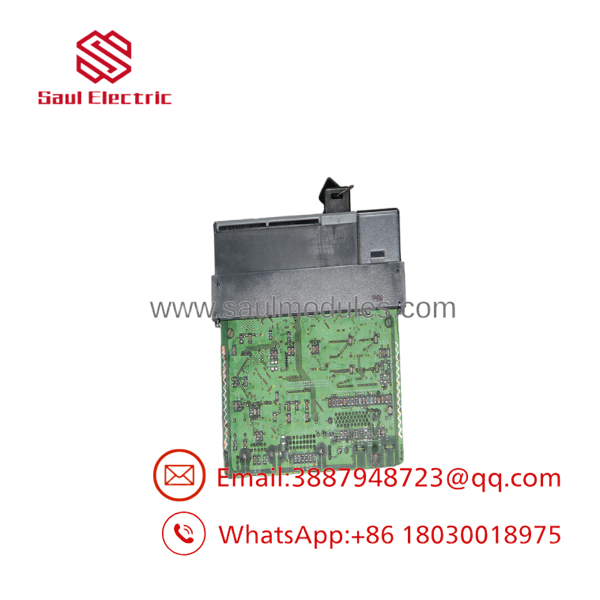
- 1747-L532
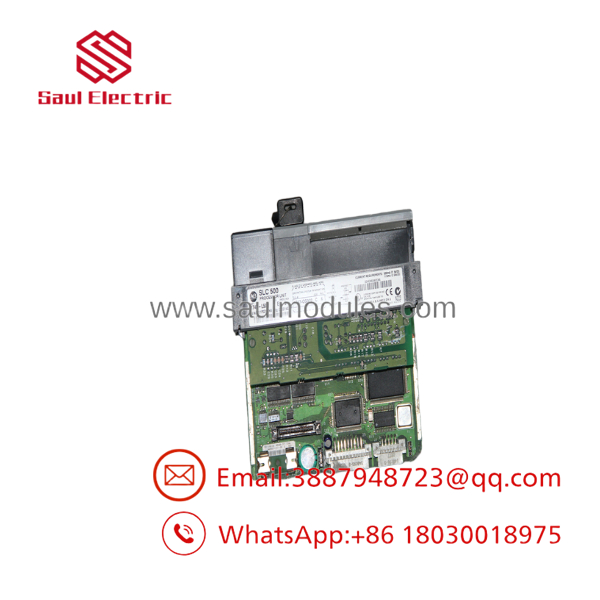
- 1747-L532
Transparency SOP: Quality Assurance & Testing
We don’t just ship boxes; we test them on actual Allen-Bradley SLC 500 racks.
- Inbound Inspection
- Verify catalog number, hardware series, and serial number.
- Inspect PCB, connectors, and key switch.
- Screen for counterfeit labels, corrosion, and unauthorized repairs.
- Live Rack Testing
- Install the processor in a functioning SLC 500 chassis.
- Verify successful boot sequence.
- Download and execute a validated RSLogix 500 application.
- Test both RS-232 and DH-485 communications.
- Electrical Parameter Checks
- Measure backplane current consumption.
- Verify processor diagnostics and watchdog operation.
- Confirm stable execution under continuous scan.
- Memory Verification
- Test Flash EEPROM operation.
- Verify battery-backed RAM retention.
- Record firmware and hardware revision.
- Final QC & Anti-static Packaging
- Complete full functional inspection.
- Clean edge connectors.
- Package in anti-static shielding with impact-resistant cushioning.
The Veteran’s Tech Trap Guide
⚠️ Don’t assume every serial cable works. The processor communicates through DF1 over RS-232. Incorrect cable wiring or an improperly configured RSLinx driver can completely block communication even when the CPU is operating normally.
⚠️ Replace the memory battery before it becomes a problem. If battery-backed RAM loses power and no Flash backup exists, recovering the application may be impossible.
❗ Verify the processor series before swapping CPUs. A 1747-L531, L532, and L533 all fit the chassis, but available memory differs. Downloading a project larger than the processor capacity simply won’t work.
⚠️ Check the chassis power budget. The 1747- draws approximately 500 mA at 5 VDC from the backplane. Large analog configurations can exceed the available capacity if the power supply is undersized.
Always verify firmware revision, communication settings, and total chassis power consumption before commissioning a replacement processor.
Frequently Asked Questions (FAQ)
Q1. What communication ports are built into the 1747-?
The processor includes one RS-232 serial port supporting DF1 communication and one DH-485 communication port for SLC 500 networking.
Q2. How much program memory does the 1747- provide?
The processor includes 16K words of user memory, making it suitable for medium-sized machine control and process automation applications.
Q3. Is the 1747- compatible with RSLogix 500?
Yes. It is programmed using RSLogix 500 and communicates through RSLinx using DF1 or DH-485 drivers. Proper communication driver configuration is essential before attempting to download or monitor a program.
Q4. Is the 1747- still manufactured?
No. Rockwell Automation discontinued the on March 31, 2024. Replacement units are now primarily available as verified new surplus or professionally refurbished inventory.
Q5. Can I replace a 1747-L531 with a 1747-?
In many applications, yes, provided the existing project is compatible and the hardware configuration is verified. The offers 16K memory, which is larger than the L531, but communication settings and firmware should still be reviewed before installation.
Q6. Are refurbished 1747- processors dependable?
They can be, provided they undergo processor diagnostics, Flash memory verification, RAM retention testing, communication testing, and live rack operation before shipment. Cosmetic appearance should never be the primary acceptance criterion.
Q7. What warranty is typically offered?
Most reputable industrial automation suppliers provide a 12-month warranty on qualified new surplus and professionally refurbished processors, covering functional defects under normal industrial operating conditions.

 Start Chat


