





Description
Product Introduction
The Allen-Bradley 1756-L55M13 is a ControlLogix5555 processor module designed for industrial control applications requiring centralized PLC logic execution, I/O management, and communication with ControlLogix chassis-based systems. It provides 1.5 MB of user memory and supports large distributed I/O architectures.
This processor belongs to the earlier ControlLogix L55 generation. It remains installed in many legacy production systems because the original machine software, I/O configuration, and validated processes were built around this controller platform. Replacement planning requires careful review of firmware revision, RSLogix 5000 compatibility, and existing communication modules.
Key Technical Specifications
| Parameter | Value |
|---|---|
| Manufacturer | Allen-Bradley / Rockwell Automation |
| Catalog Number | 1756-L55M13 |
| Product Family | ControlLogix 5555 |
| Module Type | Processor Module |
| Processor Series | L55 |
| User Memory | 1.5 MB |
| Maximum Digital I/O | 128,000 points |
| Maximum Analog I/O | 4,000 Inputs / 2,000 Outputs |
| Programming Software | RSLogix 5000 |
| Minimum Software Version | RSLogix 5000 V8.02 or later |
| Programming Port | RS-232 Serial |
| Battery Type | 1756-BA1 |
| Backplane Current | 1.23 A @ 5VDC / 14 mA @ 24VDC |
| Power Dissipation | Approx. 5.6 W |
| Scan Time | Approx. 0.08 ms per 1K instructions |
| Operating Temperature | 0°C to +60°C |
| Storage Temperature | -40°C to +85°C |
| Humidity Range | 5-95% non-condensing |
| Vibration Rating | 10-500 Hz |
| Slot Requirement | 1 ControlLogix chassis slot |
| Lifecycle Status | Discontinued |
Application Scenarios & The “Trench” Experience
The phone rings during a weekend shutdown.
“The PLC will not come back online after power restoration.”
The processor fault light is on.
The first instinct is usually replacing the CPU. Sometimes that is correct. Sometimes it is not.
Older ControlLogix L55 systems require a careful troubleshooting process. Memory contents, firmware revision, battery condition, chassis power stability, and communication module compatibility all matter.
Typical applications include:
- Automotive Manufacturing – Assembly line PLC control – The 1756-L55M13 executes machine sequencing, interlocks, and distributed I/O control logic.
- Packaging Equipment – High-speed machine automation – Used in legacy packaging lines where validated RSLogix 5000 applications remain in production.
- Water Treatment – Pump and process control – Manages discrete and analog I/O through ControlLogix chassis architectures.
- Power Generation – Auxiliary control systems – Provides processor control for installed legacy automation platforms.
- Material Handling – Conveyor automation – Runs coordinated motion, safety logic, and equipment sequencing.
Field Case
A manufacturing plant experienced an unexpected controller failure during a scheduled maintenance restart.
The spare processor was available, but the replacement would not communicate with the existing project.
The issue was not hardware.
The spare 1756-L55M13 had a different firmware revision than the original controller. The RSLogix 5000 project also required an older controller revision.
After verifying firmware compatibility and restoring the correct project image, the production line returned to operation.
The lesson: a processor spare is only useful when the firmware and application environment match.
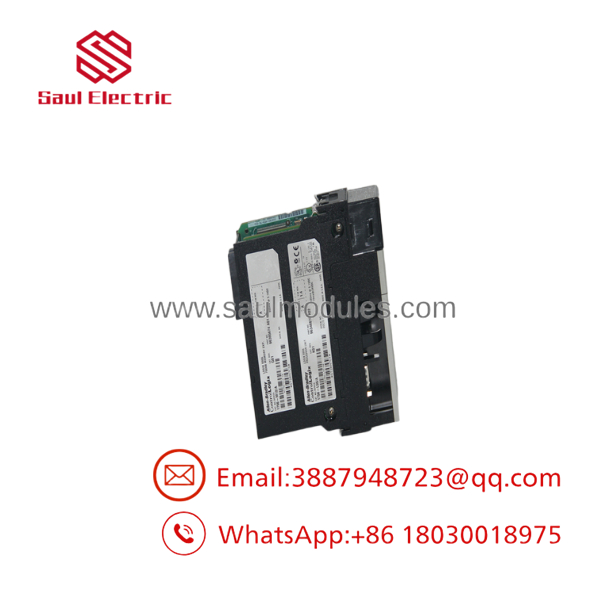
- 1756-L55M13
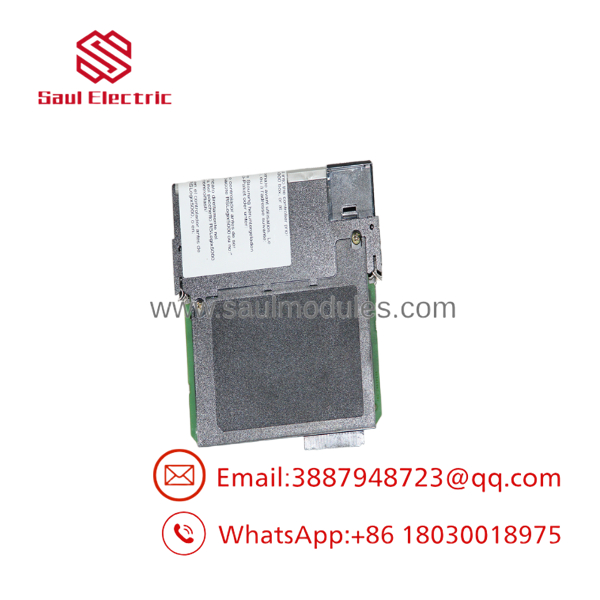
- 1756-L55M13
Transparency SOP: Quality Assurance & Testing
We don’t just ship boxes; we test them on actual Allen-Bradley ControlLogix racks.
- Inbound Inspection
- Verify Allen-Bradley label, catalog number, series, and hardware revision.
- Inspect chassis connector pins and RS-232 communication port.
- Check battery compartment condition and physical damage.
- Live Rack Testing
- Install processor in a ControlLogix chassis.
- Verify processor recognition.
- Establish RSLogix 5000 communication.
- Perform memory access and controller diagnostics checks.
- Electrical Parameter Checks
- Verify backplane current behavior.
- Confirm stable operation during power cycling.
- Check processor status indicators.
- Firmware Verification
- Record exact firmware revision.
- Confirm compatibility with available RSLogix 5000 versions.
- Verify controller identification data.
- Final QC & Anti-static Packaging
- Clear diagnostic faults after testing.
- Protect processor contacts from ESD.
- Package using anti-static materials.
The Veteran’s Tech Trap Guide
⚠️ Do not assume a newer ControlLogix processor is a direct replacement. The L55 generation has different firmware requirements, memory architecture, and migration considerations.
❗ Check RSLogix 5000 version before ordering. A controller may be physically correct but impossible to upload/download with the software available at the plant.
⚠️ Verify the battery condition. The 1756- uses a replaceable 1756-BA1 battery. A dead battery can become a problem during extended power loss.
⚠️ Do not forget the project backup. Uploading from an old processor may not recover documentation, comments, or some source information.
⚠️ Check communication modules separately. The processor does not include Ethernet/IP or ControlNet communication ports. Those functions require separate 1756 communication modules.
Take a photo of the processor status LEDs before removing it. Trust me. Those fault codes save hours of guessing later.
Frequently Asked Questions (FAQ)
Q1. What is the Allen-Bradley 1756-?
The is a ControlLogix5555 processor module with 1.5 MB user memory used for PLC logic execution and ControlLogix system control.
Q2. Is the 1756- still manufactured?
No. The 1756- is a discontinued ControlLogix processor. Existing installations commonly rely on repair services, tested surplus inventory, or planned migration projects.
Q3. What software is required for the 1756-?
The processor requires RSLogix 5000 software, with compatible versions depending on firmware revision. Older L55 controllers may require older RSLogix 5000 installations.
Q4. Can the 1756- replace a 1756-L55M14 or L55M16?
No direct replacement should be assumed.
The , L55M14, and L55M16 processors share the same family but have different memory capacities. The application size must be checked before substitution.
Q5. Does the 1756- have Ethernet/IP built in?
No.
The processor requires separate ControlLogix communication modules such as Ethernet/IP, ControlNet, or DeviceNet interface modules depending on the system design.
Q6. Can the 1756- be hot-swapped?
No.
Processor replacement requires controlled shutdown procedures. Removing the CPU during operation can stop machine control and interrupt the process.
Q7. Why is a surplus 1756- cheaper than buying directly from Rockwell Automation?
Because this processor is discontinued. Available units typically come from industrial spare inventories, retired equipment, and system upgrades. The important factors are firmware verification, functional testing, and traceable inspection.
Q8. What warranty is typically provided?
Qualified automation suppliers commonly provide a 12-month warranty on tested surplus and refurbished 1756- processors. Warranty terms depend on the supplier and testing documentation.

 Start Chat


