





Description
Product Introduction
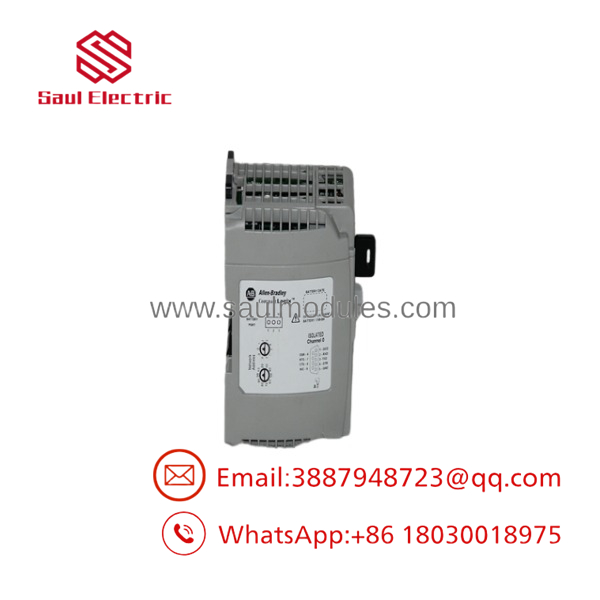
The Allen-Bradley 1769-L32C is an legacy CompactLogix controller engineered for deterministic control across ControlNet industrial networks. Belonging to the 1769-L3 processor family, it brings the Logix5000 execution engine into mid-sized automation applications requiring guaranteed I/O messaging times and scheduled network traffic.
Equipped with an integrated ControlNet BNC port alongside an RS-232 serial port, the 1769-L32C communicates seamlessly with remote ControlNet drops, drives, and higher-level ControlLogix controllers. It offers 750 KB of user memory and supports up to 16 local 1769 Compact I/O expansion modules, serving as an effective bridge between local machine control and deterministic plant networks.
Key Technical Specifications
| Parameter | Value |
| User Memory | 750 KB Non-Volatile Flash / RAM |
| Integrated Communications | (1) ControlNet BNC Port | (1) RS-232-C Serial Channel 0 |
| ControlNet Network Speed | 5 Mbps (Scheduled and Unscheduled Messaging) |
| Local I/O Expansion | Supports up to 16 1769 Compact I/O Modules (3 Banks max) |
| Power Distance Rating | 4 Modules (Must be mounted within 4 slots of power supply) |
| Battery Type | 1769-BA Lithium Battery |
| CompactFlash Card Slot | Supports 1784-CF128 External Memory Cards |
| Power Supply Compatibility | Requires 1769-PA2, 1769-PB2, 1769-PA4, or 1769-PB4 |
| Programming Software | RSLogix 5000 (v13 through v20) |
| Mounting | DIN Rail or Direct Panel Mount |
Application Scenarios & The “Trench” Experience
The Trench Story
It is 3:00 AM in a metals processing plant. A master ControlNet segment drops off because the onboard communications transceiver on a 1769-L32C processor controlling a strip-coiling station burns out. The entire coiling line locks up, holding up continuous casting operations upstream. To be honest, migrating a scheduled ControlNet node over to EtherNet/IP during a night shift is practically impossible—it requires pulling new Cat6 cabling, re-architecting the NUT (Network Update Time) schedules, and updating SCADA mapping. Dropping in a factory-tested replacement 1769-L32C processor, setting the network tap address on the front, and re-downloading the v20 project gets deterministic communications restored in under twenty minutes.
Specific Applications
- Deterministic Coiling & Slitting Lines: Manages continuous material tension control where scheduled ControlNet I/O delivery is mandatory to prevent speed jitter.
- Mining & Material Conveyors: Communicates over long-distance coax ControlNet trunklines to coordinate remote motor control centers (MCCs) and field drops.
- SCADA Integration in Power Generation: Transmits real-time generator status parameters to central ControlLogix plant networks over scheduled ControlNet media.
- Legacy Automotive Sub-Assemblies: Serves as a localized station controller tied into facility-wide ControlNet rings for deterministic interlocking.
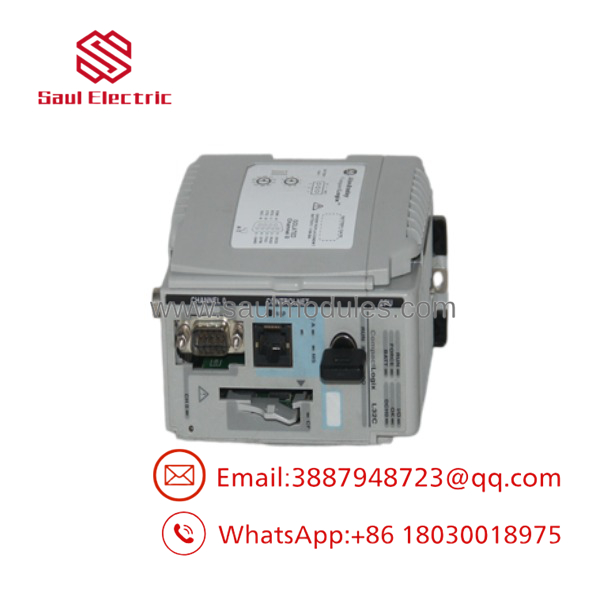
- 1769-L32C
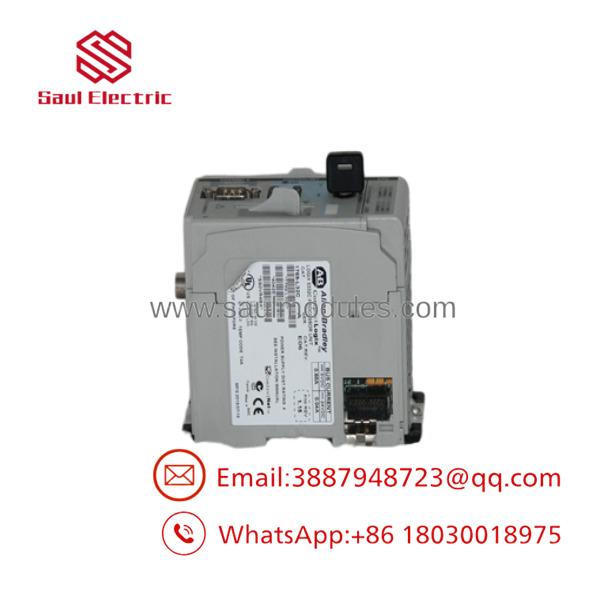
- 1769-L32C
Transparency SOP: Quality Assurance & Testing
Every 1769- processor undergoes multi-step hardware and network stress testing before entering our inventory:
- Inbound Visual & Mechanical Audit: We inspect plastic latching tabs, clean internal bus connector pins, and verify that the front BNC coax connector is free from mechanical play or oxidation.
- Backplane & Power Test: The processor docks into a 1769 rack with a 1769-PA4 power supply and test I/O cards to verify 5VDC bus distribution and local card discovery.
- ControlNet Network Stress Check: We connect the to an active ControlNet network with a 1784-U2CN switch, scheduling network traffic in RSNetWorx for ControlNet to verify zero dropped packets or media access errors.
- Firmware Flashing & Memory Integrity Check: We cycle firmware loads up through version 20, execute full memory write routines to exercise all 750 KB, and test the 1784-CF128 CompactFlash read/write cycles.
- Battery Retention Audit: The CPU is kept unpowered overnight to ensure the 1769-BA lithium battery circuit retains memory registers without dropping fault codes.
The Veteran’s Tech Trap Guide
- ⚠️ Do Not Forget RSNetWorx for ControlNet: Unlike EtherNet/IP networks where nodes can be added dynamically, ControlNet requires you to schedule network bandwidth using RSNetWorx for ControlNet whenever you change I/O configurations or network update times (NUT). Simply downloading the program in RSLogix 5000 without rescheduling the network will result in ControlNet communication faults.
- ❗ Set the Physical Network Address Correctly: The 1769- relies on physical rotary switches (or software configuration) to define its ControlNet Node Address. Make sure your replacement CPU’s node address matches the exact node number configured in your RSNetWorx file before connecting it to an active coaxial tap.
- ⚠️ Mind the 4-Slot Power Distance Rule: The 1769- has a strict power distance rating of 4. It MUST be installed within 4 slots of a 1769 power supply (such as the 1769-PA4 or 1769-PB4). Placing it further down the rail causes logic errors or unpredictable CPU resets due to backplane voltage drops.
- ❗ Firmware Limit at Version 20: The 1769- hardware ceiling is RSLogix 5000 / Studio 5000 Version 20. It cannot be flashed to v21 or higher. Do not attempt to upgrade this controller to modern Studio 5000 versions beyond v20.
Frequently Asked Questions
Q: What is the main difference between the 1769- and the 1769-L32E?
The primary difference is the integrated network interface. The 1769- features an onboard ControlNet port (BNC connector) for deterministic coax network architecture, whereas the 1769-L32E features an integrated EtherNet/IP port (RJ45 connector). Both share 750 KB of user memory and support up to 16 local 1769 I/O modules.
Q: What software do I need to program and configure the 1769-?
You need RSLogix 5000 (v13 through v20) for logic programming and RSNetWorx for ControlNet to schedule network communication traffic across the ControlNet link.
Q: How do I preserve the program memory during a prolonged plant shutdown?
You can install an optional 1784-CF128 CompactFlash card into the slot on the front of the CPU. In RSLogix 5000, set the controller properties to automatically load the image from Non-Volatile memory “On Power Up” or “On Corrupted Memory.”
Q: Can I use 1769 Compact I/O expansion modules on both sides of the 1769-?
No. All 1769 Compact I/O expansion modules must be installed to the right side of the 1769- CPU. The processor unit itself sits on the far left of the first bank, directly adjacent to its 1769 power supply module.
Q: What warranty is provided on new surplus or refurbished 1769- controllers?
Every 1769- processor we supply includes a comprehensive 12-month replacement warranty. If the unit experiences a hardware defect under normal operating conditions within 365 days of purchase, we replace it immediately from our stock or issue a full refund.
Q: Is the 1769- still actively manufactured by Rockwell Automation?
No, the 1769- is a discontinued legacy item. However, we maintain fully tested, factory-sealed new surplus and reconditioned units to keep existing plant ControlNet infrastructure running without expensive control system migrations.

 Start Chat


