





Description
Product Introduction & Engineering Value
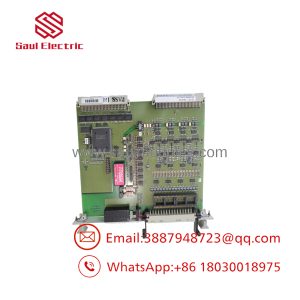
The Alstom EP3-E-4-A is a legacy EPIC III controller used in electrostatic precipitator (ESP) applications. Its job is closely tied to controlling and regulating the electrical conditions of an ESP field, including the transformer-rectifier system that supplies high-voltage power to the collecting electrodes.
For a replacement project, this is not a module that should be selected by enclosure appearance alone. The existing ESP controller configuration, transformer-rectifier arrangement, voltage/current feedback circuits, control parameters, and site wiring all need to be matched. Third-party sources disagree on some detailed specifications, so those values should be verified from the actual unit and site documentation before commissioning.
Technical Specifications
- Manufacturer: Alstom
- Model: EP3-E-4-A
- Product Family: EPIC III
- Equipment Type: Electrostatic precipitator integrated controller
- Primary Function: ESP automatic electrical control
- Controlled Equipment: Transformer-rectifier (T/R) set and associated ESP collection field
- Control Principle: Microprocessor-based control with thyristor/SCR firing control reported in available documentation
- Feedback: ESP secondary voltage and current feedback are associated with the control function
- Protection: Spark/flashover detection and protective control functions are reported for this model
- Application: Industrial particulate-emission control
- Installation: Control cabinet associated with the ESP electrical system
- Typical Industries: Power generation, cement, steel, metallurgy, and other high-particulate industrial processes
Available sources describe the EP3-E-4-A as an automatic voltage controller that regulates ESP power while responding to spark events.
Specification caution: I would not publish the commonly repeated claims of “110/220 VAC,” exact dimensions, exact RS-485/Ethernet configuration, or specific operating-temperature limits as confirmed OEM specifications without the original Alstom EPIC III manual. Current third-party listings provide conflicting details, and some appear to mix generic controller specifications with this model.
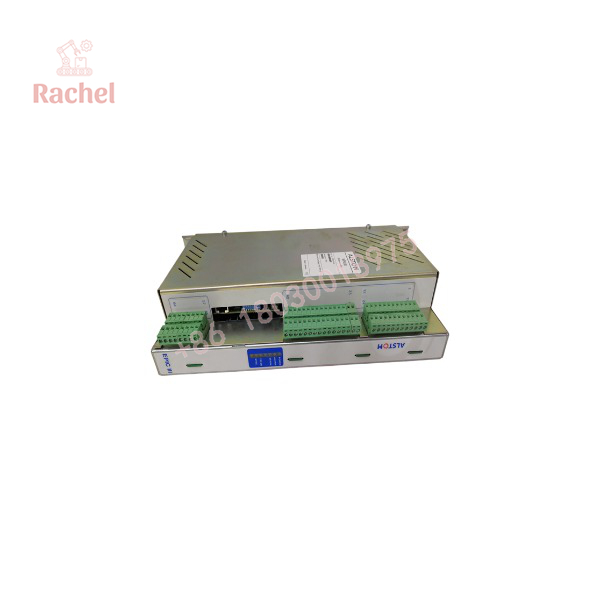
EP3-E-4-A
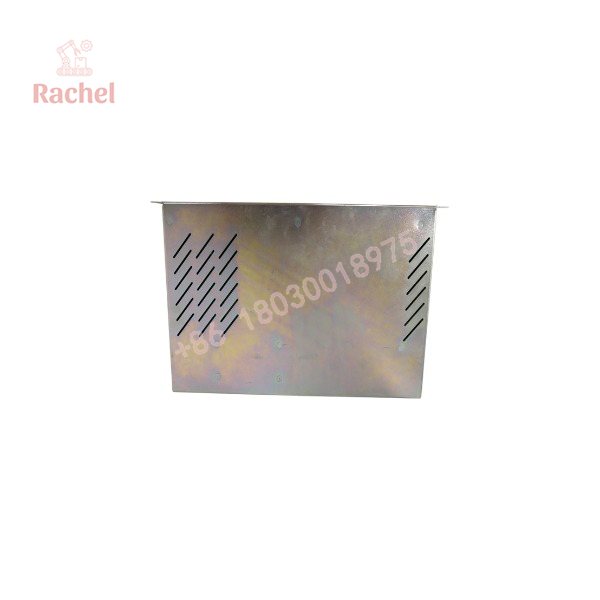
EP3-E-4-A
Field Application & the “Trench” Experience
A plant operating an older ESP system began experiencing repeated high-voltage trips on one collection field. The transformer-rectifier hardware checked out, but the controller was not maintaining the expected operating point. Maintenance initially suspected the feedback circuit.
The engineers eventually isolated the EPIC III controller as the likely source. Instead of changing the complete ESP control cabinet, they matched the replacement EP3-E-4-A, documented the existing feedback ratios and operating parameters, and performed controlled commissioning after installation.
The critical lesson is straightforward: the controller and the high-voltage ESP circuit must be treated as one control system. Incorrect feedback scaling or control parameters can cause nuisance trips, poor collection efficiency, or excessive electrical stress.
Niche applications include:
- Coal-fired boiler ESP collection fields, where fly-ash loading varies significantly with boiler operating conditions.
- Cement kiln and clinker-cooler ESP systems, where particulate loading and gas characteristics can change with process conditions.
- Steel sinter-plant gas cleaning, where continuous particulate removal is required under demanding process conditions.
- Industrial waste-incineration ESPs, where stable high-voltage control is required for particulate collection.
Transparency SOP: QA & Testing
For New Surplus or Refurbished EP3-E-4-A inventory, a meaningful test should go beyond checking whether the controller powers up.
- Identity verification — Confirm the complete EP3-E-4-A marking, serial number, revision, and board/assembly identifiers.
- Visual inspection — Check connectors, terminals, PCB assemblies, displays/keypads if fitted, and evidence of heat or electrical damage.
- Low-voltage functional test — Verify processor startup, indications, controls, and available diagnostic functions.
- I/O verification — Check representative feedback and control interfaces using an appropriate test setup.
- ESP-system test — Where practical, verify the controller against a compatible EPIC III/ESP test environment.
- Parameter verification — Compare stored or programmed operating parameters with the customer’s original configuration before putting the controller into service.
A unit that simply powers on should not be advertised as fully tested for ESP operation.
The Veteran’s Tech Trap Guide
⚠️ Trap #1 — Treating EP3-E-4-A as a generic PLC.
It is much more application-specific. Its role is tied to ESP electrical control, particularly the transformer-rectifier/collection-field system.
⚠️ Trap #2 — Losing the original feedback configuration.
Before removing the controller, document the voltage-divider and current-feedback scaling, control parameters, alarm settings, and wiring. These values are part of the commissioning data.
PRO TIP: Photograph the complete front and rear of the original unit and record every parameter displayed before shutdown. Legacy ESP systems frequently contain site-specific tuning that is not obvious from the model number.
⚠️ Trap #3 — Trusting generic online specifications.
Several current listings describe EP3-E-4-A with substantially different I/O, communication, power, and enclosure specifications. Treat those claims as secondary-market descriptions until verified against the actual Alstom documentation.
Dynamic FAQ
Q: What is the Alstom EP3-E-4-A?
A: It is an EPIC III electrostatic precipitator integrated controller, used for control of ESP electrical operation. Historical records explicitly identify it as an EPIC-III electrostatic precipitator integrated controller.
Q: What does the EP3-E-4-A control?
A: Its primary role is associated with controlling the electrical power supplied to ESP collection fields through the transformer-rectifier system, including regulation in response to spark conditions.
Q: Is EP3-E-4-A a standard PLC CPU?
A: No. It is better classified as an ESP-specific industrial controller within the EPIC III architecture.
Q: What should be checked before replacing an EP3-E-4-A?
A: Match the exact model and revision, document feedback wiring and scaling, record operating parameters, verify the transformer-rectifier configuration, and confirm the replacement’s compatibility with the existing EPIC III installation.
Q: What does New Surplus EP3-E-4-A mean?
A: It generally means previously manufactured inventory that was not installed in normal service and later entered secondary-market stock. It should be distinguished from used or refurbished equipment.
Q: What warranty should I request?
A: Specify the warranty period, test scope, return procedure, and inventory condition on the quotation. For an ESP controller, ask specifically whether the unit was merely powered up or actually function-tested with compatible control circuitry.

 Start Chat


