





Description
Product Introduction & Engineering Value
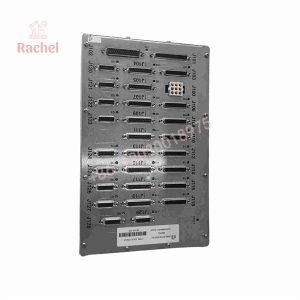
When an old AMAT tool loses its stepper-control board, the mechanical system may be perfectly healthy while the entire wafer-handling sequence is effectively dead. 0100-00003 is the type of legacy motion-control component that can make the difference between a straightforward board replacement and a much larger controls retrofit. It is documented as a VME stepper-drive board used in Applied Materials equipment.
The procurement detail that deserves attention is the revision. Secondary-market records show both Rev. B and Rev. C versions, while current listings specifically identify Rev. C as a stepper-drive assembly. Treat the full board marking—not merely 0100-00003—as the purchasing specification.
Technical Specifications
| Specification | 0100-00003 |
|---|---|
| OEM | Applied Materials |
| Part Number | 0100-00003 |
| Primary Function | Stepper drive / stepper control |
| Module Type | VME PCB/card |
| VME Format | B-size |
| Bus | VMEbus |
| Status Indication | On-board status LEDs |
| Known Revision | Rev. B / Rev. C |
| Typical Host Equipment | Legacy AMAT semiconductor equipment |
| P5000 Association | Reported in secondary-market equipment records |
| Motor Application | Precision stepper-motor motion |
| Condition Available | New OEM, used, tested, refurbished |
| Exact Motor Ratings | Must be verified against the applicable AMAT documentation |
| Exact Electrical Interface | Configuration/tool dependent |
A specialist test-equipment listing confirms the unit as a B-sized VME stepper-drive module with status LEDs and describes it as tested.
A note on disputed specifications
Several secondary-market sellers publish detailed claims concerning motor current, microstepping, pulse frequency, supply voltage, and specific wafer-handling applications. Those figures are not consistently corroborated across sources, so they should not be presented as OEM specifications without the applicable Applied Materials documentation.
For procurement, the reliable identification is:
AMAT 0100-00003 → Stepper Drive / VME module.
The exact electrical ratings should be confirmed from the board revision and host-tool documentation.
Field Application & the “Trench” Experience
A legacy P5000 platform starts generating motion faults during wafer transfer. The robot itself moves freely when manually checked, but the controller no longer produces the expected stepper sequence.
The maintenance engineer isolates the VME rack and finds the 0100-00003 stepper-drive board reporting a fault condition.
A replacement is located—but it is marked Rev. B, while the installed unit is Rev. C.
That is where a quick procurement decision can become an expensive troubleshooting exercise. The technician compares the board revision, connector population, rack position, motor wiring, and controller configuration before approving the replacement. If the revision is not documented as interchangeable, it is treated as a candidate replacement—not an assumed equivalent.
This is exactly the sort of part where preserving the original configuration is usually preferable to introducing an unverified substitute.
Specific Application Scenarios
- P5000 wafer-handling motion control — stepper-driven positioning within legacy AMAT process equipment.
- VME-based robot mechanisms — controlled positioning of older semiconductor-tool mechanical assemblies.
- Stepper-driven chamber mechanisms — precision movement where the original AMAT control architecture remains in service.
- Legacy fab spare inventory — maintaining an operational replacement for an obsolete VME motion-control card.
Current inventory records specifically associate 0100-00003 Rev. C with P5000 stepper-controller applications.
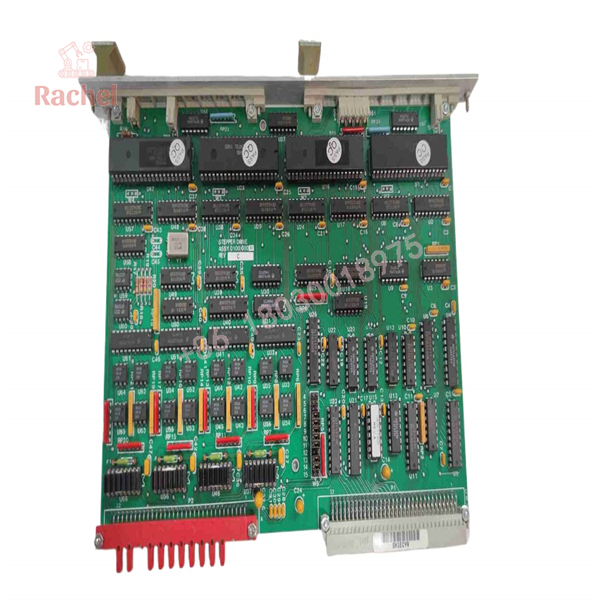
0100-00003
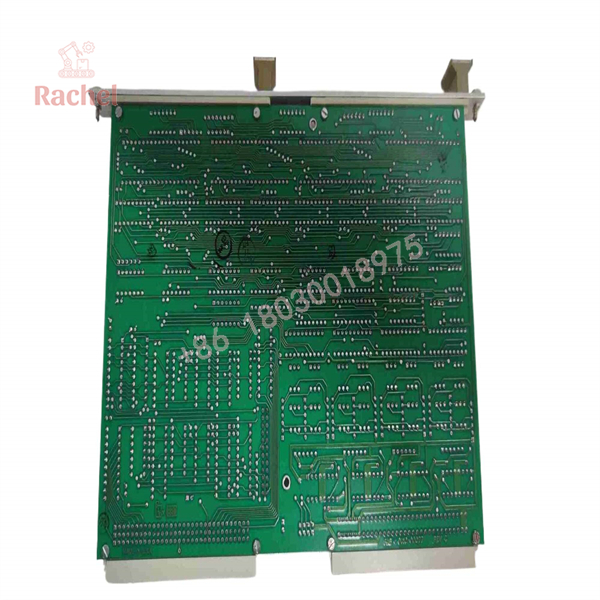
0100-00003
Transparency SOP: QA & Testing
For this board, a meaningful acceptance test should include more than a visual inspection.
1. Identity check
Confirm 0100-00003, board revision, serial number, and all secondary labels.
2. Physical inspection
Inspect the VME connector, PCB, motor-drive components, heat-affected areas, terminal/connectors, and mounting hardware.
3. Revision comparison
Compare the replacement against the failed board component-for-component where practical.
4. VME bench test
Install in an appropriate VME test chassis and verify board initialization and host communication.
5. Diagnostic verification
Check the on-board status LEDs and any available fault/status indications.
6. Drive test
Where suitable equipment exists, connect a compatible stepper-motor load and verify commanded movement, direction, acceleration/deceleration behavior, and fault response.
7. Tool-level test
The final acceptance should be performed on the target AMAT equipment or a properly configured test fixture. A successful VME power-up does not prove correct motor-control behavior.
One current supplier lists a New OEM 0100-00003 Rev. C unit in original packaging, while another specialist listing identifies a used/tested unit with a one-year warranty. This illustrates why condition must be specified explicitly on the purchase order.
The Veteran’s Tech Trap Guide
⚠️ Trap #1 — Ignoring Rev. B vs. Rev. C
AMAT inventory records show both revisions. Do not assume electrical interchangeability merely because the base part number is identical.
PRO TIP: Put the revision on the RFQ:
AMAT 0100-00003, Rev. C — exact or approved equivalent only
That prevents a surprising number of bad substitutions.
⚠️ Trap #2 — Treating a VME board as a generic VME board
The VME bus standard tells you how the card communicates with the backplane. It does not tell you how the AMAT application expects the stepper drive to behave.
The host software, motor wiring, rack position, board configuration, and motion parameters all matter.
⚠️ Trap #3 — Testing only for power
A board can illuminate its LEDs and still fail under actual motor load.
A real test includes the drive stage.
Verify the board’s response to motion commands and its behavior under representative load conditions before declaring it production-ready.
⚠️ Trap #4 — Assuming all seller descriptions are authoritative
One source calls it a “Stepper I” board; another identifies it as a VME stepper controller; another simply calls it a spare board.
Do not build a machine integration decision around a reseller’s marketing description. Use the physical board and applicable AMAT equipment documentation.
Dynamic FAQ
What is AMAT 0100-00003?
It is an Applied Materials stepper-drive board used in legacy semiconductor equipment. It is documented as a VME module and is associated with precision stepper-motor control.
Is 0100-00003 a VME board?
Yes. Specialist equipment documentation identifies it as a B-size VME module.
Which revision should I buy?
Match the revision installed in the machine whenever possible. Rev. B and Rev. C examples are present in the secondary market. If you need Rev. C, specify 0100-00003 Rev. C rather than ordering only by the base part number.
Is 0100-00003 used on AMAT P5000 equipment?
Yes. Current semiconductor-equipment inventory records specifically list 0100-00003 Rev. C as a P5000 stepper-controller board.
Is New Surplus or New OEM stock available?
Yes. At least one current specialist listing identifies 0100-00003 Rev. C as New OEM and originally packaged, while other suppliers list used/tested inventory.
How do I verify New Surplus authenticity?
Request photographs of the actual board, including the AMAT part number, revision, serial number, PCB markings, connectors, and original packaging. The supplier should explicitly state whether the unit is New OEM, New Surplus/NOS, Refurbished, or Used-Tested.
What warranty should I request?
For a production-critical stepper drive, require a written warranty covering the actual board supplied and specify the testing performed. Current secondary-market examples range from seller-backed one-year coverage to other shorter warranties, so the warranty should be part of the purchase specification rather than assumed.

 Start Chat


