





Description
Product Introduction
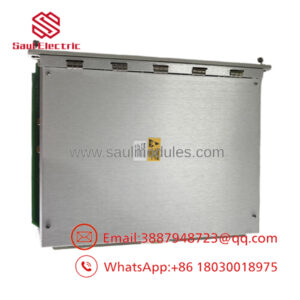
The Bently Nevada 3500/53 is a 2-channel Electronic Overspeed Protection Module designed specifically for emergency shutdown systems on high-speed rotating assets like steam turbines, gas turbines, and turbo-expanders. Mounted inside the 3500 rack, it continuously monitors shaft rotational speed using proximity probes or magnetic pulse transducers.
Unlike general-purpose tachometer modules (like the 3500/50), the 3500/53 functions strictly as a dedicated safety shutdown device. When combined in a 3-module configuration, three 3500/53 cards form a Triple Modular Redundant (TMR) Electronic Overspeed Detection System (EODS) that executes 2-out-of-3 (2OO3) voting. This setup delivers hardware-level trip response times under 20 milliseconds, meeting stringent API 670 and SIL 3 safety standards to protect large turbomachinery from overspeed destruction.
Key Technical Specifications
| Parameter | Specification Value |
| Full Model / Part Number | 3500/53 (Main Card: 133388-02 / 133388-01) |
| Channel Count | 2 independent, isolated channels per module |
| Transducer Inputs | Proximitor systems (3300 XL 8mm), Magnetic Pickups |
| Response Time | Less than 20 milliseconds to execute trip relay command |
| Frequency Range | 1.0 Hz to 60 kHz (Up to 99,999 RPM depending on gear tooth count) |
| Accuracy | Within ±1 RPM (or ±0.01% of actual speed) |
| Safety Compliance | API 670 5th Edition compliant, SIL 3 suitable in 2OO3 configuration |
| Transducer Supply | Dedicated -24 VDC short-circuit protected output per channel |
| Power Consumption | 7.0 Watts typical |
| Operating Temperature | -30°C to +65°C (-22°F to +149°F) |
Application Scenarios & The “Trench” Experience
If a generator breaker trips open while a steam turbine is operating at 100% steam flow, the sudden removal of mechanical load causes the shaft to accelerate at thousands of RPM per second. Mechanical fly-ball governors are far too slow to arrest this speed surge. If an electronic overspeed system fails to act within milliseconds, centrifugal forces will throw turbine blades through the casing—shattering the unit, destroying adjacent plant infrastructure, and posing extreme personnel safety hazards.
The 3500/53 is designed precisely for these worst-case scenarios, cutting off steam or fuel flow before mechanical yield limits are reached.
- Power Generation – Main Steam Turbine Tripping: Driving electro-hydraulic trip valves (EHV) directly via fast-acting hardware relays when shaft RPM exceeds setpoints.
- LNG Terminals – High-Speed Turbo-Expanders: Providing API 670 compliant 2OO3 voting logic to protect light-rotor expander wheels operating at 30,000+ RPM.
- Petrochemical Facilities – Syngas Compressor Turbines: Integrating independent speed sensors to prevent overspeed during sudden process surge unloads.
Field Case Scenario: During an annual safety proof test at a Gulf Coast chemical facility, the plant’s legacy mechanical trip bolt refused to fly out during a simulated overspeed ramp, failing to trip the valve. Luckily, a redundant 2OO3 array of Bently Nevada 3500/53 modules sensed the speed threshold at 3,850 RPM and fired the main trip solenoids in under 15 milliseconds—shutting down the main turbine drive safely without a single scratch on the machine train. The maintenance team scrapped the sticking mechanical bolt mechanism that weekend and converted the unit entirely to electronic overspeed protection using the 3500/53 system.
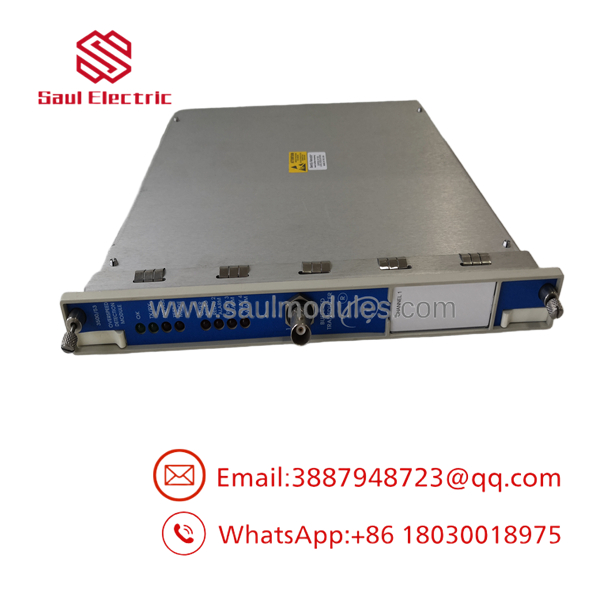
3500/53
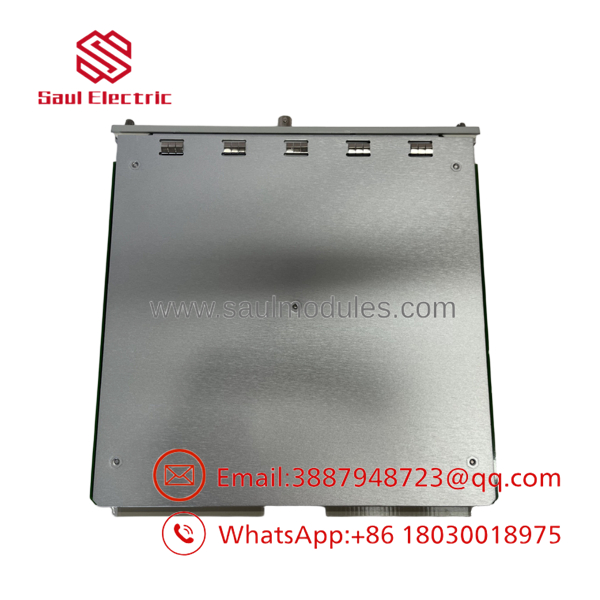
3500/53
Transparency SOP: Quality Assurance & Testing
We don’t just ship boxes; we test them on actual Bently Nevada 3500 racks.
- Inbound Visual & Component Check: We inspect circuit traces under high magnification, test for capacitor aging, inspect backplane gold edge connectors, and validate OEM serial numbers.
- Backplane Handshake & POST: The 133388-02 card is inserted into a live 3500 test chassis. We run Power-On Self-Tests (POST) to verify seamless communication with the 3500/22M System Interface card without rack error codes.
- High-Frequency Frequency Sweep Test: Using precision function generators, we feed high-frequency pulse trains (up to 50 kHz) into both channels to verify frequency timing, trip setpoint accuracy, and hysteresis limits.
- Sub-20ms Response Time Measurement: Using an oscilloscope connected to the module output, we simulate an instantaneous overspeed event to confirm that relay actuation response time remains under 20 milliseconds.
- Anti-Static Sealing: Verified modules are packaged directly into Faraday ESD shielding bags with custom protective foam blocks.
The Veteran’s Tech Trap Guide (Crucial Value-Add)
- ⚠️ Do Not Confuse 3500/53 with 3500/50 Tachometer Modules: The 3500/50 is a general-purpose tachometer meant for speed indication, acceleration tracking, and general monitoring. The 3500/53 is a dedicated, high-speed Electronic Overspeed Protection module with dedicated internal trip architecture. Do not attempt to use a standard 3500/50 card for API 670 emergency overspeed trip safety loops!
- ❗ Events Per Rev (EPR) Multiplier Mismatches: Verify the exact tooth count of your target gear wheel in the 3500 Rack Configuration software. If your shaft has a 60-tooth gear wheel but the software configuration is set for 1 pulse per rev (Keyphasor style), the 3500/53 will read 60 times higher than actual speed, immediately tripping your plant on a false overspeed trigger during startup.
- ⚠️ Passive Magnetic Pickup Voltage Levels at Low RPM: Passive magnetic pickups require high surface velocity to generate sufficient AC voltage. At low turning-gear speeds, a magnetic pickup plugged into a 3500/53 might read 0 RPM or throw a channel “Not OK” fault. Ensure active Proximitor proximity probes are used if low-speed trip or zero-speed interlocks are part of your logic scheme.
Frequently Asked Questions (FAQ for Conversion)
Q: How many 3500/53 cards are needed for a full API 670 overspeed protection system?
A: A standard API 670 compliant Electronic Overspeed Detection System (EODS) requires three 3500/53 modules installed in adjacent rack slots. This setup forms a 2-out-of-3 (2OO3) voting architecture to guarantee that a single sensor failure will not cause a false plant trip or fail to trip when an overspeed event occurs.
Q: Is the Bently Nevada 3500/53 module hot-swappable?
A: Yes, the module can be hot-swapped while the 3500 rack is powered up. However, to be honest, replacing an active safety trip module while the turbine is online requires extreme caution—always ensure the remaining two channels in your 2OO3 voting logic are healthy and clear of faults before pulling a module.
Q: What is the difference between board part numbers 133388-01 and 133388-02?
A: Part number 133388-02 is an updated revision of the 133388-01 main processing board. It features updated onboard surface-mount component architecture and enhanced electrical noise immunity, while maintaining 100% drop-in form, fit, and function compatibility.
Q: Does the 3500/53 module come with a warranty?
A: Yes. All our Bently Nevada 3500/53 modules—whether factory-sealed new surplus or fully rig-tested units—come backed by our full 12-month replacement warranty.
Q: Why source surplus 3500/53 modules instead of buying directly from the factory?
A: Factory lead times for legacy 3500 protection modules regularly exceed 16 to 24 weeks. We maintain pre-tested, verified inventory in global stock, allowing us to ship replacement modules directly to your facility within 24 to 48 hours.

 Start Chat


