





Description
Product Introduction & Engineering Value
Integrating high-fidelity machinery protection data directly into steam turbine control systems or distributed control systems (DCS) has historically required clunky serial protocols or slow Modbus polling cycles that introduce too much latency. The Bently Nevada 3500/91M (190782-01) solves this bandwidth issue by broadcasting real-time vibration, thrust, and temperatures via high-speed Ethernet Global Data (EGD).
Designed to sit directly in the 3500 monitoring chassis, this card communicates backplane status values straight to EGD-compatible controllers (such as GE Mark VIe platforms) with response times suitable for critical controller loop logic. This direct pipeline keeps plant operators instantly aware of dynamic mechanical stress without taxing the safety-critical monitor processing loops.
Technical Specifications
- Communication Protocol: Ethernet Global Data (EGD) Version 2.01, Ethernet UDP/IP frame.
- Physical Interface: Single RJ-45 port (on corresponding rear I/O module, supporting 10BASE-T and 100BASE-TX).
- Ethernet Standard: IEEE 802.3 and IEEE 802.3u CSMA/CD.
- Power Consumption: 7.4 Watts typical (maximum 7.7 Watts).
- Producer Exchanges (Data Out): Handles real-time float values for channel metrics, module statuses, bypass states, and alarm setpoints.
- Consumer Exchanges (Control In): Supports Group Reset, Group Trip Multiply, and Group Alarm Inhibit command packets.
- Module Form Factor: Standard full-height front slot (main processor card).
- Operating Temperature: -30°C to +65°C (-22°F to +150°F).
Field Application & The “Trench” Experience
The “Trench” Story
A combined-cycle power plant was executing a control system upgrade, replacing its aging turbine controllers with a modern GE Mark VIe system. Initially, the integration team attempted to route the 3500 rack’s critical trip-multiply and gap voltages using Modbus RTU serial links. However, the serial polling times lagged behind the controller’s rapid execution requirements, resulting in sluggish system response. We swapped the serial modules for the 3500/91M (190782-01) gateway and updated the configuration to EGD. Instantly, the update time dropped from two seconds down to milliseconds, allowing the Mark VIe to consume the vibration parameters synchronously in real time.
Specific Niche Applications
- Gas Turbine Over-Speed Protection Systems: Instantly feeding dynamic vibration amplitude and phase data directly to turbine governors.
- Utility Steam Turbine Rotor Position Tracking: Transmitting high-speed axial displacement values for safety-related interlock logic.
- Large Boiler Feed Pump Protection: Integrating pump health parameters with high-speed plant-level sequence of events (SOE) recorders.
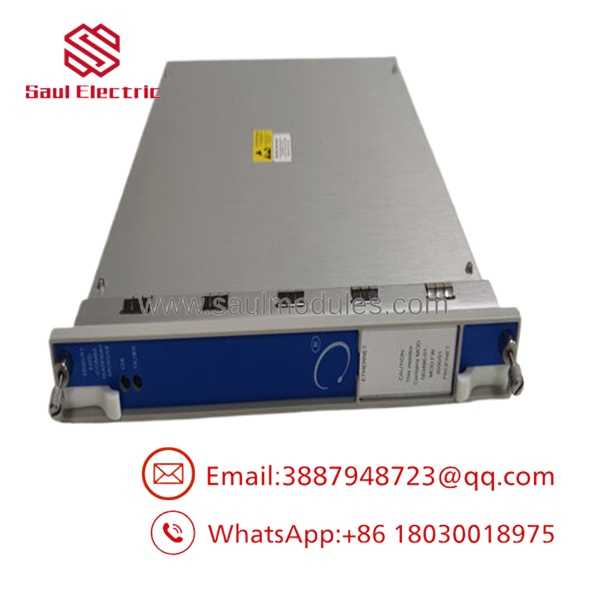
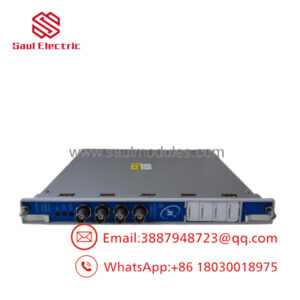
- 3500/91M 190782-01
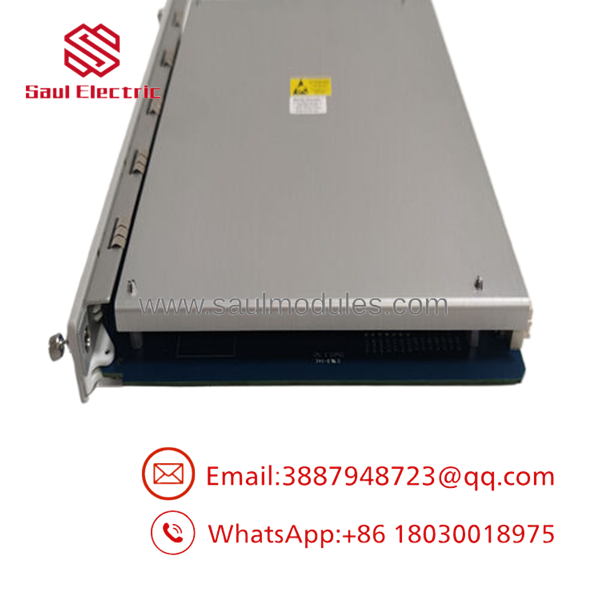
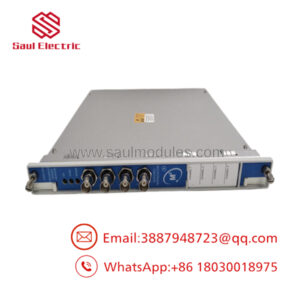
- 3500/91M 190782-01
Transparency SOP: QA & Testing
Rather than relying on visual confirmation alone, every 190782-01 module leaving our warehouse undergoes rigorous diagnostic benches:
- Step 1 (Physical Inspection): Pin-by-pin trace check under microscope to detect micro-cracking, cold solder joints, and localized heat stresses.
- Step 2 (Backplane Loop Testing): We slot the module into a live Bently 3500 testing rack and verify that the front-panel TX/RX LED illuminates, indicating perfect backplane communication via the rack’s TDI.
- Step 3 (EGD Broadcast Verification): We configure a simulated EGD “Producer Exchange” and route the data packets through a network packet analyzer to confirm the integrity of UDP/IP frames.
- Step 4 (Environmental Burn-In): Thermal load cycle testing to ensure the gateway doesn’t lose packets or hang during high-temperature ambient swings inside typical industrial enclosures.
The Veteran’s Tech Trap Guide
- ⚠️ The Single-Slot Restriction: Bently Nevada racks restrict communication resources. Only one EGD gateway module is allowed per rack. If you try to slot a second 3500/91M into the same chassis to achieve communication redundancy, the 3500 System TDI will throw a system configuration error and refuse to boot either module.
- PRO TIP: If you are migrating a rack to a new 190782-01 gateway, check your TDI firmware. This module absolutely requires a 3500/22M Transient Data Interface (TDI) with Firmware Version 1.20 or higher to bridge communication. Older, standard 3500/20 rack interface modules do not possess the processing capacity to pass data to this EGD gateway.
- ⚠️ The Configuration Version Lock: Do not attempt to commission this module with an old version of the 3500 Rack Configuration Software. It requires Version 3.70 or higher to define your Producer/Consumer registers. Attempting to download configurations with older software versions will permanently lock the module in a “configuration fault” state.
Dynamic FAQ
- Q: Is the 3500/91M compatible with standard Modbus protocols?
- A: No. The 3500/91M is dedicated solely to high-speed Ethernet Global Data (EGD) and standard UDP/IP communications. If your control system requires Modbus TCP/IP or Modbus serial, you need to use the 3500/92 Communication Gateway module instead.
- Q: Does this module package (190782-01) include the rear interface card?
- A: No, 190782-01 is the part number for the main processor card that slides into the front of the rack. You will need a corresponding Ethernet 10BASE-T/100BASE-TX I/O module (typically part number 190798-01) slotted directly behind it in the rear of the rack to connect your physical RJ-45 network cables.
- Q: How does this gateway interact with the emergency shutdown (ESD) relays?
- A: This module is purely for communication and system integration. It does not replace, interfere with, or handle safety-critical relay trips. Even if the network cable is cut and communication is lost, the rack’s localized monitor cards and mechanical trip relays will continue to operate normally.
- Q: Does the module support “Trip Multiply” commands sent from the DCS?
- A: Yes. Through its “Consumer Exchanges”, the 3500/91M can accept commands directly from your PLC or DCS to execute functions like Group Reset, Group Trip Multiply, or Alarm Inhibit across the rack.

 Start Chat


