





Description
Core Product Summary (Brand / Model / Key Attributes)
DKCXX.3-040-7 is the generic designation for the 40 A current class of the Bosch Rexroth Indramat ECODRIVE03 (EcoDrive 03) family of digital servo drive controllers. The “XX” placeholder in the documentation stands for the series digit that determines the command communications interface; all variants share the same power platform: hardware version 3, a 40 A type current, a 700 V DC bus (voltage category 7), and firmware supplied as a separate, exchangeable module (“-FW” units).
The ECODRIVE03 system is a modular, DC-bus-based servo drive platform for open- and closed-loop control tasks in handling systems, packaging machines, assembly systems, printing machines, and machine tools. The 40 A class controllers rectify a 380–480 V AC supply (50–60 Hz) onto the shared DC bus and convert it into regulated phase currents for Indramat MKD-series servo motors, offering position, velocity, and torque control in a cabinet-mounted IP20 unit.
Key Technical Specifications
| Parameter | Value |
|---|---|
| Product family | Bosch Rexroth Indramat ECODRIVE03 (EcoDrive 03) drive controllers |
| Designation pattern | DKC XX . 3 – 040 – 7 (-FW): series/interface; version 3; type current 40 A; voltage category 7 (700 V DC) |
| Type current (40 A class) | 40 A |
| DC bus nominal voltage | 700 V DC |
| Mains input | 380–480 V AC, 50–60 Hz |
| Control voltage | 24 V DC |
| Cooling | Passive (switched-cabinet cooling) — per ECODRIVE03 40 A class listings |
| Protection class | IP20 |
| Mounting | Vertical mounting in control cabinet |
| Control modes | Position, velocity, and torque control |
| Firmware | Application-specific firmware ordered separately / supplied as exchangeable -FW module |
| Standard interfaces on all variants | RS-232/RS-485 serial, analog interface, analog/digital I/O, encoder emulation |
| Available series variants (interface) | DKC01.3 Parallel · DKC11.3 Analog · DKC21.3 Parallel 2 · DKC02.3 SERCOS · DKC22.3 SERCOS 2 · DKC03.3 PROFIBUS-DP · DKC04.3 InterBus · DKC05.3 CANopen · DKC06.3 DeviceNet |
| Other current classes in family | 16 A (016), 40 A (040), 100 A (100), 200 A (200) |
Detailed Product Overview
The ECODRIVE03 DKCXX.3 family is Bosch Rexroth Indramat’s cost-effective universal automation drive system, built around a shared power platform differentiated only by its command communications interface. The type code defines every unit: DKC identifies the drive controller, the series digits (01 through 22) select the interface, “.3” is the hardware version, the middle field selects the type current (016/040/100/200 A), “7” fixes the DC bus voltage at 700 V nominal, and “-FW” denotes that the firmware — which specifies the drive’s functional behavior — is supplied as a separate module.
Because the “XX” does not pin down the interface, the designation DKCXX.3-040-7 in manuals and catalogs is used deliberately: the project planning and instruction documentation (covering the -040, -100, and -200 classes) states specifications that apply equally to every 40 A unit of the series, whichever interface version is installed. In practice, an ordering or replacement specification must resolve the XX: a DKC01.3-040-7-FW is the parallel-interface unit, a DKC02.3 the SERCOS unit, a DKC03.3 the PROFIBUS-DP unit, and so on.
The 40 A class occupies the middle of the family’s power range. All variants mount vertically in the control cabinet on the ECODRIVE03’s shared DC bus, so multiple axes hang off a single mains feed module and can exchange braking energy. Each unit provides the standard ECODRIVE03 service interfaces — RS-232/RS-485 for commissioning and diagnostics, an analog interface, digital/analog I/O, and encoder emulation — plus its series-specific command interface. The drive performs position, velocity, and torque control of Indramat MKD-series and compatible servo motors, with the application’s exact behavior defined by the installed firmware (e.g., standard motion, flying-saw, or machine-tool firmware versions).
Typical deployments are material handling and conveyor systems, packaging machines, assembly and handling systems, printing presses, and machine tools — machinery built through the 2000s and now maintained through spares, repairs, and firmware-module exchange.
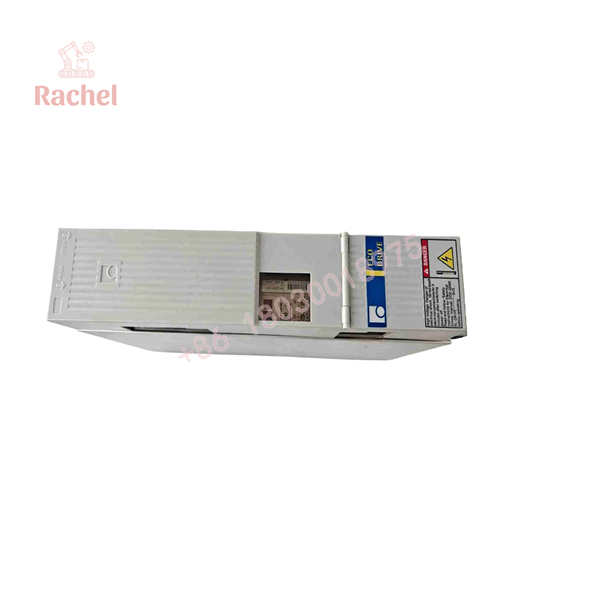
DKCXX.3-040-7
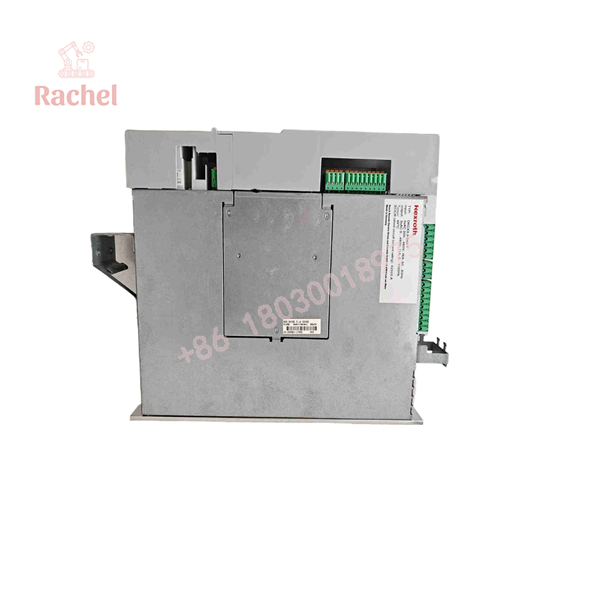
DKCXX.3-040-7
System Compatibility & Integration Requirements
| Item / Dependency | Verified Compatibility or Requirement | Practical Note |
|---|---|---|
| Platform | ECODRIVE03 modular drive system with shared DC bus | Controller connects to DC bus supplied by a mains feed module |
| DC bus | 700 V DC nominal, voltage category 7 | Common to all 040-class variants; must match feed and other axes |
| Mains supply | 380–480 V AC, 50–60 Hz | Via the system feed module, not directly to the DKC |
| Control voltage | 24 V DC | Required for control and diagnostics; independent of mains |
| Motors | Indramat MKD-series and compatible servo motors | Match motor current class and feedback type |
| Command interface (per series) | DKC01.3 Parallel; DKC11.3 Analog; DKC21.3 Parallel 2; DKC02.3 SERCOS; DKC22.3 SERCOS 2; DKC03.3 PROFIBUS-DP; DKC04.3 InterBus; DKC05.3 CANopen; DKC06.3 DeviceNet | The XX digit must match the machine’s control system |
| Standard interfaces (all variants) | RS-232/RS-485, analog interface, analog/digital I/O, encoder emulation | Used for commissioning, diagnostics, and standalone operation |
| Firmware | Application-specific, ordered separately / -FW exchangeable module | Must match the machine’s application (e.g., motion, machine tool, special functions) |
| Cabinet installation | Vertical mounting, IP20, cabinet cooling | Follow ECODRIVE03 cabinet arrangement and clearance guidance |
Dimensions, Mounting & Connection Notes
- Mounting: vertical mounting in the control cabinet as part of the ECODRIVE03 lineup
- Protection class: IP20
- Cooling: cabinet cooling (passive cooling via the switched cabinet for the 40 A class)
- Power connections: DC bus link, motor output, and 24 V DC control voltage per the ECODRIVE03 wiring documentation
- Interfaces: series-specific command interface (parallel/SERCOS/PROFIBUS-DP/InterBus/CANopen/DeviceNet/analog) plus RS-232/RS-485 service interface on all variants
- Firmware module: externally accessible on -FW units for inspection and exchange
Engineering Selection Highlights
- Resolve the XX before ordering — the interface digit is the only functional difference between series variants; identify the installed unit (nameplate, material number, and firmware version) before sourcing a replacement, since a DKC01.3 cannot replace a DKC03.3 without changing the machine’s control architecture.
- Firmware is a separate line item — ECODRIVE03 firmware must be ordered separately and specifies the drive’s functions; on -FW units the firmware module can be transplanted from a failed drive to its replacement, preserving the application program.
- Continuous vs. type current — the 040 code is the type/peak current class; the continuous current depends on the pulse frequency (in the 40 A class, 16 A at 4 kHz and 12.5 A at 8 kHz), so verify the motor’s continuous demand against the drive’s rating at the selected frequency.
- DC bus architecture — all variants operate on the 700 V DC bus fed by the system’s mains feed module; when adding axes, check the feed module’s capacity and the number of ECODRIVE03 units permitted on one DC bus.
- Interface-to-controller match — choose the series variant to match the higher-level control: SERCOS for ring-based motion networks, PROFIBUS-DP for PLC-based decentralized control, InterBus/CANopen/DeviceNet for the corresponding fieldbus systems, and parallel/analog interfaces for standalone or hard-wired control.
- Control voltage independence — the 24 V DC control supply keeps diagnostics and status available with mains removed; retain it in the cabinet design for safe fault-finding.
- Documentation applies across the class — the common project planning manual (DOK-ECODR3-DKC**.3) covers all interface variants of the 040/100/200 classes, so installation, wiring, and clearance data need not be re-sourced per variant.
FAQ
What does DKCXX.3-040-7 mean?
It is the generic designation for any 40 A, 700 V DC bus ECODRIVE03 servo drive controller from Bosch Rexroth Indramat. The “XX” is a placeholder for the series digit that determines the command interface; “.3” is the hardware version, “040” the 40 A type current, and “7” the voltage category.
Why is “XX” used instead of a specific number?
Indramat documentation uses DKCXX.3 (or DKC**.3) to state specifications that apply to all interface variants of the same power class. When ordering or replacing a unit, the actual series digit on the nameplate must be used.
Which interface variants exist in the 40 A class?
DKC01.3 (parallel), DKC11.3 (analog), DKC21.3 (parallel 2), DKC02.3 (SERCOS), DKC22.3 (SERCOS 2), DKC03.3 (PROFIBUS-DP), DKC04.3 (InterBus), DKC05.3 (CANopen), and DKC06.3 (DeviceNet).
What do all variants have in common?
The power platform: 40 A type current, 700 V DC bus, 380–480 V AC supply via the feed module, 24 V DC control voltage, IP20 cabinet mounting, and position/velocity/torque control of Indramat MKD-series motors. RS-232/RS-485, an analog interface, and encoder emulation are available on every variant.
What does the “-FW” suffix mean?
The firmware is supplied as a separate, exchangeable module rather than being fixed in the controller. The firmware specifies the drive’s functions and must be ordered separately or transferred from the replaced unit.
Which current classes does the ECODRIVE03 DKC family offer?
16 A (016), 40 A (040), 100 A (100), and 200 A (200), each available with the various interface options.
Where are these drives typically used?
Handling and conveyor systems, packaging machines, assembly systems, printing machines, and machine tools.
Verification & Troubleshooting Notes
- Identify the exact unit before replacement: read the full type code from the nameplate — series digit, version, current class, voltage category, and firmware designation — plus the material number; the XX placeholder is not an orderable part number.
- Firmware compatibility: after any drive exchange, verify the firmware module matches the machine’s application; the documentation’s troubleshooting guides are organized by interface type and firmware version, so a mismatch leads to misleading diagnostic paths.
- Interface-specific checks: PROFIBUS units need bus termination and station address verification; SERCOS units need ring continuity, transmitter power, and data-rate settings (switch S20); parallel/analog units need the command wiring verified against the I/O assignment.
- Drive halt/enable behavior: the drive halt (AH) and drive enable (RF) inputs operate only with inactive bus communication on fieldbus variants — a unit that ignores its enable input may simply be under active bus control rather than faulty.
- DC bus checks: verify bus voltage is within specification and that the feed module is healthy before condemning a DKC unit; multi-axis systems share the bus, so one axis’s fault can have its origin in the feed or a neighboring unit.
- Diagnostics: use the RS-232/RS-485 service interface with the ECODRIVE03 diagnostic tooling to read error codes and status before hardware replacement; earlier DKC generations display codes on the H1 diagnostic display.
- The DC bus holds lethal voltages after mains removal — observe the specified discharge time and lockout procedures before any wiring, module, or firmware exchange work.

 Start Chat


