





Description
Product Introduction
The Eaton CE15KN3 belongs to the Cutler-Hammer Freedom Series IEC contactor family. It is used in industrial motor-control panels to switch three-phase motors and other compatible electrical loads. The contactor uses an electromagnetic coil to operate three main power contacts.
The documented family rating is 73 A continuous current, with a K-frame design and non-reversing operation. Coil voltage, auxiliary contacts, and mounting details must be checked against the full catalog number before selecting a replacement.
Key Technical Specifications
The following specifications are documented for the Eaton CE15KN3 contactor family. Coil voltage and some installation details vary by suffix, so verify the complete part number against the nameplate and OEM documentation.
| Parameter | Specification |
|---|---|
| Manufacturer | Eaton / Cutler-Hammer |
| Base catalog number | CE15KN3 |
| Product series | Freedom |
| Product type | IEC magnetic contactor |
| Frame size | K |
| Continuous current rating | 73 A |
| Main power poles | 3 |
| Operating configuration | Non-reversing |
| Coil voltage | Variant-dependent; examples include 110–120 VAC and 220–240 VAC |
| Coil frequency | 50/60 Hz, depending on coil variant |
| Maximum motor rating | Depends on voltage, phase, and applicable rating standard |
| Overload relay | Not included in the documented CE15KN3BB configuration |
| Mounting | Steel mounting plate on the documented CE15KN3BB variant |
| Enclosure | Open type; enclosure not included |
| Certifications | UL Listed, CSA Certified, and IEC Rated for documented variants |
Sources: Eaton’s product documentation and published specification sheets.
Engineering note: A 73 A contactor rating does not mean the device can handle every 73 A load under every operating condition. Motor horsepower, utilization category, switching frequency, ambient temperature, and short-circuit protection all affect selection. Verify the applicable rating table before commissioning.
Application Scenarios & the “Trench” Experience
A motor starter fails during a production run. The contactor coil may still energize, but the main contacts no longer close consistently. Alternatively, worn contacts may overheat under load. The motor stops, the upstream PLC reports a fault, and the maintenance team has to determine whether the problem is in the control circuit, overload relay, wiring, or contactor itself.
This is where identifying the exact CE15KN3 configuration matters. A physically similar contactor with the wrong coil voltage can create another fault instead of resolving the original one.
Typical industrial applications
- Manufacturing — Three-phase motor starters — The three-pole contactor switches motor power in compatible non-reversing starter circuits. The coil must match the control voltage.
- Pumping systems — Industrial pump motors — Supports motor start/stop control in water treatment, process utilities, and circulation systems when correctly rated for the motor and duty cycle.
- HVAC and ventilation — Fan and blower control — Can serve as the power-switching component in compatible motor-control panels, subject to motor-load ratings and switching requirements.
- Material handling — Conveyor drives — Provides electromagnetic switching for compatible conveyor motors. Reversing applications require an appropriate reversing arrangement rather than a single non-reversing contactor.
- Process equipment — Auxiliary machinery — May be used for compatible three-phase loads in packaging, converting, and production equipment, subject to the load’s electrical characteristics.
These are representative applications of the contactor type, not a claim that every application is approved for every CE15KN3 suffix.
Field replacement scenario
Consider a packaging plant where a conveyor motor repeatedly fails to start. The PLC output is present, and the control relay operates, but the contactor does not pull in reliably. Inspection reveals a damaged coil.
The maintenance technician finds an available CE15KN3 replacement. Before installation, the technician checks the complete catalog number, coil voltage, main terminal arrangement, auxiliary contacts, and mounting dimensions. The replacement is installed after the circuit is isolated and verified safe.
Once the circuit is re-energized, the team tests the start/stop sequence, checks for abnormal heating or noise, and verifies motor current under operating conditions.
The critical point is straightforward: a replacement should match the electrical design, not merely the physical footprint. Incorrect coil voltage, undersized protection, or poor terminal connections can cause repeat failures and extend downtime.
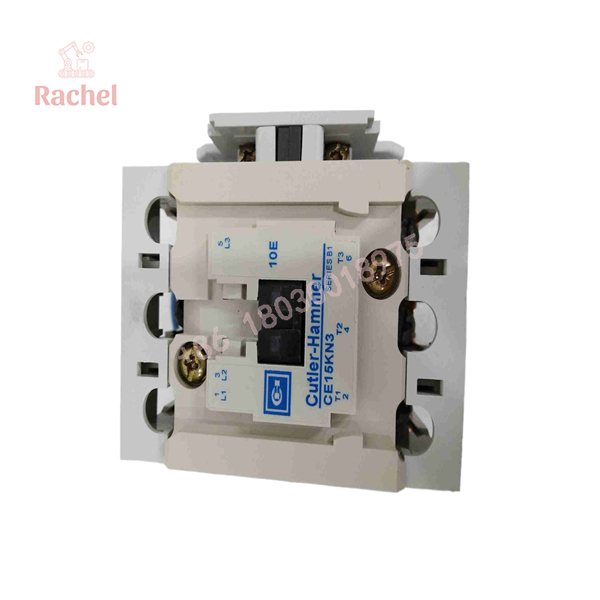
CE15KN3
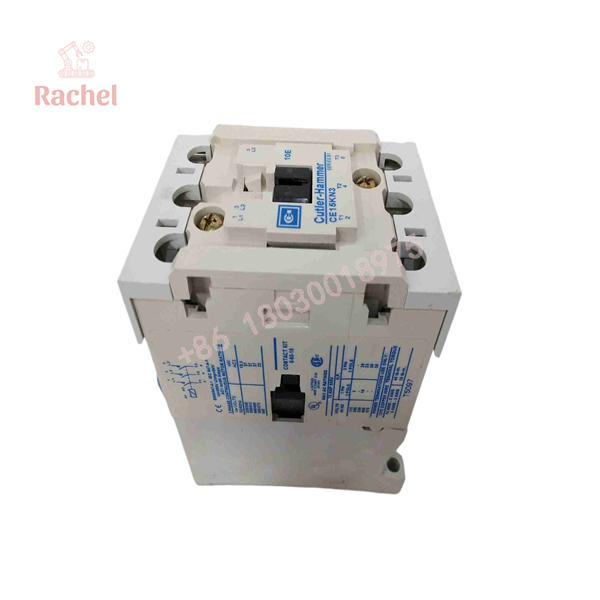
CE15KN3
Transparency SOP: Quality Assurance & Testing
For new surplus, refurbished, or used Eaton contactors, inspection should establish the unit’s identity, physical condition, and electrical function. The procedures below describe a recommended acceptance standard; they do not certify that any specific seller has completed these tests.
1. Inbound Inspection
- Record the complete catalog number, serial or date codes where available, and nameplate ratings.
- Inspect the housing, coil terminals, power contacts, mounting hardware, and auxiliary contact blocks.
- Look for heat damage, cracks, corrosion, contamination, and signs of unauthorized repair.
- Check packaging and seals where present; seals alone do not prove authenticity.
2. Functional Testing
- Energize the coil using the correct rated voltage and frequency.
- Check pickup and dropout behavior, mechanical movement, and contact operation.
- Confirm auxiliary contact operation where fitted.
- Record any sticking, chatter, abnormal noise, or inconsistent switching.
3. Electrical Checks
- Measure coil resistance and compare it with applicable service data when available.
- Check main-contact continuity and contact resistance using suitable test equipment.
- Inspect terminal integrity and verify that contact condition meets the applicable acceptance criteria.
- Perform insulation tests only using an appropriate procedure and with sensitive accessories disconnected as required.
4. Rating and Configuration Verification
- Match the coil code to the control-circuit voltage.
- Confirm the number of main poles and any auxiliary contacts.
- Verify the intended motor duty, current rating, and applicable horsepower rating.
- Check that the contactor is compatible with the installed overload protection and short-circuit protective device.
5. Final QC and Packaging
- Record the test date, results, unit condition, and any limitations.
- Protect the terminals and moving mechanism against shipping damage and contamination.
- Package according to the supplier’s handling requirements.
- Include the written warranty and return terms with the shipment documentation.
Procurement recommendation: Request test results tied to the exact unit being shipped. For refurbished stock, ask whether the contacts and coil were tested and whether any components were replaced.
The Veteran’s Tech Trap Guide
⚠️ Trap 1: Ordering the Base Model Without the Coil Suffix
CE15KN3AB and CE15KN3BB are not interchangeable when the control-circuit voltage differs. The documented AB variant uses a 110–120 VAC coil, while the BB variant uses a 220–240 VAC coil. Read the complete catalog number before ordering.
❗ Trap 2: Confusing Contactor Ratings With Overload Protection
The documented CE15KN3BB configuration does not include an overload relay. A contactor switches the load; it does not independently provide complete motor overload or short-circuit protection. Verify the installed protection scheme before returning the motor to service.
⚠️ Trap 3: Ignoring Auxiliary Contact Configuration
Some installations use auxiliary contacts for PLC feedback, electrical interlocking, or starter status. Photograph the original wiring and document each terminal before removal. A replacement with a different auxiliary-contact arrangement can leave the control sequence incomplete even when the motor starts.
❗ Trap 4: Replacing a Worn Contactor Without Finding the Cause
Pitted contacts may be the symptom, not the root cause. Check switching frequency, load current, loose terminals, coil voltage during pickup, and short-circuit protection. If the original contactor failed because of excessive electrical duty, installing an identical unit without correcting the problem may only delay the next failure.
Frequently Asked Questions
Q1. Is the Eaton CE15KN3 still available?
Availability depends on the exact catalog suffix and distributor inventory. The base designation alone is not sufficient to establish whether a particular version is current, discontinued, or available as surplus. Confirm the complete part number with Eaton or an authorized distributor before placing an order.
Q2. Can I replace the CE15KN3 with another 73 A contactor?
Not automatically. The replacement must match the required electrical ratings, coil voltage, number of poles, motor-duty requirements, terminal arrangement, auxiliary contacts, and available mounting space. A similar current rating does not establish direct interchangeability.
Q3. Is the CE15KN3 hot-swappable?
No—not as a routine maintenance procedure. This is a power-switching device, not a plug-in PLC I/O module. Isolate and lock out the relevant power sources, verify the absence of hazardous voltage, and follow the equipment manufacturer’s replacement procedure before removing or installing it.
Q4. Can I change the coil voltage without replacing the entire contactor?
Do not assume so. The complete catalog number identifies the supplied coil configuration. Confirm the manufacturer’s approved coil replacement options for the exact contactor. If no approved replacement coil is available, selecting the correct complete assembly is generally the safer approach.
Q5. Does the CE15KN3 include a motor overload relay?
The documented CE15KN3BB variant does not include an overload relay. Verify the exact configuration and determine whether the existing starter panel provides compatible overload protection separately.
Q6. Does the contactor come with a 12-month warranty?
Warranty coverage depends on the seller and product condition. Eaton’s published warranty for the documented CE15KN3BB product states one year from installation or 18 months from shipment, whichever occurs first, subject to the applicable terms. Independent surplus and refurbished units may have different coverage. Obtain the warranty in writing.
Q7. Why might a surplus CE15KN3 cost less than a new unit?
Surplus pricing can reflect inventory age, condition, remaining stock, testing, packaging, and warranty coverage. A lower price alone does not prove that a unit is counterfeit, just as a high price does not prove authenticity. Request clear condition documentation, photographs of the actual unit, and a written return policy.

 Start Chat


