





Description
Product Introduction & Engineering Value
Hook option B (Pain-Point First): Legacy PacDrive machines have a special pain attached — when the C200 dies, the machine builder has often moved on, Schneider’s migration path points at Lexium, and nobody wants to re-engineer a running packaging line mid-contract. The part you need is the part you had.
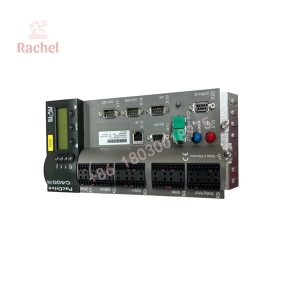
The C200/A2 is the entry-level PacDrive controller that thousands of packaging and converting OEMs standardized on: one box handling logic, motion, and I/O for up to eight servo axes, with the A2 power segment supplying 20 A to the drives. It talks to MC-4 servo drives over the system bus, runs as a Profibus DP-V0 slave to whatever PLC world sits above it, and programs in EPAS-4. For keeping a proven machine alive, nothing modern beats a drop-in C200 — if you can find a good one.
Technical Specifications
| Parameter | Value |
|---|---|
| Product type | PacDrive motion controller (logic + motion + I/O integrated) |
| Axis capacity | Up to 8 servo axes |
| Power segment | A2 variant — 20 A drive power supply class (A1 = 10 A, A4 = 40 A) |
| Drive connectivity | ELAU MC-4 servo drives via PacDrive system bus; Profibus address set by rotary switches (range 1–125) |
| Fieldbus | Profibus DP-V0 slave |
| Programming | EPAS-4 (project creation, download, online edit); legacy P3 environment support |
| Diagnostics | PacDrive Diagnostics tool — drive status, parameter readout, firmware updates; PacDrive Backup for program recovery |
| Predecessor/successor context | MAX-4 controller obsolete, replaced by C-series; C400 is the larger successor (16 axes, Ethernet/CANopen) |
| Current platform | Line integrated into Schneider Electric Lexium portfolio; existing installations supported by Schneider care centers |
| Memory | Program and parameter storage on internal memory card (verify project backup) |
| Mounting | Cabinet-installed controller module within PacDrive architecture |
Field Application & The “Trench” Experience
The Trench Story: A contract packager in the Northeast ran a decade-old horizontal wrapper whose C200 started dropping the Profibus connection intermittently — the ERR LED would blink, the line would stutter, and after three weeks of “it’s fine today” behavior, the controller died for good during a Tuesday night shift. The painful part wasn’t the hardware swap; it was the software. Their EPAS-4 project source had gone missing in an integrator’s bankruptcy years earlier, and the machine’s program lived only in the dead controller’s memory card. Fortunately, they’d bought the machine used with the controller intact, and we shipped them a tested C200/A2 the same week. Their maintenance lead used PacDrive Backup to pull the compiled program from… nothing — the card hadn’t survived the failure. The rescue came from an unlikely source: the machine’s OEM still held an archived EPAS-4 project from the original build, machine-serial-matched. Program restored, axes re-referenced, wrapper back in service by Friday. Two lessons their engineer wrote down: back up the EPAS-4 source, and back up the compiled program from the controller separately. Either one alone isn’t enough.
Niche application scenarios:
- Horizontal flow-wrapper synchronized axis control — infeed, film feed, cross-seal, and discharge axes coordinated in one PacDrive program.
- Cartoning machine servo logic-plus-motion control — eight-axis ceiling exactly matched to folder, flap tucker, and product-timing axes.
- Converting-line die-station phase matching — electronic camming between unwind, print, and die stations with Profibus supervisory handoff.
- Robot-palletizer cell coordination — legacy PacDrive cells where the C200 sequences the cell while a robot controller handles the arm.
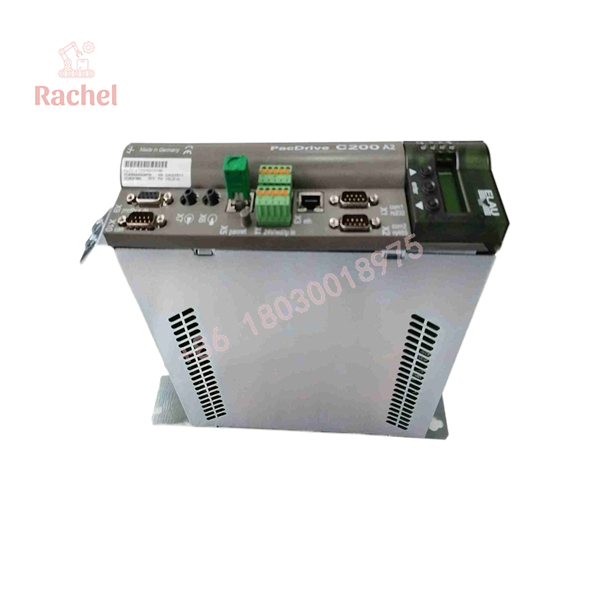
C200/A2/1/1/1/00
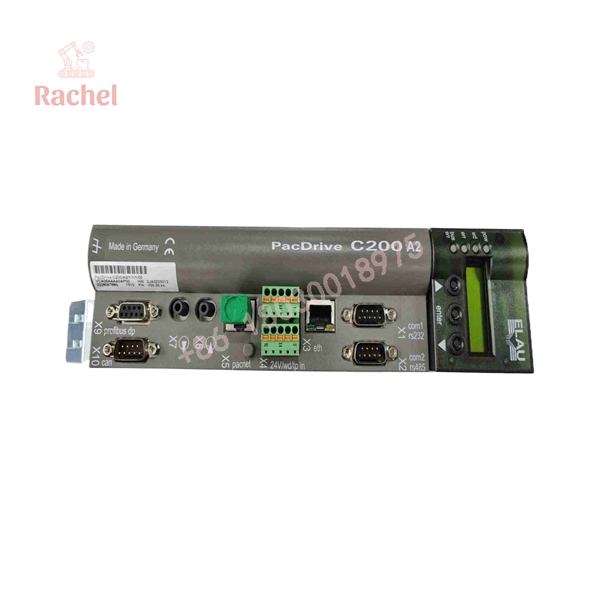
C200/A2/1/1/1/00
Transparency SOP: QA & Testing
Checklist style this time:
- Intake inspection — housing, connectors, rotary address switches, memory card slot condition
- Serial verification against ELAU/Schneider build records
- Power-up on current-limited supply — 24 V DC logic rail and A2 power segment behavior verified
- Boot check — controller reaches ready state, firmware version documented and matched to your MC-4 drives
- Profibus interface exercised — slave communication verified against a reference master
- Axis-bus test — communication established with bench MC-4 drives
- Program load test — reference EPAS-4 project downloaded and run
- Final QC sign-off — serialized test record packed with the unit
The Veteran’s Tech Trap Guide
⚠️ The memory card is the crown jewels. Program and parameters live on the controller’s internal memory. If your C200 is acting flaky, pull a PacDrive Backup of the compiled program today, and separately archive the EPAS-4 project source. A dead card plus a lost source file equals a re-engineering project, not a repair.
PRO TIP: Match firmware across the system before you swap. A replacement C200 with a different firmware generation than your MC-4 drives can refuse bus communication or throw axis faults that look like drive failures. Tell us your drive firmware versions at order — we’ll verify pairing before shipment.
⚠️ Profibus address conflicts bite on replacement. The rotary switches set the DP address (1–125). A replacement controller arriving on default settings that duplicate another node will bring the bus down in a way that looks like a defective unit. Verify the address before powering the segment.
PRO TIP: Schneider still supports the legacy line through their Elau care centers — but response times run on their schedule, not your production schedule. If your PacDrive machine is revenue-critical, carrying a tested spare C200 on the shelf is cheaper than one week of a down wrapper. Most of our C200 buyers learned that the hard way.
Dynamic FAQ
Q1: My C200A211100 died. Is this a direct drop-in replacement?
Yes — C200/A2/1/1/1/00 is the exact part reference, and the A2 power segment (20 A) must match your original. Send us your machine’s controller nameplate and MC-4 drive list; we confirm variant and firmware pairing before shipping.
Q2: Can you load my machine’s program before shipment?
Yes. Send us your EPAS-4 project or a PacDrive Backup file, and we’ll load and run it on the bench against reference drives. The controller arrives ready to drop in and reference.
Q3: What’s my migration path — should I replace the whole system with modern Schneider drives?
For a healthy machine with a failed controller, a drop-in C200 keeps a proven asset running at a fraction of re-engineering cost. Migration to Lexium/PacDrive XC makes sense when you’re facing a controls overhaul anyway, not as an emergency fix. Schneider’s care centers remain the official support channel for the legacy line.
Q4: What does “New Surplus” mean for a legacy controller like this?
Genuine ELAU/Schneider manufacture that never entered service — excess OEM or integrator stock. Given the line’s age, truly new units are increasingly scarce; every unit we list, New Surplus or Refurbished, passes the full bench sequence in Section 6 with the QA record shipped in the box.
Q5: What warranty do you offer on the C200/A2?
Both categories carry our full functional warranty covering the processor, power segment, Profibus interface, and axis bus, including DOA replacement. Current term for this SKU is quoted at order time.
Q6: Do you stock MC-4 drives and other PacDrive components?
We regularly stock MC-4 servo drives, cable sets, and other C-series components. Buying the controller and drives from one source lets us bench-verify the bus conversation between them before anything ships.

 Start Chat


