





Description
Product Introduction & Engineering Value
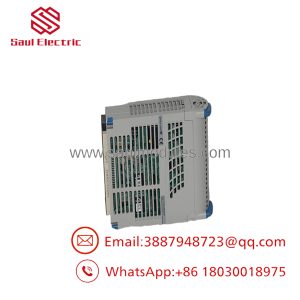
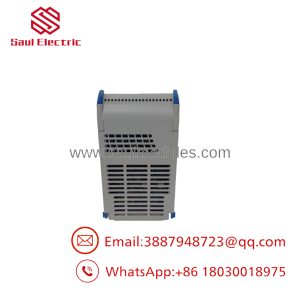
The 1C31192G01 is an Ovation Speed Detector Personality Module (PMOD) used for rotating-equipment speed measurement. It belongs to the specialized I/O hardware used where shaft-speed or pulse-frequency information must be brought into an Ovation DCS. A Puerto Rico utility procurement document also identifies 1C31192G01 as a PMOD, Speed Detector for Emerson Process Ovation DCS Units 5 and 6.
This distinction is important when ordering a replacement. Some reseller pages call it a “Speed Detector Module” or “High-Speed Input Module,” but the more specific identification is Speed Detector Personality Module. Treat it as a PMOD component and verify the associated EMOD assembly before installation.
Technical Specifications
| Parameter | Specification |
|---|---|
| Part Number | 1C31192G01 |
| Manufacturer | Emerson / Westinghouse Process Control |
| Control Platform | Ovation DCS |
| Module Type | Speed Detector Personality Module |
| Module Classification | PMOD |
| Primary Function | Rotating-speed detection/interface |
| Typical Input Sources | Speed/pulse sensors |
| Application | Turbine, motor, pump, compressor, and other rotating machinery |
| Reported Power Supply | 24 VDC* |
| Reported Frequency Capability | Up to 50 kHz* |
| Reported Accuracy | ±0.1%* |
| Approx. Net Weight | 0.25 lb |
- Technical caution: The 24 VDC, frequency, and accuracy figures appear in third-party listings and are not established here as Emerson-controlled specifications for the PMOD alone. One supplier reports 0.1 Hz–50 kHz and ±0.1%, while another reports a wider frequency range. These values should therefore be verified against the installed EMOD/PMOD assembly documentation before being used for engineering acceptance.
The strongest part-identification evidence available describes 1C31192G01 as the Speed Detector PMOD.
What the module does
A speed-detector channel typically converts the pulse information from a rotating-machine sensor into information that the control system can use for speed monitoring, protection, control, or sequencing.
That makes this component different from an ordinary discrete-input module.
A pulse is not simply an ON/OFF status.
Frequency matters.
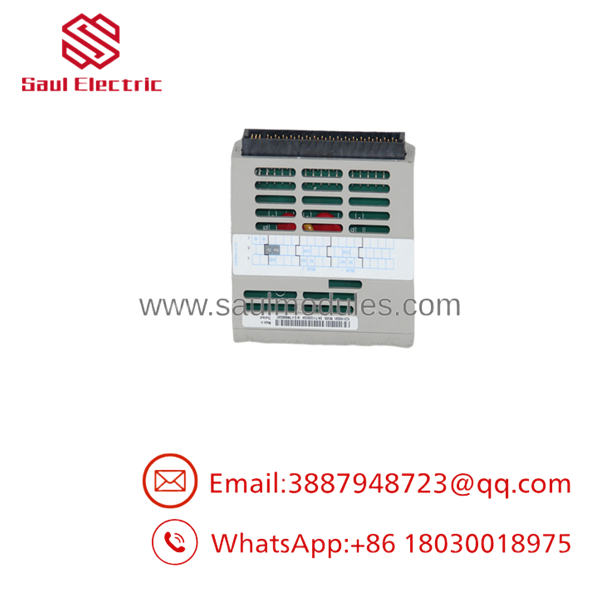
1C31192G01
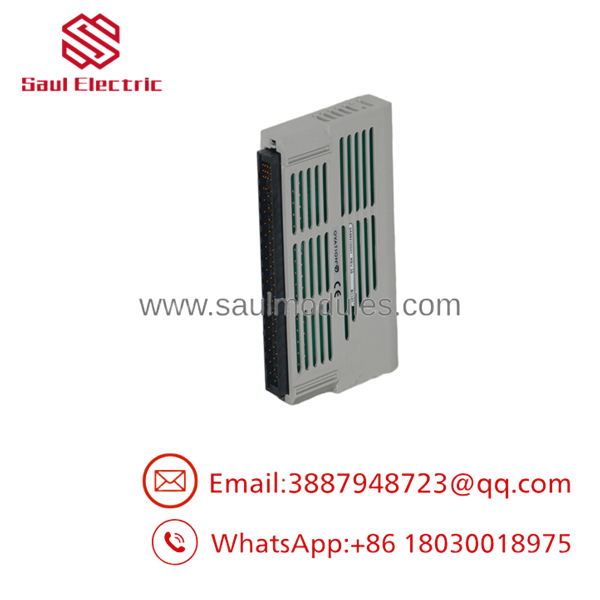
1C31192G01
Field Application & the “Trench” Experience
Consider a turbine auxiliary system where the DCS suddenly reports an abnormal or missing speed signal. The shaft itself is turning normally. The magnetic pickup has already been checked. Field wiring measures correctly.
A technician might replace the sensor immediately.
That is not always the right move.
With an Ovation installation using the 1C31192G01, the speed-detector interface should be evaluated as part of the complete PMOD/EMOD signal chain. If the field sensor and wiring are healthy, the next step is to verify the detector electronics and its associated module before disturbing a calibrated mechanical speed pickup.
Specific application scenarios
- Steam-turbine speed monitoring: pulse-frequency measurement from a magnetic pickup on a turbine shaft.
- Boiler feed-pump overspeed monitoring: monitoring pump rotational speed and identifying abnormal operating conditions.
- Large motor or compressor trains: bringing tachometer or pulse-sensor information into an Ovation control system for operating-state supervision.
One real procurement record lists the part under Instrument Air/Service Air equipment while specifying its use in Emerson Process Ovation DCS Units 5 and 6. That illustrates why the surrounding equipment tag should always be checked rather than assuming the part’s application from the catalog name alone.
Transparency SOP: QA & Testing
For New Surplus or refurbished 1C31192G01 inventory, use a controlled inspection process.
1. Part-number verification
Confirm the marking is exactly:
1C31192G01
Watch for the common transcription error 1C31192GO1, where the final character is incorrectly entered as the letter “O.” This typo is specifically noted by a supplier listing.
2. PMOD identification
Confirm that the item supplied is the Speed Detector Personality Module, not a similarly numbered Ovation I/O assembly.
3. Physical inspection
Check:
- PCB and component condition
- Connector pins
- Mounting interface
- Identification labels
- Evidence of oxidation or contamination
- Signs of thermal stress or previous repair
4. Functional verification
Where appropriate test equipment is available, verify the complete speed-detector assembly using the applicable EMOD and representative pulse/speed input. A visual inspection alone cannot prove correct frequency detection.
5. Commercial QA record
For surplus inventory, document:
Part number → condition → packaging → test status → warranty → photographs
That chain of evidence is much more useful to a maintenance department than a generic “tested OK” statement.
The Veteran’s Tech Trap Guide
⚠️ PRO TIP — Do not buy it as a generic high-speed input card.
The exact part identification is Speed Detector Personality Module. The PMOD designation matters because the complete Ovation speed-detector function may depend on its associated electronics module.
⚠️ Do not assume every advertised frequency specification is interchangeable.
Third-party listings disagree on the published frequency range. One reports 0.1 Hz–50 kHz, while another advertises a range extending to 100 kHz. Those discrepancies are a reason to verify the exact Ovation hardware configuration rather than selecting a replacement based on a reseller specification table.
⚠️ Sensor type matters.
Listings variously describe compatibility with magnetic pickups, encoders, and tachometers. Before commissioning, confirm the actual sensor installed on the machine and the electrical characteristics expected by the Ovation speed-detector assembly.
PRO TIP: Record the existing PMOD and EMOD part numbers together. For legacy DCS hardware, that pair is often more useful than the PMOD number alone.
Dynamic FAQ
What is Emerson 1C31192G01?
It is an Ovation Speed Detector Personality Module (PMOD) used in rotating-speed detection applications.
Is 1C31192G01 a digital-input module?
It is better classified as a speed-detector PMOD rather than a conventional digital-input card. Its purpose is to interface speed/pulse information with the Ovation control architecture.
What equipment can use this module?
Typical applications include turbine shafts, pumps, compressors, motors, and other rotating machinery where speed must be monitored by pulse or pickup signals. The exact sensor compatibility should be confirmed against the complete Ovation assembly.
What should I verify before ordering?
Verify 1C31192G01, the existing EMOD part number, sensor type, machine application, module revision, and terminal/interface arrangement. Also confirm whether the supplied item is new surplus, refurbished, or previously used.
Is 1C31192G01 still available?
Yes, current third-party industrial suppliers and used-equipment marketplaces continue to list the part, although it is legacy Ovation hardware and availability varies by condition and supplier.
Does New Surplus mean newly manufactured by Emerson?
No. New surplus normally means unused inventory that is no longer necessarily part of the manufacturer’s current production stock. For procurement, ask for the original packaging status, label photographs, manufacturing/revision information, and test documentation. A supplier’s “brand new” claim should not be treated as proof of current OEM manufacture.

 Start Chat


