





Description
Product Introduction & Engineering Value
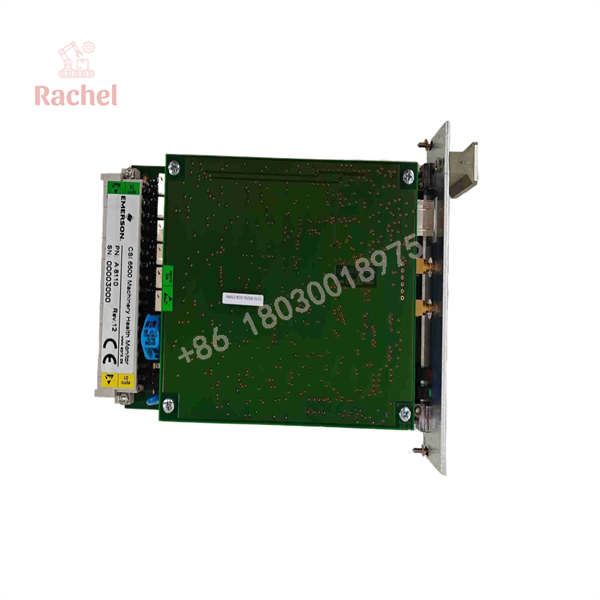
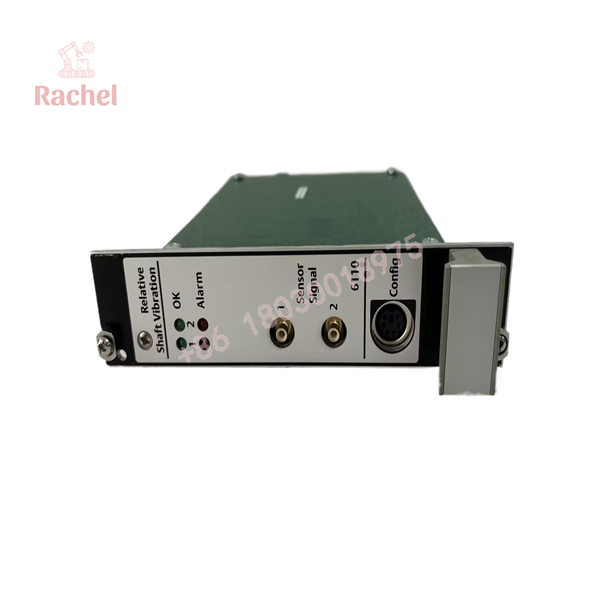
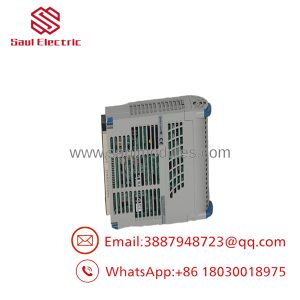
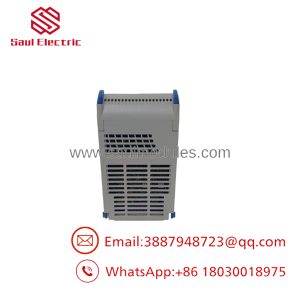
The A6110 is designed for a very specific job: monitoring shaft-relative vibration on critical rotating machinery. It accepts two independent eddy-current displacement-sensor channels and evaluates vibration and shaft-position measurements against configured alarm limits. Emerson specifies the module for applications including steam turbines, gas turbines, compressors, and hydro turbomachinery.
For maintenance teams supporting an existing AMS 6500 / CSI 6500 rack, the A6110 can be replaced as an individual monitoring card rather than treating the entire machinery protection system as one assembly. It is also documented as a hot-swappable, one-slot module, which is important when planning maintenance on an installed rack.
Technical Specifications
| Parameter | Specification |
|---|---|
| Manufacturer | Emerson Process Management |
| Model | A6110 |
| System | CSI 6500 / AMS 6500 Machinery Health Monitor |
| Function | Shaft-relative vibration monitoring |
| Number of Inputs | 2 |
| Input Type | Eddy-current differential displacement |
| Compatible Sensors | Emerson 6422 / 6423 / 6424 / 6425 |
| Input Isolation | Galvanically isolated from power supply |
| Input Resistance | >100 kΩ |
| Input Voltage Range | 0 to -22 VDC |
| Frequency Range | Lower cutoff 1 or 5 Hz; upper cutoff adjustable from 50 to 2,000 Hz |
| Measurement Range | Continuously adjustable; 0–400 mV minimum range to 0–8,000 mV maximum range |
| Sensor Supply | -26.7 V nominal; 20 mA nominal, 35 mA maximum |
| Front Buffered Outputs | ±10 V |
| Configuration Interface | RS-232 via Mini-DIN configuration socket |
| Rear Current Outputs | 0/4–20 mA per channel |
| Rear Voltage Outputs | 0–10 VDC per channel |
| Communication | Modbus TCP/IP available for analysis parameters |
| Power Consumption | Maximum 6 W / 250 mA at 24 VDC |
| Operating Temperature | 0 to 65°C (32 to 149°F) |
| Storage Temperature | -30 to 85°C (-22 to 185°F) |
| Relative Humidity | 5–95%, non-condensing |
| Format | 100 × 160 mm Eurocard; 1 rack slot |
These values are taken from Emerson’s A6110 documentation and the Emerson AMS 6500 protection-card reference.
Measurement and analysis functions
The A6110 supports zero-to-peak, peak-to-peak, independent dual-channel, and combined dual-channel measurement modes. Its analysis functions include Smax calculations and ½X, 1X–10X and associated phase-angle measurements.
Alarm configuration includes separate Alert and Danger thresholds, with selectable normally-open or normally-closed behavior and configurable time delays. The module also performs self-checking of the power supply, sensor, cable, module status, overload, internal temperature, and system watchdog.
A6110
A6110
Field Application & the “Trench” Experience
A plant running a steam turbine may have two proximity probes installed around a shaft bearing to measure radial shaft motion. The probes feed the A6110, which processes the two channels independently or as a combined measurement.
During maintenance, one A6110 card begins reporting an internal diagnostic fault while the probes and field wiring test normally. The maintenance engineer checks the rack configuration, confirms the card identity, and replaces the module with a correctly matched A6110. The important part is not merely restoring the green status LEDs; the engineer also verifies the sensor gap, measurement scaling, alarm thresholds, and relay behavior before returning the turbine protection channel to service.
Specific application scenarios
- Steam turbine shaft-relative vibration monitoring at bearing locations.
- Gas turbine machinery protection using eddy-current proximity probes.
- Compressor train vibration protection where radial shaft movement must be monitored continuously.
- Hydro turbine bearing monitoring using dual-channel shaft displacement measurements.
- API 670 machinery protection systems built around CSI 6500/AMS 6500 rack hardware.
Emerson describes the A6110 as part of a modular system used to build machinery protection monitoring systems for critical rotating equipment, including steam, gas, compressor, and hydro turbomachinery.
Transparency SOP: QA & Testing
For New Surplus or refurbished A6110 inventory, a meaningful inspection should cover the complete signal chain:
1 — Hardware identity
Confirm the A6110 model, revision, serial number, and front-panel markings.
2 — Physical condition
Inspect the PCB, front connector, rear connector interface, card guides, handle, and identification plate.
3 — Power-up verification
Check module startup behavior and diagnostic indicators in an appropriate AMS/CSI 6500 rack.
4 — Sensor simulation
Where suitable test equipment is available, simulate the expected displacement-transducer signal and verify channel response.
5 — Alarm verification
Check Alert/Danger threshold behavior, time delays, channel status, and diagnostic reporting.
6 — Output verification
Verify the applicable 0/4–20 mA, 0–10 V, and buffered outputs.
7 — Configuration review
Confirm that the installed module’s parameters correspond to the plant’s approved machinery-protection configuration.
The A6110’s own diagnostics monitor the module, power input, hardware temperature, sensor and cable conditions, among other conditions.
The Veteran’s Tech Trap Guide
⚠️ Do not confuse shaft-relative vibration with casing vibration.
The A6110 is specifically intended for shaft-relative vibration measurement using displacement sensors. It is not simply a generic vibration input card.
⚠️ Sensor compatibility matters.
Emerson specifies the A6110 for its 6422/6423/6424/6425 displacement-sensor family. Replacing the module without checking the installed probe and driver configuration can produce incorrect measurement scaling.
PRO TIP: Record the existing sensor type, gap voltage, measurement range, Alert/Danger thresholds, alarm delays, and channel configuration before removing the card. Those settings are part of the protection-system configuration, not merely commissioning preferences.
⚠️ Don’t rely only on the front LEDs.
A green channel indication does not replace verification of actual sensor gap, vibration amplitude, alarm thresholds, and downstream relay behavior.
⚠️ Check the rack before assuming the card is defective.
Because the A6110 works as part of the CSI/AMS 6500 rack architecture, a problem with rack power, sensor wiring, configuration, or associated relay/communication modules can produce symptoms that resemble a failed monitoring card.
Dynamic FAQ
What is the Emerson A6110?
The Emerson is a dual-channel shaft-relative vibration monitor for the CSI 6500 / AMS 6500 Machinery Health Monitor system.
What sensors does the A6110 support?
Emerson specifies 6422, 6423, 6424, and 6425 eddy-current displacement sensors for the A6110.
How many vibration channels does A6110 have?
It has two independent channels, which can also be configured for combined dual-channel monitoring modes.
Does A6110 support 4–20 mA output?
Yes. Emerson specifies 0/4–20 mA outputs for each channel, proportional to the configured main measurement value. It also provides 0–10 V outputs.
Can A6110 be replaced while the AMS 6500 rack is operating?
The A6110 documentation identifies the module as hot-swappable, but replacement should still follow the plant’s approved machinery-protection maintenance procedure.
What is the A6110 operating temperature?
The documented operating range is 0 to 65°C (32 to 149°F), with a storage range of -30 to 85°C (-22 to 185°F).
Is New Surplus A6110 inventory authentic?
Condition must be established unit by unit. For New Surplus stock, request photographs of the actual Emerson label, serial number, revision, packaging, and any available test documentation. For refurbished units, request the functional test procedure and warranty terms before purchase.

 Start Chat


