





Description
Product Introduction
The Emerson EPRO CON041 is an eddy-current signal converter used in machinery monitoring systems to measure shaft displacement, position, eccentricity, and speed-related signals. It is designed for use with compatible PR642-series probes in applications such as turbines, compressors, pumps, and fans. Its specified frequency response extends to 20 kHz, with a rise time below 15 μs.
When replacing a unit, confirm the probe model, measurement range, supply requirements, and output range before installation. A converter with the wrong range can produce misleading readings even if its terminals and housing appear identical. The base CON041 and extended-range order codes must be checked against the installed sensor and the equipment documentation.
Key Technical Specifications
| Parameter | Specification |
|---|---|
| Manufacturer | Emerson EPRO |
| Model | CON041 |
| Device type | Eddy-current signal converter |
| Frequency response | 0–20,000 Hz, −3 dB |
| Rise time | Less than 15 μs |
| Compatible probe families | PR6422, PR6423, PR6424, PR6425, PR6426 |
| Supply voltage | −23 to −32 V or −21 to −32 V, depending on output range |
| Output voltage range | −4 to −20 V or −2 to −18 V, depending on supply configuration |
| Operating temperature | −30°C to +100°C |
| Protection rating | IP20 |
| Mounting | DIN rail |
| Housing material | PA 6.6 |
| Approximate weight | 60 g |
| Terminal connection | Screw terminals; maximum conductor cross-section 1.5 mm² |
Source: Emerson’s CON041 specification sheet. Confirm the applicable voltage and output configuration against the exact unit documentation before commissioning.
Standard and extended measuring ranges
| Converter order code | Compatible probe | Measuring range | Linearity error |
|---|---|---|---|
| CON041 | PR6422 | 1.0 mm | ≤ 1.5% |
| CON041 | PR6423 | 2.0 mm | ≤ 1.0% |
| PR6424 | 4.0 mm | ≤ 1.5% | |
| PR6426 | 8.0 mm | ≤ 1.5% | |
| CON041/912-015 | PR6422 | 1.5 mm | ≤ 2.0% |
| CON041/913-030 | PR6423 | 3.0 mm | ≤ 1.5% |
| CON041/914-060 | PR6424 | 6.0 mm | ≤ 1.0% |
| CON041/915-040 | PR6425 | 4.0 mm | ≤ 1.5% |
| CON041/916-120 | PR6426 | 12.0 mm | ≤ 1.5% |
These are selected entries from the manufacturer’s ordering matrix, not an exhaustive list. PR6425 requires an extended-range converter; use the full ordering code to identify the correct configuration.
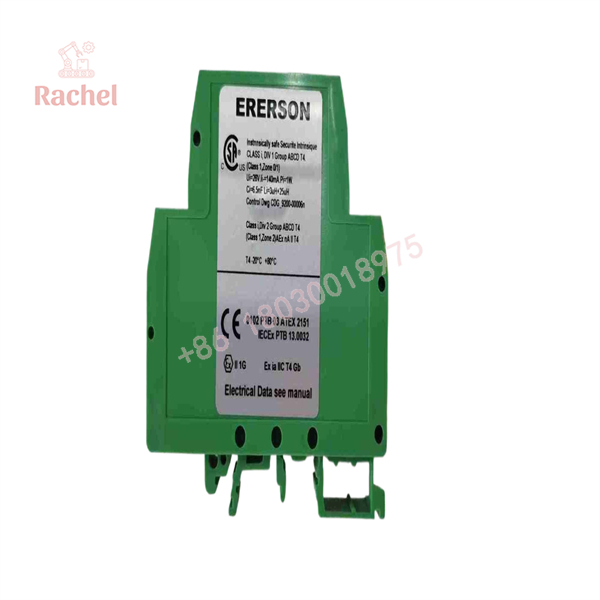
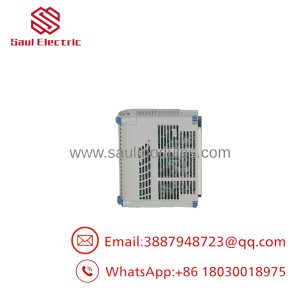
CON041
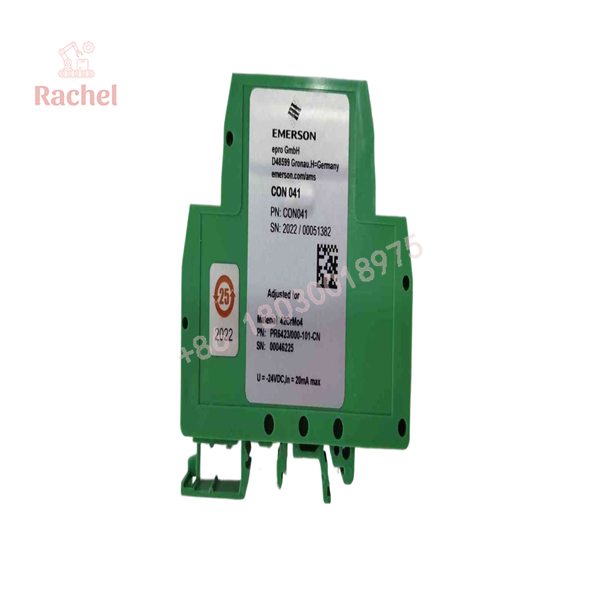
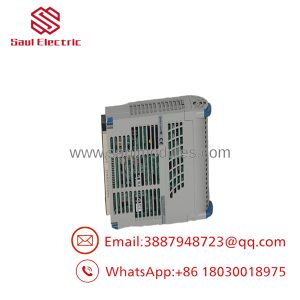
CON041
Application Scenarios & “Trench” Experience
Typical applications
- Steam and gas turbines: Monitoring radial shaft movement and axial displacement to help identify abnormal rotor behavior.
- Centrifugal compressors: Providing displacement signals for machinery protection and condition-monitoring systems.
- Industrial pumps: Tracking shaft position and eccentricity where compatible eddy-current probes are installed.
- Hydroelectric machinery: Supporting shaft-motion monitoring on rotating equipment.
- Fans and other rotating equipment: Supplying displacement or speed/key-related measurement signals to compatible monitoring instrumentation.
The CON041 is a signal-conditioning component. It does not independently replace the complete machinery protection system, alarm logic, or shutdown interlocks.
Common maintenance problem
A replacement converter may fit the DIN rail and accept similar wiring, yet have the wrong measuring range for the installed probe. The resulting signal can be misinterpreted as a mechanical clearance change or a real shaft movement.
Hypothetical case study: A compressor maintenance team replaces a converter during a scheduled outage. After startup, the displayed shaft-position value differs from the pre-maintenance baseline. Rather than immediately adjusting the probe gap, the team checks the converter order code, probe model, supply voltage, output range, and monitoring-channel scaling. This process helps isolate a configuration mismatch before mechanical adjustments are made.
Transparency SOP: Quality Assurance & Testing
For a used or surplus CON041, request evidence of the following checks. These are recommended inspection steps, not claims that any specific unit has already passed testing.
- Inbound inspection: Check the nameplate, complete part number, serial number, terminal condition, housing, and mounting clips.
- Live rig testing: Test with a compatible probe or calibrated test setup across the intended measuring range.
- Electrical checks: Verify supply voltage, output polarity, signal stability, and response against the applicable datasheet.
- Configuration verification: Confirm probe compatibility, measuring range, output range, and monitoring-channel scaling.
- Final QC and ESD packaging: Record the inspection results, protect terminals from damage, and package the unit appropriately for transport.
For critical machinery protection service, request a dated test report identifying the actual unit and the test equipment used.
Veteran’s Tech Trap Guide
- Trap 1 — Treating all CON041 variants as identical: Extended-range versions use distinct order codes. Match the installed probe and required range before purchasing.
- Trap 2 — Ignoring negative supply and output voltages: The datasheet specifies negative voltage ranges. Do not assume a conventional positive 24 VDC supply or a standard 4–20 mA output is correct.
- Trap 3 — Confusing probe and converter ratings: The probe and converter have different environmental and protection limits. The converter itself is rated IP20, so it requires suitable enclosure protection.
- Trap 4 — Assuming a replacement is calibrated: Physical compatibility does not prove measurement accuracy. Verify signal behavior, scaling, and baseline readings before returning critical machinery to service.
FAQ
Q1: Which probes are compatible with the CON041?
The manufacturer lists the PR6422, PR6423, PR6424, PR6425, and PR6426 families. The required converter order code depends on the probe and measuring range. PR6425 requires an extended-range converter.
Q2: Can I replace a CON041 with any unit carrying the same model number?
Not without checking the configuration. Confirm the complete part number, probe type, measurement range, and output range against the existing installation.
Q3: Is the CON041 hot-swappable?
Do not assume so. Follow the equipment manufacturer’s shutdown and isolation procedure, and confirm whether removing the converter affects live machinery protection channels.
Q4: Does it require firmware configuration?
The published specification describes a signal converter rather than a programmable PLC or network controller. Verify the relevant probe pairing and electrical configuration; do not assume it has user-loaded firmware.
Q5: Can it connect directly to a PLC or DCS?
Potentially, if the receiving input supports the converter’s specified voltage signal and electrical reference. Check the input range, grounding arrangement, scaling, and isolation requirements before connecting it.
Q6: What warranty applies to a replacement unit?
Warranty coverage depends on the seller, condition, and purchase terms. Request written confirmation of the warranty period and return conditions, especially for used or surplus equipment.
Q7: How can I verify authenticity and assess surplus pricing?
Request clear photographs of the nameplate and terminals, the serial number, condition disclosure, and a unit-specific test report. Compare quotes for the same complete order code and condition; a low price alone does not establish authenticity or functionality.

 Start Chat


