





Description
Product Introduction & Engineering Value
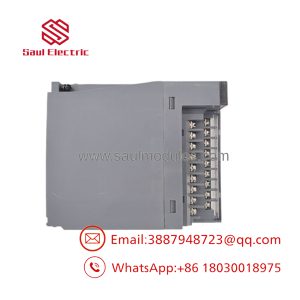
The Honeywell CC-PDIS01 is a Series C digital input sequence-of-events (SOE) module designed to acquire 32 discrete 24 VDC signals and record input transitions with 1 ms SOE resolution. It supports normal, sequence-of-events, and low-latency operating modes for process monitoring and event analysis.
For maintenance teams, its primary value is precise event ordering when several field signals change in rapid succession. The module supports compatible Honeywell Series C I/O termination assemblies, but the installed IOTA, redundancy arrangement, and system configuration must be checked before ordering a replacement.
Technical Specifications
| Parameter | Manufacturer-Documented Specification |
|---|---|
| Model | CC-PDIS01 |
| Brand | Honeywell |
| Product family | Experion Series C I/O |
| Input type | Digital input, sequence of events (DISOE) |
| Number of channels | 32 |
| Input voltage range | 18–30 VDC |
| SOE time resolution | 1 ms |
| Normal process-variable scan | 20 ms |
| Low-latency process-variable scan | 5 ms |
| Input ON threshold | Minimum 13 VDC or 3 mA |
| Input OFF threshold | Maximum 5 VDC or 1.2 mA |
| Input impedance | 4.2 kΩ |
| Galvanic isolation | 1,500 VAC RMS or ±1,500 VDC |
| Isolation method | Optical isolation within the I/O module |
| Filter and isolation delay | 5 ms ±20% |
| Open-wire detection | Available in normal mode only |
| Redundancy | Supported with compatible hardware and configuration |
Source: Honeywell Experion Series-C I/O Specification, document EP03-490-520, section 5.14. SOE resolution is not the same as total end-to-end response time; the documented filter and isolation delay must also be considered.
Compatible termination assemblies
Honeywell documentation identifies the following IOTA models for the CC-PDIS01, subject to the applicable system configuration:
- CC-TDIL01 — nonredundant configuration.
- CC-TDIL11 — redundant configuration.
- Other documented Series C arrangements include CC-GDIL01, CC-GDIL11, CC-GDIL21, and CC-SDXX01; verify the intended architecture and hardware revision before substitution.
Field Application & the “Trench” Experience
Illustrative engineering scenario — not a documented customer installation.
Scenario: Investigating a compressor trip with conflicting event records
A plant maintenance team is troubleshooting an intermittent compressor shutdown. The DCS alarm log shows a motor trip, a permissive change, and a pressure-switch transition within a short interval, but the existing monitoring configuration cannot establish their order with sufficient precision. The team evaluates the CC-PDIS01 to capture the relevant 24 VDC discrete signals using its 1 ms sequence-of-events resolution.
Before commissioning, engineers verify the signal wiring, channel assignments, controller configuration, and event timestamp synchronization. They also account for the module’s input filter and isolation delay rather than assuming that 1 ms SOE resolution guarantees 1 ms end-to-end response. This distinction matters when reconstructing a trip sequence.
Target applications
- Compressor trip-sequence analysis: Record motor status, protective relay contacts, and process permissive changes to help reconstruct shutdown events.
- Boiler burner management monitoring: Capture discrete status transitions associated with burner permissives and trip indications, subject to the approved control-system architecture.
- Catalytic cracking unit interlock diagnostics: Establish the sequence of discrete process and equipment status changes during an interlock event.
The CC-PDIS01 is a monitoring and event-acquisition component. Its presence does not independently establish a safety-rated shutdown function or replace a certified safety instrumented system.
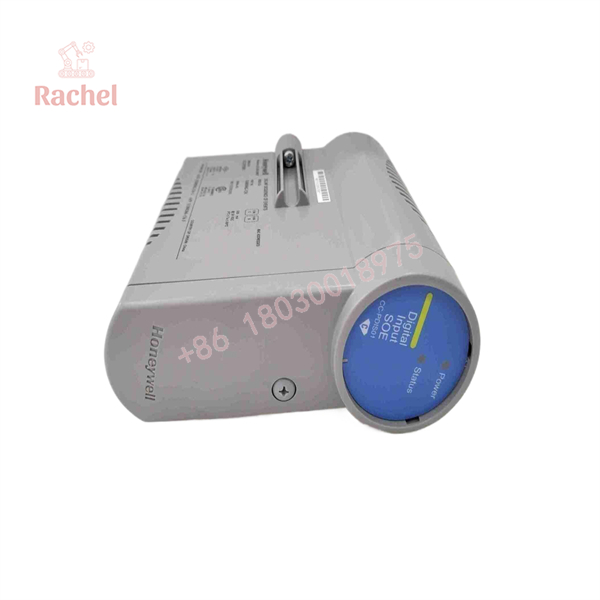
CC-PDIS01
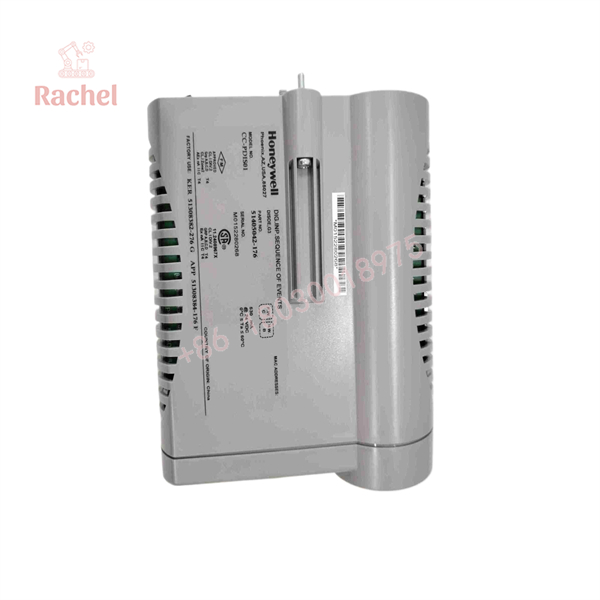
CC-PDIS01
Quality Assurance and Testing Procedure
The appropriate inspection depends on whether the unit is new surplus or refurbished. The following is a recommended supplier QA procedure, not a claim that a particular unit has already passed these tests.
1. Part-number and condition verification
Check the CC-PDIS01 model marking, applicable part number, label condition, connector integrity, and signs of unauthorized repair. Record the supplied condition as new surplus or refurbished.
2. Electrical and functional inspection
Where suitable test equipment and a compatible test setup are available, verify module startup, channel-state acquisition, diagnostics, and operation against the applicable manufacturer specifications.
3. Documentation and release
Record inspection results, observed faults, repair history where available, and the final stock classification. Supply test reports and warranty terms when included in the order.
Procurement note: Visual inspection alone does not establish functional condition or authenticity. Request serial or date-code photographs, test evidence, and a written warranty before purchase, particularly for refurbished inventory.
The Veteran’s Tech Trap Guide
Trap 1: Ordering by model number without checking the IOTA
CC-PDIS01 compatibility depends on the termination assembly and installed Series C hardware arrangement. Confirm the existing IOTA model and redundancy configuration rather than assuming that every Series C termination assembly is interchangeable.
Trap 2: Confusing SOE resolution with actual signal timing
A 1 ms SOE resolution does not mean the field signal is processed with zero delay. The specified filter and isolation delay is 5 ms ±20%. Account for this when interpreting closely spaced events or comparing timestamps from different devices.
Trap 3: Ignoring the operating mode and wiring
Open-wire detection is available in normal mode only. The input power range is 18–30 VDC, and the documented ON/OFF thresholds must be considered when checking field contacts, proximity switches, and wiring resistance. Verify the configured mode and field-power arrangement before diagnosing a replacement as defective.
PRO TIP: Before removing the existing module, document channel assignments, field wiring, configuration settings, and any redundancy-related indicators. Follow the plant’s approved isolation, ESD, and module-replacement procedures. Do not assume hot-swap support without verifying the applicable hardware and system instructions.
Frequently Asked Questions
Q1. What does the Honeywell CC-PDIS01 do?
It is a 32-channel digital input sequence-of-events module for Honeywell Experion Series C I/O. It accepts 24 VDC discrete signals and supports 1 ms SOE resolution for event analysis.
Q2. Is the CC-PDIS01 compatible with my existing Honeywell control system?
Compatibility depends on the installed IOTA, controller and I/O architecture, hardware revision, and system configuration. Provide the existing module label and termination assembly model before ordering a replacement.
Q3. Can the CC-PDIS01 be used in a redundant configuration?
Yes. Honeywell documentation identifies redundant and nonredundant termination arrangements. The complete hardware configuration must support the intended redundancy scheme.
Q4. Is new-surplus inventory the same as factory-new inventory?
No. New-surplus stock generally refers to unused inventory outside the manufacturer’s current distribution channel. Its packaging, storage history, traceability, and warranty may differ from stock purchased directly through an authorized channel. Request supporting documentation and clear photographs before purchase.
Q5. How can I verify authenticity and test condition?
Request clear photographs of the product label, model number, and available serial or date codes. Ask for traceability documents where available, inspection records, and functional test results. These checks help assess the offer but do not independently prove manufacturer authorization or authenticity.
Q6. What warranty applies to a CC-PDIS01 replacement?
Warranty coverage depends on the supplier and the terms stated in the quotation. Confirm the coverage period, start date, return authorization procedure, and remedy for a unit that fails incoming inspection or commissioning. No specific warranty period should be assumed without written confirmation.

 Start Chat


