





Description
Product Introduction
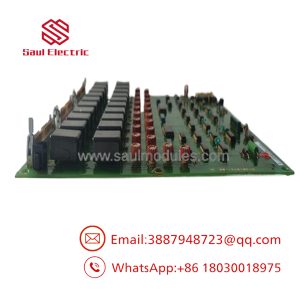
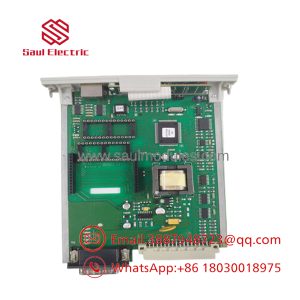
The Honeywell CC-TAIX51 is a Series C Analog Input IOTA (Input Output Termination Assembly) used with the Experion PKS Distributed Control System. It provides the physical interface between field instrumentation and compatible Series C analog input modules, simplifying field wiring while maintaining signal integrity for process measurements.
Unlike an analog input module, the CC-TAIX51 contains no signal-processing electronics. Its job is to terminate field wiring, distribute power, and connect the field devices to the installed I/O module. It is specifically designed for the CC-PAIH51 HART analog input module and is the non-redundant version of the assembly. Plants requiring redundant architecture should instead use the CC-TAIX61.
Key Technical Specifications
| Parameter | Value |
|---|---|
| Manufacturer | Honeywell |
| Model | CC-TAIX51 |
| Product Family | Experion PKS Series C |
| Product Type | Analog Input IOTA |
| IOTA Configuration | Non-Redundant |
| Compatible I/O Module | CC-PAIH51 |
| Supported Channels | 16 Analog Inputs |
| Supported Signals | High-Level Analog Inputs with HART (module dependent) |
| Physical Size | 6-inch IOTA |
| Field Wiring | Direct termination to terminal blocks |
| Short-Circuit Protection | Individual channel protection |
| Compatible System | Honeywell Experion PKS Series C |
Application Scenarios & The “Trench” Experience
A maintenance crew replaces an analog input module after several HART transmitters suddenly disappear from the operator display.
Nothing changes.
The controller recognizes the module.
The field transmitters still output a healthy 4–20 mA signal.
The actual problem is a damaged terminal on the IOTA after years of vibration inside the cabinet.
People often replace the expensive electronics first. In reality, passive termination assemblies fail more often than many engineers expect, especially in cabinets exposed to moisture, vibration, or repeated maintenance.
Typical Applications
Oil & Gas — Process instrumentation — Terminates pressure, flow, and temperature transmitter wiring for Series C HART analog input modules.
Chemical Plants — Reactor control — Provides organized field termination for multiple smart transmitters.
Power Generation — Boiler instrumentation — Connects HART-compatible pressure and temperature loops to Experion PKS.
Water & Wastewater — Pump stations — Interfaces multiple analog transmitters with centralized DCS cabinets.
Pharmaceutical Manufacturing — Validated process systems — Supports structured field wiring while simplifying maintenance and replacement.
Field Replacement Example
A refinery reported recurring channel faults affecting several differential pressure transmitters. The CC-PAIH51 module passed diagnostics, yet intermittent HART communication errors continued. Inspection revealed oxidation on the CC-TAIX51 terminal assembly caused by years of cabinet condensation. Replacing the IOTA eliminated the communication faults without replacing a single transmitter or controller.
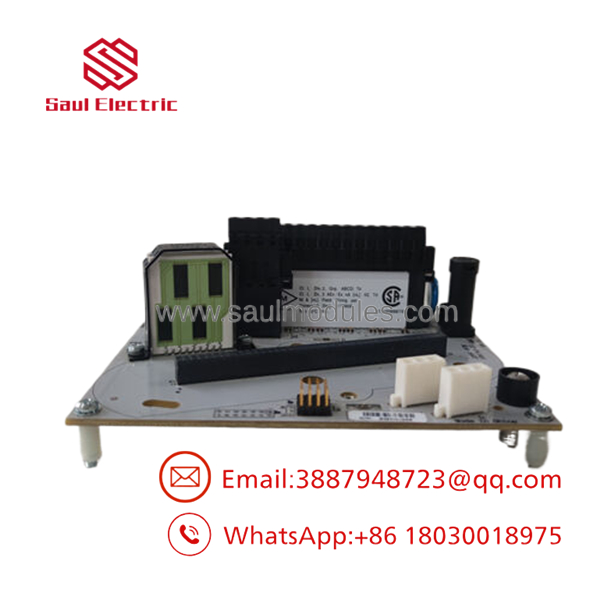
- CC-TAIX51
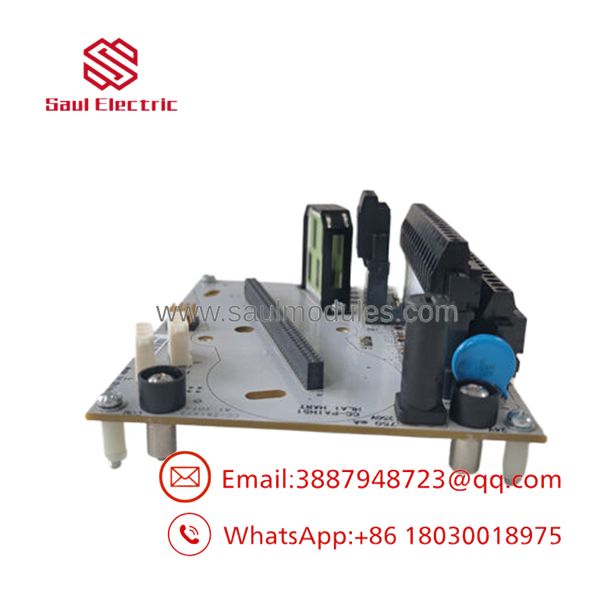
- CC-TAIX51
Transparency SOP: Quality Assurance & Testing
We don’t just ship boxes; every IOTA is inspected on actual Honeywell Series C hardware whenever practical.
- Inbound Inspection
- Verify Honeywell identification label and revision.
- Inspect PCB traces and terminal blocks.
- Check for cracked connectors and bent pins.
- Screen for unauthorized repairs.
- Mechanical Verification
- Confirm terminal screw torque.
- Inspect fuse holders where applicable.
- Verify connector alignment.
- Functional Testing
- Install the IOTA with a compatible CC-PAIH51 module.
- Verify controller recognition.
- Confirm continuity across all field terminals.
- Test channel isolation.
- Compatibility Verification
- Record hardware revision.
- Verify compatibility with the intended Series C module.
- Final QC & Packaging
- ESD-safe packaging.
- Protective terminal covers.
- Traceable inventory records.
The Veteran’s Tech Trap Guide
⚠️ Remember that the CC- is not an analog input module.
It is a passive Input Output Termination Assembly (IOTA). If the electronics have failed, replacing only the IOTA will not restore signal acquisition.
⚠️ Don’t confuse CC- with CC-TAIX61.
The is non-redundant, while the CC-TAIX61 is designed for redundant architectures. Installing the wrong IOTA can prevent proper redundancy operation.
❗ Inspect the terminals before blaming the transmitter.
Loose terminal screws, corrosion, or damaged connectors frequently create intermittent analog faults that look like transmitter failures.
⚠️ Take photos before removing field wiring.
Sixteen identical analog channels can become surprisingly confusing during a shutdown. Label every wire before disconnecting the assembly. Trust me.
Frequently Asked Questions (FAQ)
Q1. What is the Honeywell CC-?
The is a Series C Analog Input IOTA that provides field wiring termination for compatible Honeywell Series C analog input modules. It contains no processor or analog conversion circuitry.
Q2. Which I/O module is it designed for?
It is designed primarily for the Honeywell CC-PAIH51 High-Level Analog Input HART module.
Q3. Does the CC- support HART communication?
The IOTA itself does not process HART signals. HART functionality is provided by the installed analog input module, such as the CC-PAIH51, while the IOTA provides the physical wiring interface.
Q4. Is this the redundant version?
No. The is the non-redundant IOTA. The corresponding redundant model is CC-TAIX61.
Q5. Can the IOTA fail?
Yes. Although passive, IOTAs can develop problems due to terminal damage, corrosion, connector wear, or mechanical stress. These faults often appear as intermittent analog signal or HART communication issues.
Q6. What warranty is typically available?
Most industrial automation suppliers offer a 12-month functional warranty on inspected New Surplus or professionally tested surplus IOTAs. Warranty terms vary by supplier.
Q7. What should be verified before installation?
Verify the part number, confirm compatibility with the installed module, inspect the terminal block for damage, check field wiring against the loop drawings, verify HART device assignments, and confirm that a non-redundant IOTA is appropriate for the cabinet design. Always compare the installation with the Honeywell Series C I/O documentation before energizing the system.

 Start Chat


