





Description
Product Introduction
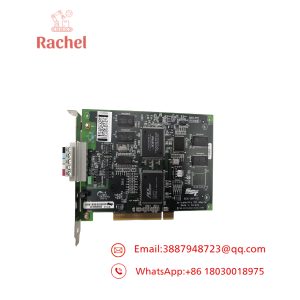
The Lenel LNL-8000 StarMultiplexer is an access control communication module designed for OnGuard enterprise security systems. It acts as a line driver and port distributor, taking a single 2-wire RS-485 upstream signal from an OnGuard system processor and splitting it across 8 independent downstream channels. It remains essential for clean home-run panel layouts in large multi-door facilities.
Unlike simple passive terminal splitters, the LNL-8000 acts as an active signal repeater and distributor. It isolates communication segments so that an electrical fault or short on one downstream reader branch won’t crash the entire RS-485 polling loop.
Key Technical Specifications
| Parameter | Value |
| Primary Power Input | 12V DC ±10% or 24V DC ±10% |
| Current Draw | 350 mA max @ 12V DC |
| Upstream Interface | 1 x RS-485 channel (2-wire connection to ISC/Access Controller) |
| Downstream Channels | 8 x RS-485 channels (2-wire independent branches) |
| Uplink Baud Rates | Auto-sensing up to 115.2 kbps |
| Max Wiring Distance | Up to 4,000 ft (1,219 m) per downstream branch (shielded twisted pair) |
| Isolation | Active optical signal isolation per channel |
| Status LED Indicators | Power, Heartbeat, Upstream Tx/Rx, Downstream Tx/Rx per port |
| Operating Temperature | 0°C to +70°C (32°F to 158°F) |
| Dimensions | 6.0 in W x 8.0 in L x 1.0 in H (152 mm x 203 mm x 25 mm) |
Application Scenarios & The “Trench” Experience
It’s 11:00 PM at a regional data center, and the access controller panel goes dark on 12 critical server room doors. A tech pinched an RS-485 line while shutting a panel cover, creating a dead short that pulled down the whole daisy chain loop. Instead of locking down the whole floor, an LNL-8000 keeps that issue isolated to a single port, leaving the rest of the facility online while you trace the short.
- Commercial High-Rises – Star-topology door reader layouts – Route individual riser cables to different floors without running continuous daisy chains from room to room.
- Manufacturing Plants – High-noise industrial door loops – Isolate long exterior cable runs from sensitive interior panel backplanes.
- Data Centers – Redundant rack access panels – Isolate individual server cage reader lines so a single damaged reader cable won’t knock out access to adjacent cages.
Field Case Study: A major hospital facility had constant communication dropouts across two patient wings due to ground loops caused by mismatched building potentials. Inserting an LNL-8000 between the main LNL-3300 processor and the downstream interface modules broke up the continuous ground paths. Signal isolation cleared up the comm errors immediately and cut installation troubleshooting time down to zero.
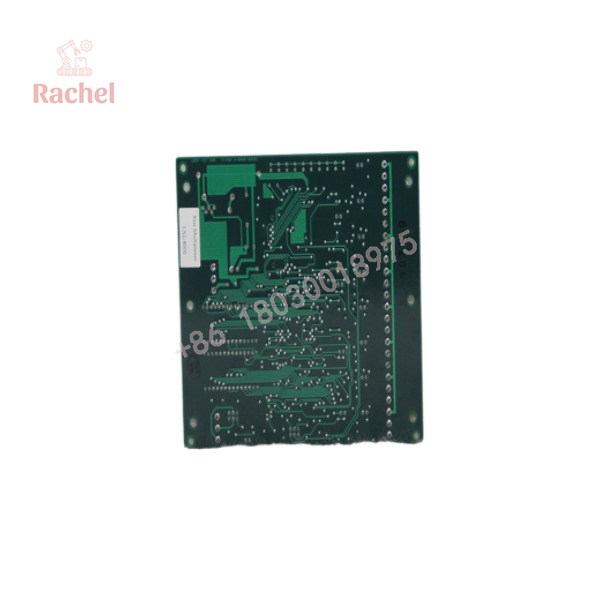
LNL-8000
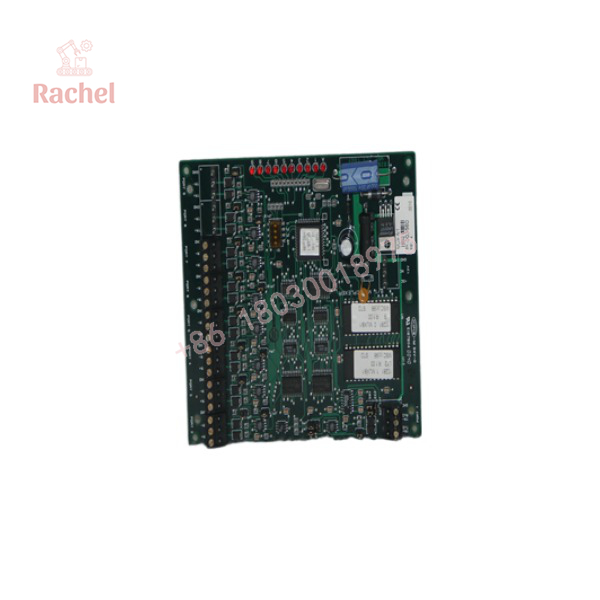
LNL-8000
Transparency SOP: Quality Assurance & Testing
Every LNL-8000 module undergoes complete bench verification before shipping:
- Inbound Visual & Anti-Counterfeit Check: Physical inspection of PCB trace pathways, component solder joints, header pins, and Lenel security holographic labels.
- Power-On Diagnostic: Applying 12VDC power to verify baseline current draw and confirm onboard power status LEDs.
- Active RS-485 Pass-Through Test: Connecting the board between an active OnGuard controller and downstream sub-controllers (LNL-1320/LNL-1100).
- Multi-Port Load Injection: Polling all 8 downstream channels under live data traffic to verify clean Tx/Rx transitions without packet loss.
- ESD Packaging: Sealed in anti-static shielding bags with custom padded packaging to prevent board warp during freight.
The Veteran’s Tech Trap Guide (Crucial Value-Add)
- ⚠️ Watch the Termination Jumpers: Every downstream line acts as its own RS-485 segment. You must set the end-of-line (EOL) termination jumpers on the last physical device on each branch, not just at the LNL-8000 board itself.
- ❗ Never Mix Power and Signal Grounds: The LNL-8000 uses 2-wire RS-485, but you still need a common ground reference between devices if they’re on separate power supplies. Tie signal ground correctly; don’t count on the building chassis ground to do the job.
- ⚠️ Watch Out for Baud Rate Mismatches: The LNL-8000 supports pass-through comms, but if your upstream controller jumps baud rates (e.g., from 38.4k to 115.2k) after a firmware patch, force a power cycle on the LNL-8000 so it re-syncs to the line speed properly.
- ❗ Double-Check Your RS-485 Polarity: Lenel labeling uses “TR+” and “TR-“. Mixing up DAT+ and DAT- on one downstream leg won’t blow up the board, but that specific line will fail to poll, firing off offline events in OnGuard Alarm Monitoring.
Frequently Asked Questions (FAQ)
Q: Does the LNL-8000 hold cardholder data or system logic?
A: No. The LNL-8000 is strictly a physical-layer communications multiplexer and line driver. It contains no database, no cardholder memory, and zero decision-making logic.
Q: Can I cascade multiple LNL-8000 boards together?
A: Yes. You can feed an upstream channel from one LNL-8000 into another LNL-8000 to expand your topology further, provided you remain within the maximum device polling limits of your primary controller (like an LNL-2220 or LNL-3300).
Q: Will the LNL-8000 work with non-Lenel controllers?
A: Physically, it repeats standard 2-wire RS-485 signals. However, it’s designed specifically for the voltage levels and pinouts of Lenel OnGuard hardware backplanes and enclosures. We only recommend using it within native Lenel architectures.
Q: Is the LNL-8000 hot-swappable?
A: No. Always disconnect the 12V/24V power header before pulling or inserting the board. Swapping it hot can arc pins and disrupt communication across all active downstream branches.
Q: What is the warranty coverage on surplus LNL-8000 boards?
A: We back all new-surplus and refurbished Lenel modules with a comprehensive 12-month advance replacement warranty.

 Start Chat


