





Description
Product Introduction
The Physik Instrumente (PI) C-663 Mercury Step is a high-performance, single-axis motion controller specifically engineered to drive 2-phase stepper motors in precision industrial and laboratory automation skids. Combining a compact footprint with extensive networkability, the C-663 handles complex point-to-point motion profiles and trapezoidal velocity curves without bogging down central machine controllers.
Unlike low-cost open-loop stepper drivers, the C-663 supports high-speed differential quadrature encoder feedback for real-time stall detection and closed-loop position monitoring. Its native execution of PI General Command Set (GCS) and onboard non-volatile EEPROM macro storage allow autonomous, stand-alone sequencing—drastically reducing bus traffic over USB or daisy-chained RS-232 networks.
Key Technical Specifications
| Parameter | Value |
| Manufacturer | Physik Instrumente (PI) |
| Model / Series | C-663 Mercury Step (e.g., C-663.11, C-663.12) |
| Supported Motor Type | 2-Phase Stepper Motors |
| Number of Axes | 1 Axis |
| Operating Voltage | 15 to 30 V DC (C-663.11) / 24 to 48 V DC (C-663.12) |
| Max Output Power / Current | 60 W max / up to 2.5 A per phase limit |
| Microstep Resolution | Up to 1/2048 full step |
| Encoder Input | A/B quadrature, TTL, RS-422 (Up to 60 MHz) |
| Limit & Reference Inputs | 2 x TTL limit, 1 x TTL reference switch, 1 x RS-422 index |
| Communication Interfaces | USB, RS-232 (daisy-chain networkable up to 16 units) |
| Digital/Analog I/O | 4 analog/digital inputs (0-5V/TTL), 4 digital outputs (TTL) |
| Command Set & Software | PI General Command Set (GCS), PIMikroMove, LabVIEW, Python, C/C++ |
Application Scenarios & The “Trench” Experience
picture a high-throughput semiconductor inspection cell where an X-Y stage relies on a C-663 driving the micro-positioning theta axis. At 3:00 AM, electrostatic interference or power degradation causes communication dropouts on the axis, throwing positional fault codes and halting the line. The production manager is staring at $12,000 an hour in lost wafer throughput. Swapping in a pre-tested, bench-verified C-663 module, uploading the saved GCS startup macros via USB, and confirming encoder handshakes restores sub-micron positioning in under twenty minutes.
Specific Application Scenarios:
- Semiconductor Inspection & Metrology: Driving motorized alignment stages, wafer handlers, and precision optical focus loops.
- Biotechnology & Automated Pipetting: Controlling syringe pumps, sample tray indexers, and micro-fluidic dosing systems requiring smooth microstepping.
- Optical & Laser Alignment: Positioning linear translation stages and goniometers in cleanroom environments.
- Custom Precision Machine Building: Multi-axis networked automation using daisy-chained C-663 units over a single RS-232/USB host line.
Transparency SOP: Quality Assurance & Testing
Every PI C-663 Mercury Step module undergo a rigorous testing battery on actual positioning rigs before shipping:
- Inbound Inspection: Physical check of Sub-D connectors, chassis grounding, casing integrity, and original serial label verification.
- Power-On & Communication Handshake: Connecting to a host PC via USB and RS-232 to verify enumeration in PIMikroMove and check internal hardware status flags.
- Firmware & Macro Memory Audit: Querying internal EEPROM parameters, clearing stale user macros, and verifying clean firmware rev execution.
- Dynamic Load & Closed-Loop Test: Wiring to a standard 2-phase stepper motor stage with incremental encoder feedback. Running continuous trapezoidal point-to-point profile routines at max rated voltage (48V) to monitor current phase output and smooth microstepping execution.
- I/O & Limit Switch Logic Checks: Triggering all 4 digital/analog inputs, limit switch lines, and digital outputs under live voltage to confirm optical/TTL isolation.
- ESD Safe Packaging: Final cleaning and sealing in anti-static ESD shielding bags with custom foam packing blocks.
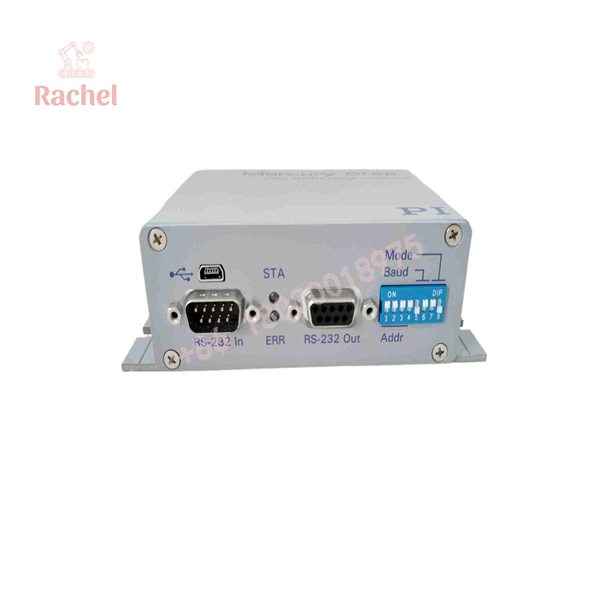
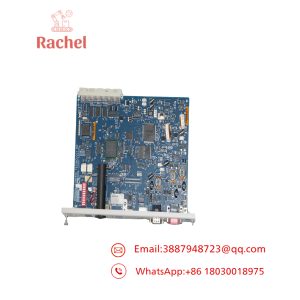
C-663
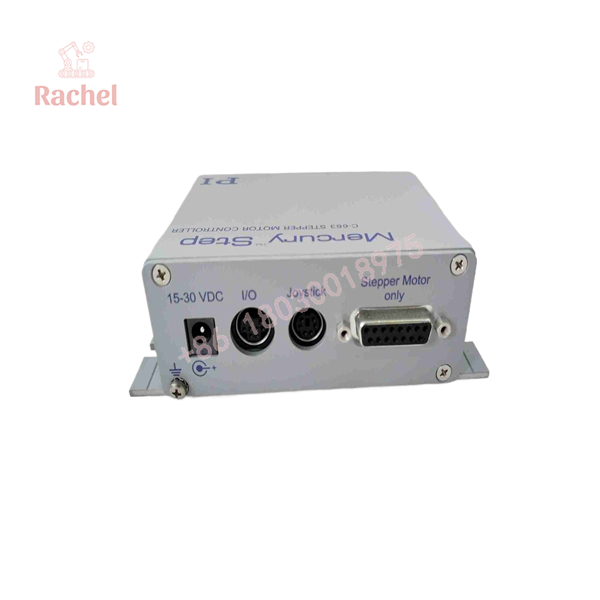
C-663
The Veteran’s Tech Trap Guide
⚠️ 1. Matching Sub-D Pinouts and Module Sub-Variants
Do not assume every C-663 uses the same pin arrangement. The older C-663.11 features a Sub-D 15 motor connector, whereas the C-663.12 uses an HD Sub-D 26 pinout combining motor phases and encoder signals in one bundle. Check your cable head before dropping in a replacement—forcing the wrong variant cable will bend pins or miswire motor phase power straight into encoder logic lines.
❗ 2. Respect Operating Voltage Caps
The original C-663.11 operates between 15V and 30V DC. The C-663.12 extends this range up to 48V DC. If you feed 48V into a panel originally set up for C-663.11 legacy hardware, you will immediately trigger overvoltage destruction on the drive bridge. Always measure your DC bus voltage at the terminal plug before powering on.
⚠️ 3. Save Your EEPROM Macros Before Discarding Old Units
If your existing system runs standalone without continuous PC command streams, the controller relies on an autostart macro stored in its internal EEPROM. If you swap in a fresh unit without dumping the old macro script via PIMikroMove, the new controller will simply power up and sit idle, ignoring machine trigger signals.
Frequently Asked Questions
Q: Can I daisy-chain multiple C-663 controllers together?
A: Yes. You can network up to 16 units on a single USB interface host line or up to 6 units via RS-232 bus architecture, assigning individual network addresses to each axis.
Q: Does the C-663 support closed-loop operation with an encoder?
A: Yes. The controller supports A/B quadrature differential signals (TTL/RS-422) for closed-loop position monitoring and automatic stall detection.
Q: Is the C-663 hot-swappable while the motor power supply is live?
A: No. Disconnecting or plugging in the motor connector while DC voltage is applied can create inductive voltage spikes that destroy the internal MOSFET power stage. Always disconnect main power prior to swapping hardware.
Q: What programming environments can I use to write commands for this module?
A: PI provides software support and APIs for C, C++, C#, VB.NET, MATLAB, Python, and National Instruments LabVIEW drivers alongside their native PIMikroMove suite.
Q: What warranty is provided with this surplus C-663 unit?
A: We provide a full 12-month functional replacement warranty on all tested surplus and refurbished PI motion controllers.

 Start Chat


