





Description
Core Product Summary (Brand / Model / Key Attributes)
The Parker DLD13004R is a digital servo amplifier (AC servo drive) from the Digivex Little Drive (DLD) series of the Parker SSD Parvex motion control range, manufactured in France. It is a 4 A drive operating from a three-phase 230 V input supply (3.8 A rms, 47–63 Hz) and delivering a three-phase output of up to 310 V at 4 A peak, with a PWM output frequency range of 0–1 kHz, corresponding to approximately 1.02 HP of motor power.
The “R” suffix in the model designation identifies the feedback variant with resolver feedback. The drive is designed to control Parvex brushless AC servo motors — and compatible permanent magnet synchronous motors — in industrial motion applications, with the DLD series providing servo control in a compact, panel-mounted amplifier format. The DLD family spans three sizes in this frame — DLD13002R (2 A), DLD13004R (4 A), and DLD13007R (7 A) — sharing the same architecture with different output ratings.
Key Technical Specifications
| Parameter | Value |
|---|---|
| Product type | Digital servo amplifier (AC servo drive) |
| Model | DLD13004R |
| Product family | Parker SSD Parvex Digivex Little Drive (DLD) series |
| Feedback variant | R — resolver feedback |
| Manufacturer | Parker (SSD Parvex), made in France |
| Input supply | 3-phase, 230 V, 3.8 A rms, 47–63 Hz |
| Output | 3-phase, 0–310 V, 4 A peak, 0–1 kHz output frequency range |
| Approximate motor power | 1.02 HP |
| Motor compatibility | Parvex brushless AC servo motors and compatible permanent magnet synchronous motors |
| Family variants in same frame | DLD13002R (2 A), DLD13004R (4 A), DLD13007R (7 A) |
Detailed Product Overview
The DLD13004R belongs to the Digivex range, Parker’s Parvex-origin family of digital servo drives used for brushless motor control in machine tools, robotics, and industrial automation. Within the Digivex architecture, the Little Drive (DLD) models are the compact single-axis servo amplifiers, complemented by the Single Drive (DSD), Multi Drive (DMD/DPS), and Power Drive (DPD spindle drive) lines that make up the wider family.
As a digital servo amplifier, the DLD13004R performs the current, speed, and position regulation demanded by servo applications: it converts the three-phase 230 V input into a controlled PWM output of up to 310 V for the motor phases, modulated within a 0–1 kHz output frequency band, and closes its control loops using motor feedback. The “R” version takes that feedback from a resolver mounted on the motor — the rugged, position-sensing approach favored in industrial servo motors for its robustness in temperature, vibration, and contamination compared to optical encoders.
The 4 A peak output rating places this model in the middle of its three-size family. It suits small to medium servo axes: rotary tables, linear axes on packaging and assembly machines, tool positioning, robotic joints, and similar applications where a roughly 1 HP-class brushless motor is used. Being a panel-mounted amplifier, it integrates into the machine’s electrical cabinet, receiving motion commands from the machine controller and switching the motor power under closed-loop control.
Today the drive is handled primarily through the repair, refurbishment, and service-exchange market, as Digivex-era machines are maintained to board- and unit-level by keepers of Parker SSD Parvex legacy equipment.
System Compatibility & Integration Requirements
| Item / Dependency | Verified Compatibility or Requirement | Practical Note |
|---|---|---|
| Motor type | Parvex brushless AC servo motors and compatible permanent magnet synchronous motors | Match motor voltage (≤ 310 V) and peak current (≤ 4 A) to the drive |
| Feedback | Resolver feedback (“R” variant) | Verify the motor’s feedback device matches the drive’s feedback variant |
| Supply | 3-phase 230 V AC, 47–63 Hz, 3.8 A rms | Three-phase input required; single-phase supplies are outside rating |
| Family variants | DLD13002R (2 A), DLD13004R (4 A), DLD13007R (7 A) in the same DLD frame | Select current class by motor peak demand |
| Digivex family context | DLD (Little Drive) single-axis amplifiers within the Digivex range alongside DSD/DMD/DPS drives and DPD spindle drives | Spares and documentation are organized by the Digivex product structure |
| Installation | Panel-mounted servo amplifier in machine electrical cabinet | Follow cabinet layout, cooling, and wiring practices for servo amplifiers |
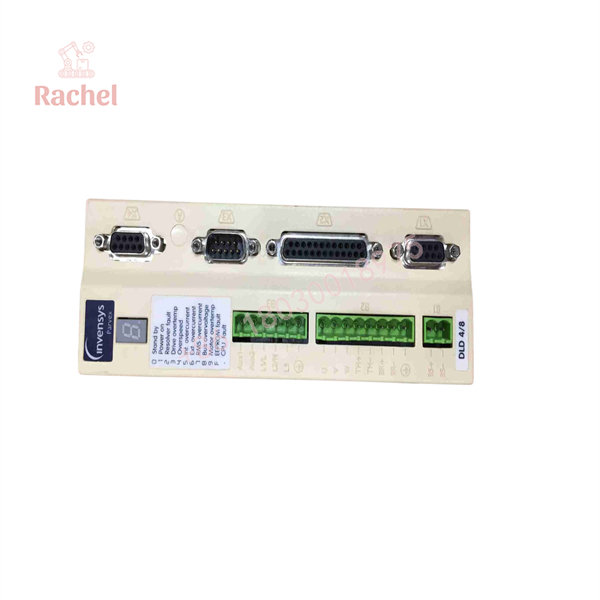
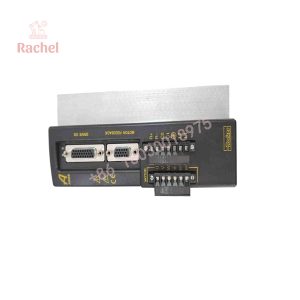
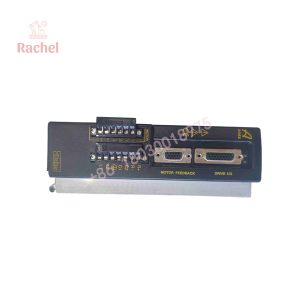
DLD13004R
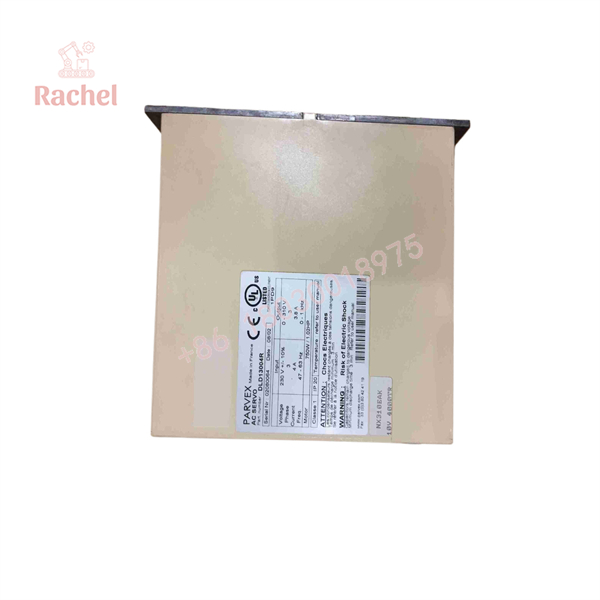
DLD13004R
Dimensions, Mounting & Connection Notes
- Mounting: panel-mounted servo amplifier in the machine’s electrical cabinet
- Power connections: three-phase 230 V input; three-phase motor output (0–310 V, 4 A peak)
- Feedback connection: motor resolver cabling per the drive’s feedback terminal assignment
- Control connections: motion command and enable signals from the machine controller per the Digivex wiring documentation
- Origin: manufactured in France by Parker SSD Parvex
Engineering Selection Highlights
- Feedback variant matters — the “R” designates resolver feedback; mating the drive to a motor with a different feedback type (e.g., encoder-equipped variants) is not a like-for-like substitution. Verify motor feedback before specifying a replacement.
- Match the current class — the DLD family offers 2 A (DLD13002R), 4 A (DLD13004R), and 7 A (DLD13007R) variants; the drive’s peak current rating must cover the motor’s peak demand, while smaller family members will current-limit on larger motors.
- Supply requirement — the drive requires a three-phase 230 V supply (47–63 Hz) at up to 3.8 A rms; single-phase supplies are not within its specified input, so verify cabinet power availability before installation.
- Motor pairing — the drive is engineered for Parvex brushless servo motors and compatible permanent magnet synchronous motors; motor phase current, voltage (up to 310 V), and feedback type must match the drive configuration.
- Output frequency band — the 0–1 kHz output frequency specification applies to the drive’s modulation range; confirm motor speed requirements and feedback resolution are compatible with the drive’s control performance.
- Family-wide spares strategy — the three DLD frame sizes share the same architecture and form factor family; plants with multiple Digivex axes can reduce spares variety by stocking the current class actually fitted in their machines.
- Legacy support path — as a discontinued-generation product, plan for repair/exchange rather than new purchases; retain parameter configuration records so repaired or exchanged units can be set up identically.
FAQ
What is the Parker DLD13004R?
It is a digital servo amplifier from Parker’s Digivex Little Drive (DLD) series, produced by Parker SSD Parvex. It drives brushless AC servo motors from a three-phase 230 V input with a 4 A peak, 0–310 V output.
What does the “R” suffix mean?
It identifies the drive’s feedback variant as resolver feedback, matched to motors equipped with resolvers.
What are its input and output ratings?
Input: three-phase 230 V, 3.8 A rms, 47–63 Hz. Output: three-phase, 0–310 V, 4 A peak, within a 0–1 kHz output frequency range — roughly 1.02 HP of motor power.
Which motors does it drive?
Parvex brushless AC servo motors and compatible permanent magnet synchronous motors whose voltage and peak current fall within the drive’s ratings.
What other models are in the same family?
The DLD frame includes the DLD13002R (2 A) and DLD13007R (7 A) variants alongside this 4 A model.
Where was the drive made?
In France, by Parker SSD Parvex.
Is the DLD13004R still available new?
It is a legacy-generation drive; supply today is mainly through the industrial repair, refurbishment, and service-exchange market.
Verification & Troubleshooting Notes
- Drive will not enable: verify the three-phase 230 V input is present and balanced on all phases, and that the enable/command signals from the controller are active before suspecting the amplifier.
- Motor runs without regulation or hunts: the resolver feedback path is the first checkpoint — damaged resolver cabling, miswired feedback connections, or a faulty resolver will break the control loop even with a healthy power stage.
- Drive current-limits on acceleration: confirm the motor’s peak current demand is within the 4 A rating; if the axis needs more, the application may require the 7 A family variant rather than a defective drive.
- Overheating or erratic output: check cabinet ventilation and the amplifier’s heatsink clearance; servo amplifiers derate silently in poorly ventilated cabinets.
- After repair or exchange: verify the drive’s parameter configuration (motor data, feedback settings, limits) was restored to the machine’s documented values before returning the axis to service.
- Replacement identification: read the full model designation from the drive nameplate — current class and feedback variant (R) must match the installed unit; a DLD13002R or DLD13007R is not a like-for-like substitute.
- Servo amplifiers store hazardous DC bus voltage after power removal — allow the specified discharge time and follow lockout procedures before any wiring, inspection, or exchange work.

 Start Chat


