





Description
Product Introduction
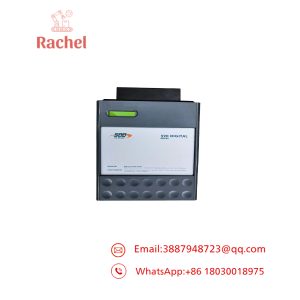
The Pioneer Magnetics 24F33-0-4-R-S is a discontinued industrial switching DC/DC power supply module used in legacy control-system power architectures. Available industrial references identify it as a single-output module with isolated output and a power-fail signal. It is also associated with the PM-2722A-1 part number.
Its main value today is replacement compatibility. The module covers a broad 2-60 VDC output range and a stated 200-800 W power range, making it a very different proposition from a generic low-power DIN-rail supply. One known application reference identifies the PM2722-1 / 24F33-0-4-R-S in a Westinghouse WDPF environment.
Key Technical Specifications
| Parameter | Specification |
|---|---|
| Manufacturer | Pioneer Magnetics |
| Part Number | 24F33-0-4-R-S |
| Alternate Part Number | PM-2722A-1 / PM2722-1 |
| Product Type | Power Supply Module |
| Conversion Type | Switching DC/DC converter |
| Output Configuration | Single output |
| Output Power | 200-800 W |
| Output Voltage | 2-60 VDC |
| Output Isolation | Isolated output |
| Power-Fail Function | Power-fail signal |
| Manufacturer Status | Discontinued |
| Known System Association | Westinghouse WDPF / legacy industrial control systems |
The published specifications should be treated as identification data rather than a complete electrical datasheet. The exact input range, current limits, connector pinout, and control-signal characteristics should be verified against the OEM documentation or the nameplate of the installed unit before energization.
Application Scenarios & The “Trench” Experience
A legacy control system loses its DC supply. The replacement engineer sees a 24 VDC requirement and reaches for a modern DIN-rail power supply. Wrong move.
The 24F33-0-4-R-S is not simply a generic 24 VDC supply. Its published specification describes a high-power switching DC/DC converter with isolated output and power-fail signaling. Substituting a modern supply without checking the original power architecture can remove required monitoring signals or create a completely different electrical interface.
- Power Generation — Legacy Control Systems — Used where an existing control architecture depends on the original high-power DC/DC conversion stage.
- Process Automation — WDPF Systems — Relevant to legacy Westinghouse WDPF equipment where the PM2722-1 / 24F33 designation appears in system inventories.
- Industrial Control — DC Power Distribution — Provides isolated DC conversion where the downstream electronics require the original electrical architecture.
- Plant Maintenance — Obsolete Spare Replacement — Useful when the installed Pioneer Magnetics supply has reached end of life and redesign is not immediately practical.
Field case — plausible replacement scenario:
A plant’s legacy DPU cabinet suddenly drops several control functions. The technician initially suspects the processor cards. Measurements eventually point upstream to the power module. The installed unit is marked 24F33-0-4-R-S, but no current OEM channel can provide a standard replacement.
A matching surplus module is sourced. Before installation, the team photographs the wiring, confirms the part number and connector arrangement, checks the supply externally, and compares its electrical characteristics with the removed unit. The cabinet returns to service without redesigning the entire power subsystem.
That matters. A production outage measured in hours can cost more than the replacement module itself.
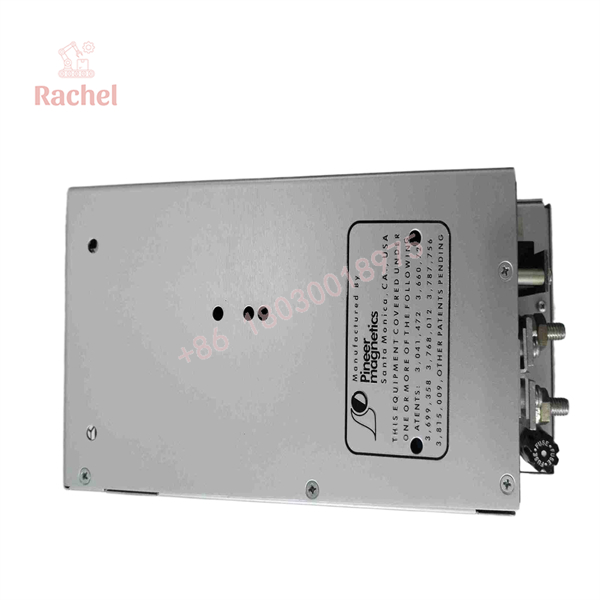
24F33-0-4-R-S
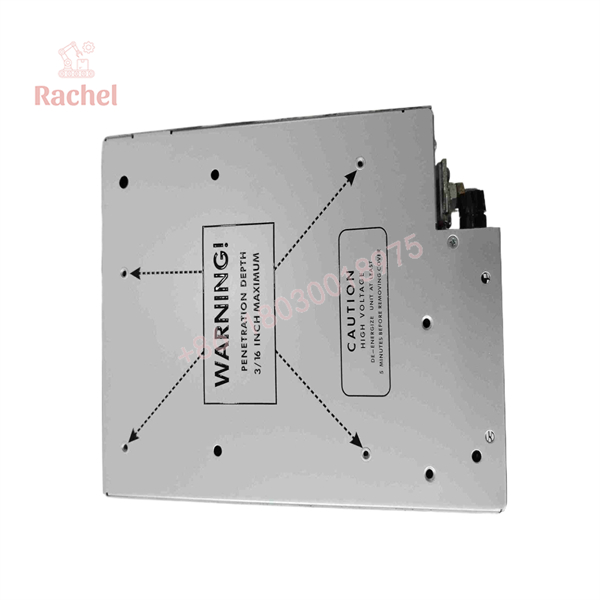
24F33-0-4-R-S
Transparency SOP: Quality Assurance & Testing
For a discontinued Pioneer Magnetics supply, condition control matters more than cosmetic appearance.
- Inbound Inspection
- Confirm 24F33-0-4-R-S marking and alternate identification where applicable.
- Inspect OEM labels, serial markings, connectors, terminals, mounting hardware, and enclosure.
- Check for corrosion, overheated components, cracked insulation, and unauthorized repairs.
- Live Rig Testing
- Test using an appropriate DC/DC power-supply test setup.
- Verify startup behavior under controlled load.
- Check output stability across representative load conditions.
- Verify the power-fail signal where test equipment and documentation permit.
- Electrical Parameter Checks
- Check input/output isolation where applicable.
- Measure output voltage and ripple under controlled load.
- Verify current capability against the required system load.
- Do not apply arbitrary Megger testing across semiconductor-connected terminals; use the manufacturer’s approved test method.
- Firmware Verification
- This is a power supply rather than a conventional PLC CPU, so firmware verification is generally not the primary acceptance test.
- Record any identifiable revision, control-board marking, or configuration information.
- Final QC & Anti-Static Packaging
- Record serial number and test results.
- Photograph the actual tested unit.
- Protect connectors and electronics during shipment.
- Package using appropriate ESD controls.
We don’t just ship boxes. A discontinued power module should be electrically tested before it goes into a cabinet that may be supporting an operating plant.
The Veteran’s Tech Trap Guide (Crucial Value-Add)
- ⚠️ Do not assume “60 VDC” means the system can run anywhere in that range. The published figure is an output-voltage range, not permission to configure the replacement arbitrarily. Match the installed system’s required voltage and load.
- ❗ Check the power-fail signal. The original architecture includes a power-fail function. Replacing the module with a generic supply that has no equivalent signal can leave the control system blind to an impending power problem.
- ⚠️ PM-2722A-1 and 24F33-0-4-R-S are associated alternate identifiers. Confirm the physical nameplate before accepting a substitution. Industrial databases explicitly cross-reference these numbers.
- ❗ Do not improvise the connector pinout. Public listings do not provide enough reliable pin-level information to reconstruct the wiring. Verify exact pinouts with the OEM documentation before installation.
Frequently Asked Questions (FAQ for Conversion)
Q1. Is Pioneer Magnetics 24F33-0-4-R-S discontinued?
Yes. Multiple industrial parts databases identify the 24F33-0-4-R-S as discontinued by the manufacturer. This makes surplus inventory and repair services relevant for maintaining legacy equipment.
Q2. What is the equivalent part number?
The strongest available cross-reference is Pioneer Magnetics PM-2722A-1 / PM2722-1. Radwell explicitly lists PM-2722A-1 as an alias for 24F33-0-4-R-S, and another industrial reference identifies PM2722-1 as the same Pioneer Magnetics type.
Q3. What are the output specifications?
Published listings specify 200-800 W output power and a 2-60 VDC output-voltage range, with a single isolated output and power-fail signal. These figures should be confirmed against the actual nameplate and application before replacement.
Q4. Can I replace it with a modern DIN-rail power supply?
Technically, a redesign may be possible. It is not automatically a drop-in replacement. You would need to account for output voltage/current, isolation, power-fail monitoring, transient behavior, physical mounting, wiring, and system-level requirements. For a running legacy plant, an exact replacement is usually the lower-risk first step.
Q5. Is 24F33-0-4-R-S hot-swappable?
Do not assume it is. The available documentation does not establish hot-swap capability for this specific module. Shut down and isolate the applicable power system before removal unless the OEM system documentation explicitly specifies a live-replacement procedure.
Q6. Why is a surplus unit cheaper than a direct OEM replacement?
Because this is a discontinued product. Existing inventory can come from decommissioned systems, maintenance stock, industrial surplus, and other secondary-market sources. Price alone does not establish authenticity or condition. Current listings show surplus availability despite the discontinued status.
Q7. Is a surplus 24F33-0-4-R-S fake or refurbished?
Not necessarily. The secondary market contains both unused and previously installed industrial hardware. The correct procurement approach is to request photographs of the actual unit, verify the nameplate and PCB markings, establish whether it is new surplus, used, or refurbished, and obtain a written warranty. Do not confuse a supplier’s warranty with an OEM factory warranty.

 Start Chat


