





Description
Product Introduction
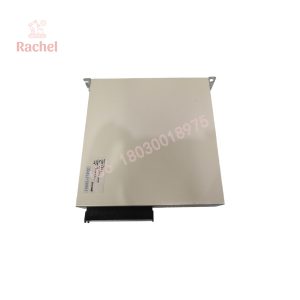
The Reliance Electric 57C413B is a Common Memory Module used in DCS 5000 and AutoMax rack-based control systems. It stores configuration information shared among processor modules and provides the memory and bus-arbitration functions required when multiple processors operate in the same rack.
The important distinction is its system role. This is not a general-purpose RAM expansion card. In a multi-processor AutoMax rack, the 57C413B is part of the control architecture itself. It can also be installed in slot 0 of a single-processor rack or used in an even-numbered slot for user-defined data storage.
Key Technical Specifications
| Parameter | Specification |
|---|---|
| Manufacturer | Reliance Electric |
| Current Brand Associations | Rockwell Automation / ABB / Baldor Reliance |
| Model | 57C413B |
| Product Type | Common Memory Module |
| Platform | AutoMax / DCS 5000 |
| Memory | 128 KB |
| Memory Organization | 64K × 16 |
| Primary Multi-Processor Location | Slot 0 |
| Battery | On-board lithium battery |
| Primary Function | Shared configuration/data memory and bus arbitration |
| Rack Compatibility | AutoMax / DCS 5000 racks |
| Status | Legacy / EOL |
The OEM manual identifies the 57C413B as a 128 KB module with an on-board lithium battery. The hardware block diagram describes the memory as 64K × 16.
The distinction from the older 57C413 matters. The original 57C413 uses external battery backup, while the 57C413B has its battery on the module itself.
Application Scenarios & The “Trench” Experience
A legacy AutoMax rack can run for years without anybody touching the common-memory card. Then a processor failure occurs, the rack is powered down, and somebody discovers that the memory module battery is also decades old.
That is where the trouble starts.
The 57C413B is infrastructure hardware, not just storage. In a multi-processor rack, losing common memory can affect shared configuration data and processor coordination. Rockwell’s documentation specifically states that the module is required in slot 0 when a DCS 5000/AutoMax rack contains more than one processor.
- DCS 5000 — Multi-Processor Control — Provides shared configuration memory and bus arbitration between processor modules.
- AutoMax — Multi-Processor Rack — Allows processors to access system-wide configuration information and common data.
- AutoMax — Single-Processor Rack — Can be installed in slot 0 to move configuration data from the processor into common memory.
- AutoMax — User-Defined Data Storage — When installed in an appropriate even-numbered slot other than slot 0, the module can provide user-defined memory storage.
- Legacy Plant Maintenance — Spare Module Stock — Appropriate as a controlled spare for operating AutoMax/DCS 5000 installations where migration is not immediately practical.
Field case — plausible replacement scenario:
A production line uses multiple AutoMax processors in one rack. A processor fault occurs during a planned shutdown. The replacement processor powers up, but the rack does not behave as expected.
The maintenance team discovers that the common-memory module is also reporting a battery-related problem.
The technician checks the installed card: 57C413B.
Instead of assuming that any 57C413-family board is equivalent, the team verifies the suffix. The B version has its own battery architecture, and the replacement is tested before installation. The rack is then brought back online and processor communication is verified.
The lesson is simple: on legacy control systems, the suffix can be as important as the base model number.
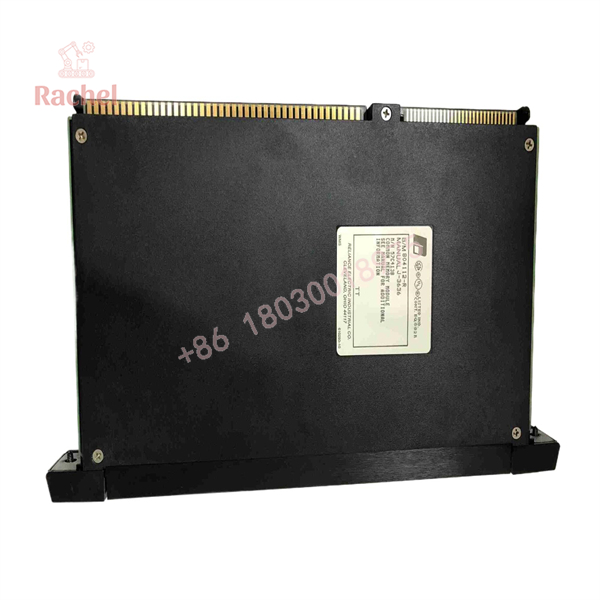
57C413B
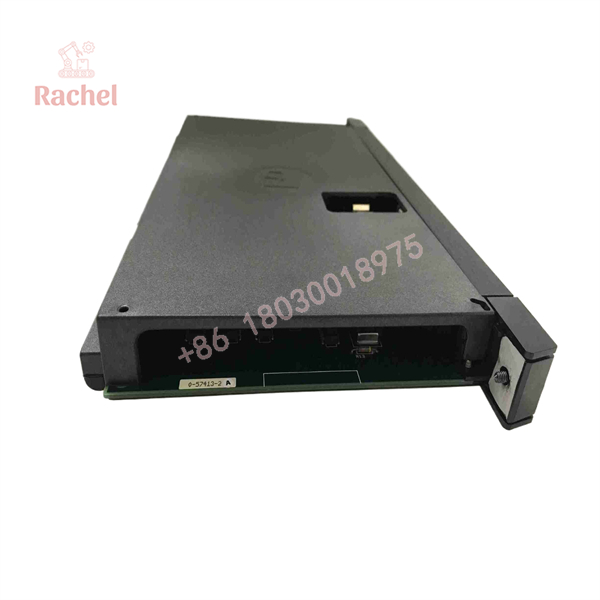
57C413B
Transparency SOP: Quality Assurance & Testing
Common-memory hardware requires more than a visual inspection. Battery condition and backplane operation are especially important.
- Inbound Inspection
- Verify 57C413B identification and revision markings.
- Inspect the PCB, edge connector, LEDs, battery area, and mounting hardware.
- Look for corrosion or leakage around the battery.
- Compare the board layout against the installed module.
- Live Rig Testing
- Install the module in a compatible AutoMax/DCS 5000 rack.
- Verify rack initialization and module diagnostics.
- Test processor access to common memory.
- Where applicable, verify multi-processor communication and bus arbitration.
- Electrical Parameter Checks
- Inspect battery voltage and battery condition using an approved procedure.
- Check backplane connectivity.
- Verify memory read/write operation through the supported controller environment.
- Check diagnostic indicators for abnormal conditions.
- Firmware / Revision Verification
- Record board revision and hardware identifiers.
- Confirm compatibility with the processor generation being used.
- Do not assume that a 57C413, 57C413A, and 57C413B are interchangeable in every rack configuration.
- Final QC & Anti-static Packaging
- Record battery condition and functional-test results.
- Protect the board and edge connector against ESD.
- Package the module with mechanical protection around the battery and PCB.
- Record the exact hardware revision supplied.
We don’t just ship boxes. For a memory module this old, battery condition and actual rack testing are part of the acceptance criteria.
The Veteran’s Tech Trap Guide (Crucial Value-Add)
- ⚠️ Check the battery before you trust the card. The 57C413B has an on-board lithium battery. A module that passes a basic power-up test can still have a battery approaching end of service life.
- ❗ Do not confuse 57C413 with 57C413B. The original 57C413 requires external battery backup, whereas the 57C413B incorporates the battery on the module.
- ⚠️ Slot position matters. In a rack with multiple processors, the Common Memory module is required in slot 0 according to the OEM documentation. Don’t move it around casually during troubleshooting.
- ❗ Back up the control configuration before replacing memory hardware. Common memory can contain configuration data shared by processors. Treat the card as part of the control-system architecture, not as disposable RAM.
Frequently Asked Questions (FAQ for Conversion)
Q1. What is the Reliance 57C413B?
It is a Common Memory Module for the Reliance DCS 5000 and AutoMax control systems. Its functions include shared configuration storage and processor bus arbitration.
Q2. How much memory does the 57C413B have?
The OEM documentation identifies the module as having 128 KB of memory, organized as 64K × 16.
Q3. Is 57C413B required when there is only one processor?
Not necessarily. In a single-processor rack, it can be used in slot 0 to store configuration data or in an appropriate even-numbered slot for user-defined data storage. Its required role is more important in multi-processor configurations.
Q4. Is the 57C413B the same as the 57C423?
No. They are related Common Memory modules, but the memory capacities differ. The OEM block diagram identifies 57C413B as 64K × 16 and 57C423 as 128K × 16.
Q5. Can I hot-swap the 57C413B?
No. The applicable Rockwell documentation warns that inserting or removing modules can cause unexpected machine motion and instructs users to turn machine power off before module removal or installation.
Q6. Why is a surplus 57C413B cheaper than an OEM replacement?
This is legacy hardware, so supply now comes largely through industrial surplus, repair, and secondary-market channels. Current suppliers list repair and replacement services for the 57C413B, including 12-month supplier warranties in some cases.
Q7. Is a surplus 57C413B safe to use?
Potentially, but battery condition is the first thing I would verify. Request the actual board photograph, hardware revision, battery condition, rack-test results, condition classification, and written warranty. For an AutoMax system that still controls production equipment, an untested 30-year-old memory card is not a spare; it is a troubleshooting project waiting to happen.

 Start Chat


