





Description
Product Introduction
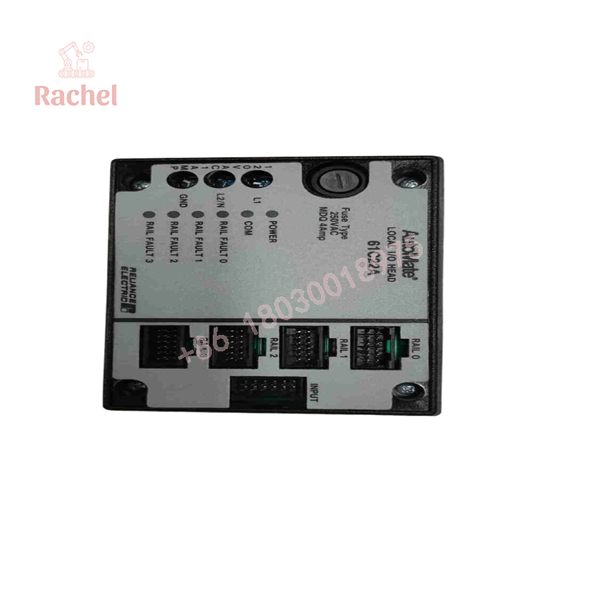
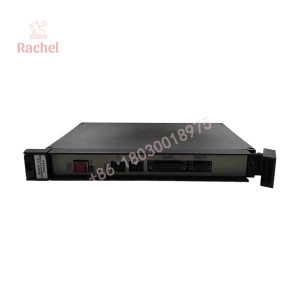
The Reliance Electric 61C22A is a dedicated AutoMate Local I/O Head module engineered to bridge local I/O expansion rails directly to an AutoMate programmable logic controller processor. Mounted within the local chassis system, this module coordinates high-speed signal distribution, power monitoring, and channel diagnostic handshakes across up to four connected I/O rail segments.
Unlike basic passive ribbon headers, the 61C22A features active onboard line conditioning and dedicated rail fault detection circuitry. Swapping an aging or faulted unit with a fully tested replacement eliminates intermittent bus comm drops, phantom rail fault indicators, and unmapped I/O dropouts across legacy industrial control cabinets.
Key Technical Specifications
| Parameter | Value |
|---|---|
| Manufacturer | Reliance Electric / Rockwell Automation |
| Part / Model Number | 61C22A |
| Product Line | AutoMate Series |
| Module Type | Local I/O Head Driver Assembly |
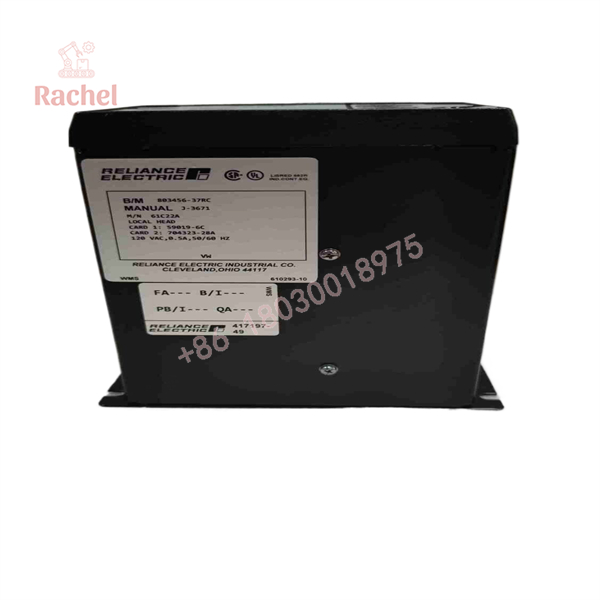
| Input Power Rating | 120 VAC, 1 Amp |
| Onboard Fuse Protection | 250 VAC, 4 Amp (Type MDQ Slow-Blow) |
| Rail Support Capacity | Up to 4 Local I/O Rails (Rail 0, Rail 1, Rail 2, Rail 3) |
| Status Indicators | POWER, COM, RAIL FAULT 0 through 3 |
| Mounting Configuration | AutoMate Chassis / Sub-panel Mount |
Application Scenarios & The “Trench” Experience
When a legacy AutoMate system loses its local I/O head, entire lines go dark in a fraction of a second. Chasing down a intermittent “RAIL FAULT” light across four rows of 120V relay modules at 2 AM is a miserable experience for any field engineer. Nine times out of ten, age-wear on the internal power regulation circuit or an oxidized backplane header on the 61C22A is the true culprit behind the line collapse.
- Heavy Manufacturing Lines – AutoMate PLC Systems – Drives digital and analog I/O communication between the CPU and remote control panels.
- Stamping & Metal Forming Presses – Sub-panel Interfacing – Routes high-speed limit switch inputs and safety valve triggers straight to the main logic frame.
- Legacy Factory Overhauls – Control Panel Maintenance – Provides a direct, drop-in replacement module to restore operational reliability without rewriting complete PLC ladder code.
Field Case Study
A steel slitting line went offline after a power surge tripped the main breaker, leaving the central AutoMate rack throwing a persistent Rail Fault 2 alarm. The site technician tried replacing individual I/O cards, but the main system refused to clear the bus fault. Realizing the internal line conditioning on the local head was blown, they swapped in a pre-tested 61C22A module from surplus inventory. After replacing the unit and resetting the front panel 4A MDQ fuse, the entire rack initialized cleanly and restored full production in under 45 minutes.
61C22A
61C22A
Transparency SOP: Quality Assurance & Testing
We don’t ship untested surplus boxes. Every 61C22A undergoes a practical testing sequence before leaving our shop:
- Inbound Visual & Fuse Audit: Full inspection for cracked terminal housings, swollen power capacitors, and verification of proper 4A MDQ fuse sizing.
- AC Line Power-On Check: Applying 120 VAC to terminal points (L1, L2/N, GND) to confirm onboard power supply stability and clean DC internal rails.
- Live Bus & Comm Diagnostics: Seating the board in an AutoMate test rack to verify active COM handshakes and loopback testing across Rail 0 through Rail 3 ports.
- Individual Rail Fault Simulation: Deliberately breaking rail loop connections to confirm all four diagnostic LEDs trigger correctly.
- Anti-Static & Protective Packaging: Sealed inside heavy-duty anti-static bags and wrapped in custom foam cushioning to protect connector pins during transport.
The Veteran’s Tech Trap Guide
- ⚠️ Check the Fuse Type First: The 61C22A uses a specific 250 VAC, 4 Amp MDQ dual-element slow-blow fuse. Don’t throw a fast-acting glass fuse in there during a quick fix—it will blow the moment the AC line inrush hits.
- ❗ Never Pull Under Load: Turn off the 120 VAC feed before disconnecting the ribbon cables or unmounting the chassis. Pulling connectors while energized can spike the bus line and fry downstream I/O logic chips.
- ⚠️ Inspect the Ribbon Cable Headers: The pin headers on Rail 0–3 are prone to bent pins or oxidation after sitting in dirty industrial enclosures for decades. Spray them down with zero-residue contact cleaner before plugging in your rail cables.
- ❗ Verify Earth Ground Continuity: Always make sure the dedicated GND terminal on the front barrier strip has a clean, solid connection to the panel backplate. Poor grounding creates noise that triggers false “RAIL FAULT” alarms.
Frequently Asked Questions (FAQ for Conversion)
Q: Is the Reliance Electric 61C22A compatible with standard AutoMate I/O rails?
A: Yes. The 61C22A is built specifically to drive standard AutoMate local I/O rail structures (supporting up to 4 distinct rail channels simultaneously).
Q: Can I hot-swap the 61C22A if my control system is running?
A: Absolutely not. You must cut power to the 120 VAC supply terminals and power down the rack before servicing this unit to prevent backplane damage.
Q: What does a red RAIL FAULT LED mean on the front panel?
A: A active Rail Fault LED indicates a loss of communication, broken cable, or voltage drop on that specific expansion rail line (Rail 0, 1, 2, or 3).
Q: Why buy a surplus 61C22A unit instead of upgrading the entire PLC system?
A: Migrating an entire AutoMate system to a modern platform can cost tens of thousands of dollars in hardware, rewiring, and downtime. A tested replacement 61C22A keeps your current line running instantly at a fraction of the cost.
Q: What warranty comes with this replacement head?
A: Every new surplus and reconditioned 61C22A module comes backed by a 12-month warranty covering operational and functional failures.

 Start Chat


