





Description
Product Introduction & Engineering Value
The 505-CP2572 occupies a very specific position in a legacy control system: it is the Ethernet communications gateway between the Series 505 PLC environment and an IP network. It does not function as a CPU, conventional digital I/O module, or Ethernet switch. Its purpose is to translate Ethernet-based communications into transactions the 505 PLC can process through its backplane interface.
This makes the module particularly valuable when maintaining older production systems that still depend on TI/Siemens 505 controllers. A failed communication processor can leave the PLC itself operational while simultaneously breaking HMI, SCADA, historian, engineering-station, or inter-PLC communications.
Technical Specifications
Communication Architecture
The 505-CP2572 can operate in both server and client modes.
As a server, another network node can send a command through TCP/IP, after which the CP2572 communicates with the PLC processor through the backplane and returns the requested information to the network client.
As a client, the module can initiate communications under PLC control. Siemens documentation gives examples of network transactions involving PLC memory and other network nodes.
| Specification | Details |
|---|---|
| Module family | SIMATIC 505 |
| Module type | Ethernet TCP/IP communication processor |
| Network | Ethernet |
| Transport | TCP/IP |
| Messaging | CAMP / CAMP Packed Task Code |
| PLC role | Client and server |
| PLC interface | 505 backplane |
| PLC memory access | Supported through communication commands |
| Networked PLC communication | Supported |
| PC communication | Supported |
| HMI/SCADA integration | Supported through compatible drivers/software |
| Configuration environment | Legacy 505 programming/configuration tools |
| Typical supported CPUs | TI/505 systems including TI545, TI555 and TI565 environments |
| Maximum TCP connections | Default documented value: 8 |
| Data Share mode | Can reduce TCP server connections to 2 |
| Ethernet driver compatibility | Supported by several current industrial communication drivers |
The Kepware SIMATIC 505 Ethernet driver specifically supports 505-CP2572 and documents operation with TI545, TI555, and TI565 systems. It also identifies CAMP and CAMP Packed Task Code as supported protocols.
TCP Connection Capacity
The default number of TCP connections documented for the CP2572 is 8. The module’s Start Network Server command can be used to configure a different connection count. When the Data Share feature is enabled, the number of TCP server connections is automatically limited to two.
This is an important engineering consideration when replacing an existing card. A system with multiple HMIs, supervisory computers, engineering stations, and other PLCs should be checked for its actual simultaneous connection requirements rather than assuming that any Ethernet interface will provide unlimited client capacity.
Ethernet Interface Consideration
The legacy CP2572 documentation includes an AUI Ethernet interface. The manual specifies that compatible IEEE 802.3 AUI transceivers or cables are required. It also documents an AUI external power arrangement capable of supplying at least 500 mA at 12 VDC when external AUI power is selected.
This is one of the most important differences between this legacy communication processor and modern RJ45 Ethernet modules.
Do not assume the 505-CP2572 has a conventional integrated RJ45 copper Ethernet port.
If the existing installation uses an AUI transceiver, the replacement strategy needs to preserve that physical network interface.
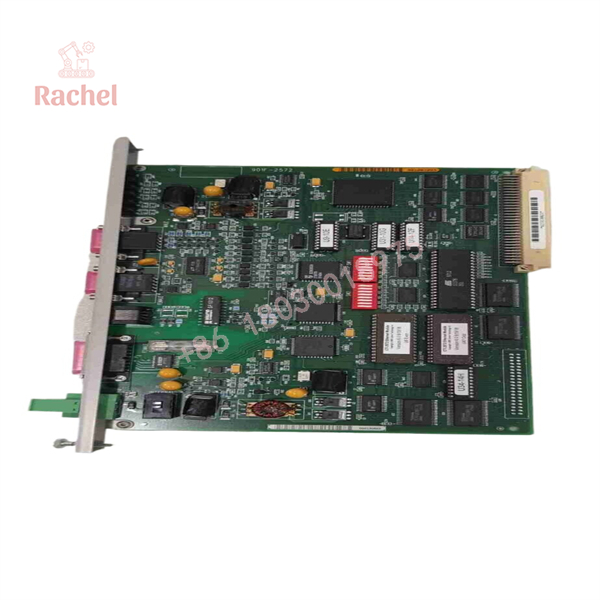
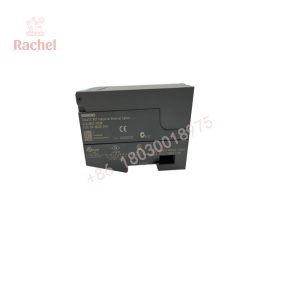
505-CP2572
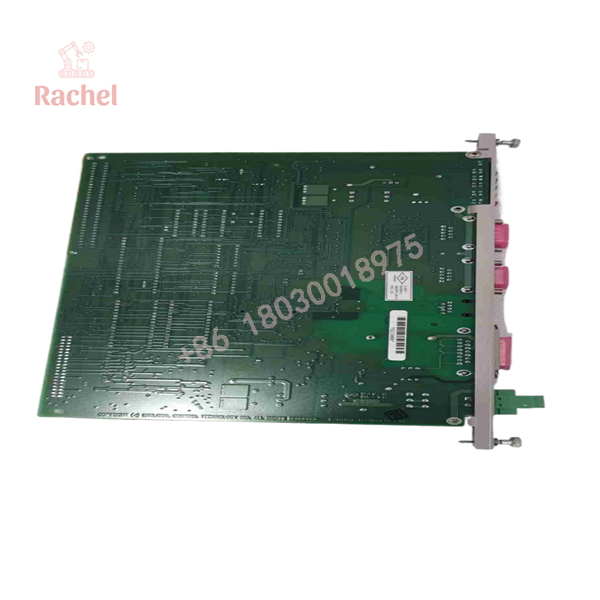
505-CP2572
Field Application & “Trench” Experience
Typical Application
The 505-CP2572 is commonly encountered in older automation systems where a Series 505 PLC remains responsible for machine or process control while Ethernet is used for higher-level communications.
Typical applications include:
- PLC-to-PLC communications
- HMI connectivity
- SCADA systems
- Production data collection
- Historian interfaces
- PC-based supervisory applications
- Remote monitoring
- Legacy plant Ethernet networks
The modern Kepware driver documentation confirms that SIMATIC/TI 505 systems using the CP2572 can be integrated with OPC applications such as HMI, SCADA, historians, MES, and ERP systems.
Plausible Maintenance Scenario
A production line’s TI 545 PLC continues executing its control program normally, but the operator stations suddenly lose PLC data. Maintenance initially suspects the Ethernet switch because several stations report communication failures simultaneously.
The actual problem is the CP2572.
The PLC logic continues to run because the communication processor is not the CPU. However, the HMI and supervisory systems depend on the CP2572 for access to PLC data. Replacing the communication processor restores network visibility without disturbing the PLC control program.
This is a classic legacy-system failure pattern: the machine is running, but the plant has effectively lost its eyes and supervisory interface.
Transparency SOP: QA & Testing
Because the 505-CP2572 belongs to a legacy PLC platform, procurement should require more than a visual inspection.
Recommended Inspection
1. Part-number verification
Confirm the physical identification as:
Siemens SIMATIC 505-CP2572
Also verify whether the unit is actually Siemens-branded or a CTI 2572-equivalent. Historical documentation states that Siemens obtained exclusive rights to market the CTI 2572 as the SIMATIC 505-CP2572 beginning June 1, 1996, and that the CTI programming documentation applies to the Siemens version.
2. Connector inspection
Inspect the Ethernet/AUI interface carefully. Check for:
- Bent connector contacts
- Damaged shell
- Oxidation
- Loose hardware
- Previous mechanical stress
3. PCB inspection
Look for:
- Corrosion
- Burn marks
- Damaged ICs
- Cracked solder joints
- Contamination
- Evidence of previous repair
4. Configuration verification
If the card is a used replacement, document its existing network configuration before installing it into a production system.
5. Functional test
A proper test should include:
- Installation into a compatible Series 505 system
- Successful module recognition
- Ethernet initialization
- Network connectivity
- TCP connection establishment
- PLC memory read/write testing where appropriate
- Client/server communications
- HMI or OPC communications if those are part of the application
New Surplus Authenticity
For a New Surplus 505-CP2572, request photographs showing:
- Complete Siemens/505-CP2572 label
- Part number
- Serial number
- Revision information
- Ethernet/AUI connector
- Overall PCB condition
- Original packaging when available
New Surplus should not automatically be described as carrying a current Siemens factory warranty.
A supplier warranty is a separate commercial commitment and should be stated explicitly.
Veteran’s Tech Trap Guide
⚠️ Trap #1 — Don’t confuse CP2572 with CP1434-TCP
Both belong to the SIMATIC 505 Ethernet ecosystem, but they are different communication processors.
The CP2572 is associated with the legacy 505 Ethernet architecture and CTI 2572 technology. The CP1434-TCP is a separate Siemens communication processor with its own hardware and functionality. Siemens documentation specifically identifies CP2572 and CP1434-TCP as separate modules.
Match the replacement against the installed card, not simply against the words “505 Ethernet.”
⚠️ Trap #2 — AUI is not RJ45
This is a procurement trap that causes unnecessary delays.
The legacy 505-CP2572 documentation describes an AUI Ethernet interface and associated transceiver requirements.
If your plant network was modernized around standard RJ45 switches, verify the AUI-to-Ethernet transceiver arrangement before ordering the card.
⚠️ Trap #3 — TCP connection limits matter
The default documented connection count is eight, and Data Share can impose a two-connection limitation.
If several HMIs, SCADA servers, historians, and engineering PCs communicate directly with the PLC, count the connections before assuming the card is adequately configured.
PRO TIP
For legacy 505 systems, record the PLC CPU model, CP2572 configuration, Ethernet transceiver type, IP address, subnet configuration, connected clients, and communication protocol in the spare-parts record.
The spare card alone is not the complete recovery package.
Dynamic FAQ
What is the Siemens 505-CP2572?
It is an Ethernet TCP/IP communication processor for SIMATIC/TI 505 PLC systems. It provides network communications between the 505 PLC and Ethernet-connected devices.
Is 505-CP2572 a PLC CPU?
No. It is a communications processor. The PLC CPU continues to execute the control program, while the CP2572 provides the Ethernet communications path.
What protocols does the 505-CP2572 support?
The documented communication stack uses TCP/IP with CAMP and CAMP Packed Task Code messaging.
Can it communicate with an HMI or SCADA system?
Yes. SIMATIC 505 Ethernet drivers support the CP2572 for connections to OPC applications, HMI, SCADA, historians, MES, ERP, and other supervisory systems.
Is 505-CP2572 compatible with CTI 2572?
The relationship is historically direct. Documentation states that Siemens received exclusive rights to market the CTI 2572 as the SIMATIC 505-CP2572, and the CTI 2572 programming reference applies to the Siemens designation.
Nevertheless, procurement should verify the exact hardware revision and application requirements before treating every 2572-family card as a drop-in replacement.
Is the 505-CP2572 obsolete?
It is a legacy Series 505 communication processor, so it should be treated as legacy-support hardware rather than a current-generation PLC networking product. That makes spare-stock planning particularly important for plants still dependent on Series 505 control systems.
What should I specify when purchasing a replacement?
Use the complete identification:
Siemens SIMATIC 505-CP2572 Ethernet TCP/IP Communication Processor
Also request confirmation of:
- Exact part number
- Hardware revision
- Condition: New Surplus / Used / Refurbished
- Functional test status
- AUI interface condition
- Warranty period
- Return policy
- Any included configuration or documentation
What warranty should I expect for New Surplus?
Do not assume an active Siemens factory warranty. New Surplus generally means unused inventory sourced outside normal current OEM distribution. The supplier should state its own warranty explicitly and identify whether the unit has been functionally tested.
Is a photo useful for confirming this part?
Yes. For a legacy communications processor, a clear photo of the front label, connector area, and PCB identification can help distinguish the CP2572 from visually similar 505 Ethernet modules and CTI variants.

 Start Chat


