





Description
Product Introduction
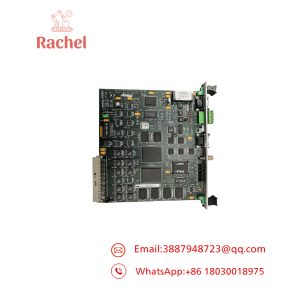
The SST 5136-DNP-CPCI (manufactured by Molex / Woodhead under the SST brand) is a high-performance 3U CompactPCI interface card engineered for DeviceNet networks. Industrial automation programmers and IPC system builders rely on this card to turn standard 3U cPCI industrial computers into powerful DeviceNet Master scanner consoles or high-speed Slave nodes.
Unlike standard PCI network adapters that suffer from thermal throttling and flimsy edge-card connections, the 5136-DNP-CPCI features a rugged cPCI Eurocard format with faceplate ejector handles. Its onboard microprocessor manages all DeviceNet CAN protocol layers locally, offloading network cyclic polling entirely from the main cPCI host CPU.
Key Technical Specifications
| Parameter | Value |
| Manufacturer | SST / Molex / Woodhead |
| Part Number | 5136-DNP-CPCI |
| Bus Interface | CompactPCI (cPCI) 3U Form Factor, 32-bit / 33 MHz |
| Network Protocol | DeviceNet (Group 2 Master/Slave & UCMM compliant) |
| Baud Rates | 125 Kbps, 250 Kbps, 500 Kbps (Software Configurable) |
| Onboard Processor | High-speed embedded RISC processor for CAN stack execution |
| Field Connector | 5-Pin Phoenix Sealed Screw Terminal (DeviceNet standard) |
| Isolation | 500V Galvanic isolation between network and cPCI bus |
| Memory Mapping | 16 KB Shared RAM / I/O Mapped |
| Operating Temperature | 0°C to +60°C |
Application Scenarios & The “Trench” Experience
A major semiconductor fabrication facility ran into a critical bottleneck when a cPCI-based wafer handling system dropped its DeviceNet scanner card during a high-vacuum chamber run. The stock PC-based soft-logic controller lost all handshakes with field pneumatic valve manifolds, threatening a $400,000 production lot. Because standard PCI cards couldn’t lock into the high-vibration 3U chassis, technicians swapped in a pre-tested SST 5136-DNP-CPCI card, restored the driver stack via SST console, and got the line fully back in control within 30 minutes.
- Semiconductor Manufacturing – Wafer Handling & Vacuum Systems – Links cPCI industrial PCs directly to mass flow controllers and solenoid valve blocks over DeviceNet.
- Automotive Assembly – Robotic Weld Cell Supervision – Manages high-density distributed I/O blocks across harsh, high-EMI robotic assembly lines.
- Packaging Machinery – High-Speed Motion & Sorting – Provides real-time scan cycles for distributed photo-eyes, motor drives, and pneumatic ejectors.
Transparency SOP: Quality Assurance & Testing
We don’t just ship boxes; we test them on actual cPCI racks. Every 5136-DNP-CPCI module undergoes a strict 5-step bench validation before entering our inventory:
- Inbound Physical Inspection: Thorough verification of cPCI J1/J2 backplane pins, PCB trace integrity, faceplate ejector latch mechanics, and original OEM labels.
- Live Rack Initialization: Slotted into a powered 3U CompactPCI chassis to verify BIOS detection, resource allocation (IRQ/Base Address), and system boot stability.
- Network Communication Loop: Connected to an active DeviceNet test loop with Allen-Bradley Point I/O drops to verify Master scanner execution at 500 Kbps.
- Thermal Stability Run: Run under continuous 100% I/O polling for 4 hours inside a bench-enclosure to ensure zero CAN controller register lockups under thermal load.
- Anti-Static Packaging: Cleared cards are sealed inside moisture-barrier ESD bags with fresh desiccant prior to custom foam boxing.
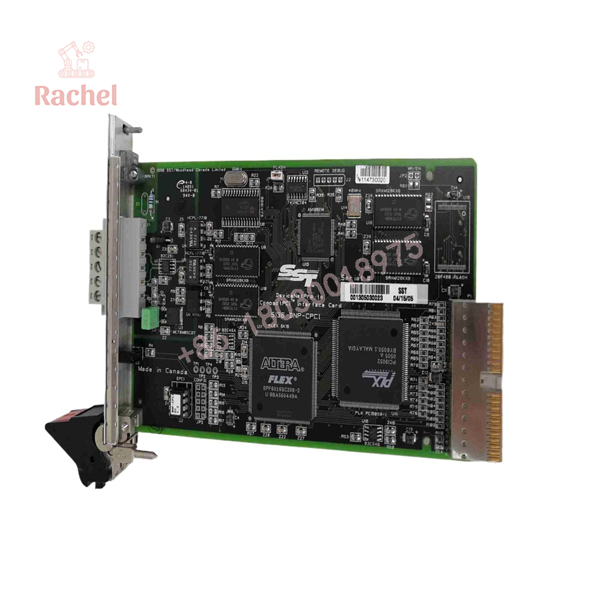
5136-DNP-CPCI
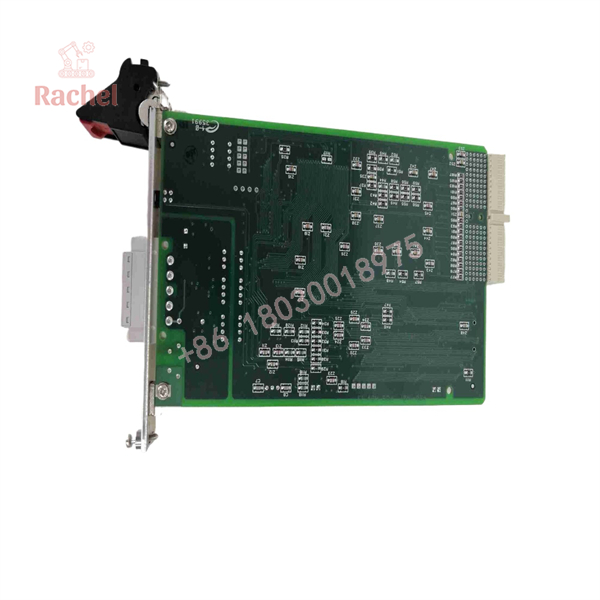
5136-DNP-CPCI
The Veteran’s Tech Trap Guide (Crucial Value-Add)
- ⚠️ DeviceNet Power Supply Requirement: The 5136-DNP-CPCI requires 24V DC field bus power fed directly through the 5-pin Phoenix connector to power the transceiver optocouplers. If your network 24V DC bus drops below 11V DC, the onboard CAN transceiver shuts down silently, dropping all node communications while the cPCI host CPU still reports the card as “Present.”
- ❗ Mac Address & Baud Rate Mismatches: Unlike modern Ethernet cards that auto-negotiate, this card must have its DeviceNet MAC ID (Node Address 0-63) and Baud Rate explicitly defined via the SST Configurator software or driver registry. A duplicate MAC ID on your loop will immediately cause a duplicate MAC fault and knock the card off the network.
- ⚠️ Termination Resistor Reminders: DeviceNet requires a 121-ohm, 1/4-watt termination resistor at each physical end of the trunk line. To be honest, engineers forget this constantly on short bench setups. Running without proper termination resistors causes excessive CAN bit-error retries that look like card hardware failure.
Frequently Asked Questions (FAQ)
Q: Is the SST 5136-DNP-CPCI compatible with modern 64-bit Windows operating systems?
A: Legacy SST drivers were natively built for Windows NT, 2000, and XP, or real-time OS environments like VxWorks and QNX. Running this card on modern Windows 10/11 system builds usually requires running third-party soft-PLC platforms or legacy virtualized environments with raw PCI pass-through support.
Q: Can this card act simultaneously as a DeviceNet Master and Slave?
A: Yes. The onboard firmware stack natively supports multi-master and slave capabilities, allowing the host cPCI system to gather I/O as a Master scanner while simultaneously reporting status data as a Slave to a primary plant PLC.
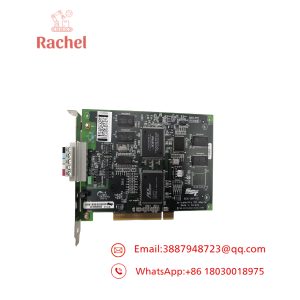
Q: What is the difference between the 5136-DNP-CPCI and the 5136-DNP-PCI?
A: Functionally and protocol-wise, they perform the exact same task. The key difference is physical bus architecture: the 5136-DNP-PCI uses a standard desktop PCI edge connector, while the 5136-DNP-CPCI uses a rugged 3U Eurocard format with CompactPCI backplane connectors built for high-vibration industrial racks.
Q: What warranty comes with these surplus SST cPCI cards?
A: Every SST 5136-DNP-CPCI shipped includes a full 12-month operational warranty. If you encounter backplane communication failures or transceiver hardware defects within one year, we replace it or issue a full refund.
Q: Are these units genuine OEM parts?
A: Yes. All stock consists of original SST / Woodhead / Molex manufactured boards sourced from verified factory retrofits, canceled automation projects, and liquidation stores.

 Start Chat


