





Description
Product Introduction & Engineering Value
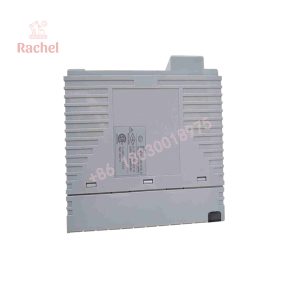
The Yokogawa AAI141 is designed for a very specific process-control task: bringing 16 channels of 4–20 mA analog signals into a CENTUM VP FIO system. Its inputs are non-isolated, so field-loop isolation must be addressed at the transmitter, barrier, or signal-conditioning level when the application requires it.
This makes AAI141 suitable for high-density transmitter termination where loop compatibility and channel count matter more than per-channel galvanic isolation. Yokogawa provides multiple connection arrangements, including pressure-clamp terminal blocks and dedicated cable interfaces.
Technical Specifications
| Specification | AAI141 |
|---|---|
| Model | AAI141 |
| Signal Type | Analog current input |
| Input Range | 4–20 mA DC |
| Number of Channels | 16 |
| Input Isolation | Non-isolated |
| System | CENTUM VP FIO |
| Standard Suffix | -S |
| HART Version | -H |
| Explosion Protection | Suffix E available |
| G3 / Extended Temperature Option | Suffix 3 |
| Terminal Options | /K4A00, /A4S00, /A4S10, /A4D00, /A4D10 |
| MIL Connector Cover | /CCC01 |
| Typical Application | 4–20 mA process transmitters |
Yokogawa’s model/suffix documentation confirms that -S denotes the standard type and -H adds HART digital communication. Suffix 5 indicates no explosion protection, while E indicates explosion protection. Suffix 3 provides the ISA Standard G3 option together with the -20 to 70 °C temperature option.
Connection options
The AAI141 can be used with several signal-connection arrangements. Yokogawa documentation lists:
- /K4A00 — KS Cable Interface Adapter, ATK4A-00
- /A4S00 — Pressure Clamp Terminal Block, ATA4S-00
- /A4S10 — Pressure Clamp Terminal Block with surge absorber
- /A4D00 — Dual Pressure Clamp Terminal Block
- /A4D10 — Dual Pressure Clamp Terminal Block with surge absorber
- /CCC01 — Connector cover for MIL cable
These options are part of the ordering configuration and should not be treated as interchangeable hardware without checking the installed connection scheme.
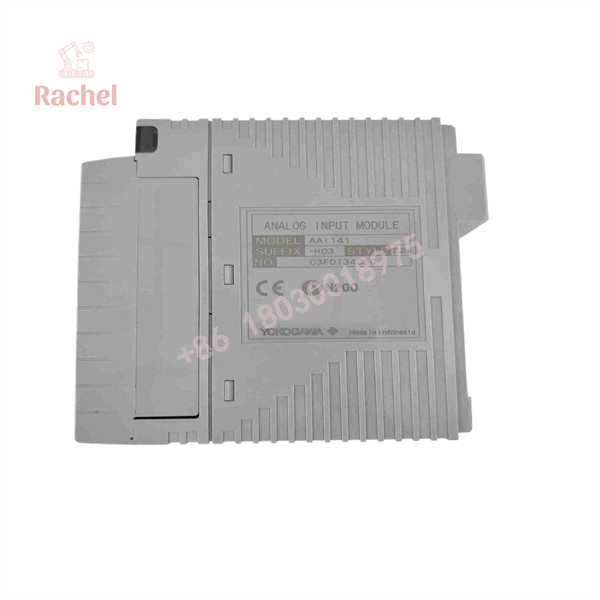
AAI141
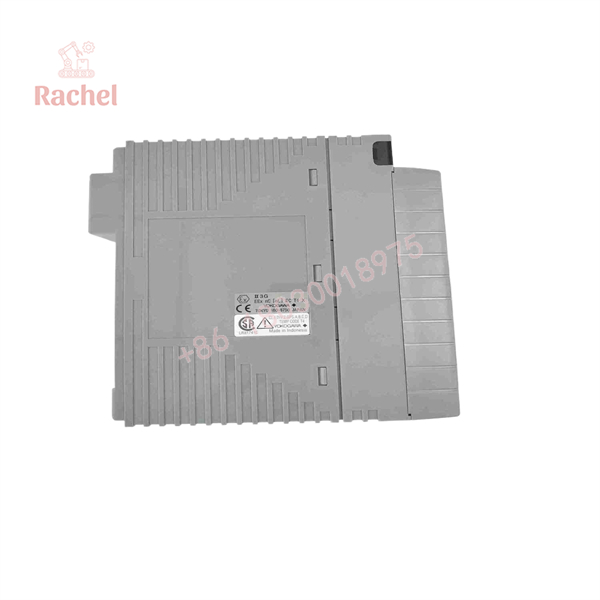
AAI141
Field Application & Practical Engineering Scenario
A common AAI141 application is a CENTUM VP cabinet receiving multiple pressure, flow, level, and temperature transmitter loops from a process area. Sixteen 4–20 mA channels can be concentrated on one analog-input module, reducing the number of I/O slots required for a large transmitter population.
Practical application scenarios
Process transmitter termination
Use AAI141 for conventional 4–20 mA transmitters where channel density is important and galvanic isolation is handled elsewhere in the signal path.
Pulp and paper process control
The module is well suited to legacy CENTUM VP installations where many continuous process measurements remain on standard current loops.
Utility and balance-of-plant systems
Boiler, cooling-water, compressed-air, steam, and other utility measurements commonly use 4–20 mA transmitters and can be concentrated on high-density analog input hardware.
Engineering point
is non-isolated. Do not substitute it for an isolated AAI143 simply because both modules accept 4–20 mA signals. Yokogawa lists AAI143 separately as a 16-channel isolated analog input module.
QA & Testing SOP
For New Surplus or refurbished AAI141 inventory, the inspection should go beyond checking whether the module powers up.
1. Part-number verification
Confirm the complete ordering code:
AAI141 + suffix + option code
For example, AAI141-S00 and AAI141-H00 are not identical configurations.
2. Physical inspection
Check:
- Front-panel label
- Connector condition
- Terminal interface
- PCB and housing
- Mounting hardware
- Signs of corrosion or contamination
- Revision information
3. Input-channel test
Apply calibrated current signals to representative channels and verify that the control system correctly detects the expected 4–20 mA values.
4. Multi-channel verification
A single successful channel test is not sufficient for a used 16-channel module. Test multiple channels across the module, preferably including channels near both ends of the channel numbering.
5. Accuracy verification
Where calibrated test equipment is available, check measured values against the applicable Yokogawa specification. One current product listing for the HART version reports ±16 µA accuracy, but the exact specification should be checked against the applicable hardware revision and Yokogawa document.
6. Communication verification
For an configuration, verify the HART function separately. The HART suffix is a hardware/configuration distinction and should not be assumed on a standard AAI141-S module. Yokogawa explicitly identifies -H as the HART-enabled version.
New Surplus authenticity
A genuine New Surplus AAI141 should be unused original Yokogawa hardware. Request photographs showing the actual model/suffix label, not merely a generic AAI141 stock image.
Veteran’s Tech Trap Guide
⚠️ Trap 1: Ordering “AAI141” without the suffix
AAI141 is the base model. The suffix determines important characteristics.
For example:
- = standard type
- = HART communication
- = explosion-protected configuration
- = G3 / extended-temperature option
The complete ordering code matters.
PRO TIP: Photograph the entire label before placing a replacement order.
⚠️ Trap 2: Confusing AAI141 with AAI143
Both are 16-channel 4–20 mA analog input modules, but AAI141 is non-isolated while AAI143 is isolated.
Do not make the substitution based only on signal range and channel count.
⚠️ Trap 3: Assuming every AAI141 supports HART
Standard AAI141 and are different configurations. Yokogawa specifically identifies the -H suffix as the HART version.
If the maintenance requirement includes HART variable access, verify the complete part number.
⚠️ Trap 4: Ignoring the terminal arrangement
AAI141 supports several connection configurations, including ATA4S and ATA4D terminal arrangements and KS/MIL cable options. The terminal hardware must match the cabinet wiring design.
Dynamic FAQ
Q1. What is the Yokogawa AAI141?
is a 16-channel analog input module for 4–20 mA signals used in Yokogawa’s FIO-based CENTUM VP architecture. The standard AAI141 is non-isolated.
Q2. How many analog inputs does AAI141 provide?
It provides 16 analog input channels. Each channel is designed for a 4–20 mA current signal.
Q3. Is AAI141 isolated?
No. The standard AAI141 is a non-isolated analog input module. Yokogawa separately specifies AAI143 as the 16-channel isolated 4–20 mA module.
Q4. Does AAI141 support HART?
The variant supports HART digital communication. The standard configuration does not have the HART function. Yokogawa’s model coding explicitly distinguishes the -H version.
Q5. Can AAI141 be used with a 2-wire transmitter?
Yes. The AAI141 architecture supports 2-wire transmitter applications, including transmitter power supply through the module. Four-wire transmitter configurations require an external power source.
Q6. Is AAI141 compatible with pressure-clamp terminals?
Yes. Yokogawa documents pressure-clamp terminal options such as ATA4S-00 and ATA4D-00, as well as other cable/interface configurations.
Q7. How should New Surplus AAI141 authenticity be checked?
Verify the actual module’s Yokogawa label, complete suffix code, option code, connector arrangement, and physical condition. A listing that only says “AAI141” does not establish that it has the required HART, explosion-protection, temperature, or terminal configuration.
Q8. What warranty should be expected?
Warranty depends on the supplier and stock condition. For example, one current supplier listing for AAI141-S00 states a one-year warranty. For procurement, confirm the warranty period, DOA coverage, test status, and return conditions for the exact module being supplied.

 Start Chat


