





Description
Product Introduction & Engineering Value
Managing legacy process signals across legacy control networks gets tricky when remote I/O modules begin drifting or dropping off the bus. The ABB 07AC91F (GJR5252300R3101) is a field-proven decentralized analog expansion unit engineered specifically for the ABB Advant Controller 31 (AC31) architecture.
Equipped with high-resolution A/D converters and built-in galvanic isolation, this module interfaces local process instrumentation—such as pressure transmitters, RTD converters, and control valves—directly back to the main CPU via the CS31 twisted-pair fieldbus. Dropping in a direct GJR5252300R3101 replacement restores precise loop feedback and signal processing without requiring firmware upgrades or PLC rack re-engineering.
Technical Specifications
- Operating Supply Voltage: 24 V DC nominal (20 V DC to 30 V DC range)
- Bus Interface: CS31 system bus (RS-485 twisted-pair fieldbus line)
- Analog Inputs: Configurable current (0/4..20 mA) or voltage (0..10 V) signal ranges
- Analog Outputs: Configurable current or voltage control signals for field actuators
- Signal Resolution: 12-bit analog-to-digital (A/D) conversion
- Galvanic Isolation: Optical isolation between field terminals, internal logic, and the CS31 bus
- Diagnostics: Front-panel LED display for operational status, power supply, and CS31 bus communication faults
- Mounting Style: Standard DIN rail mount with removable terminal block connectors
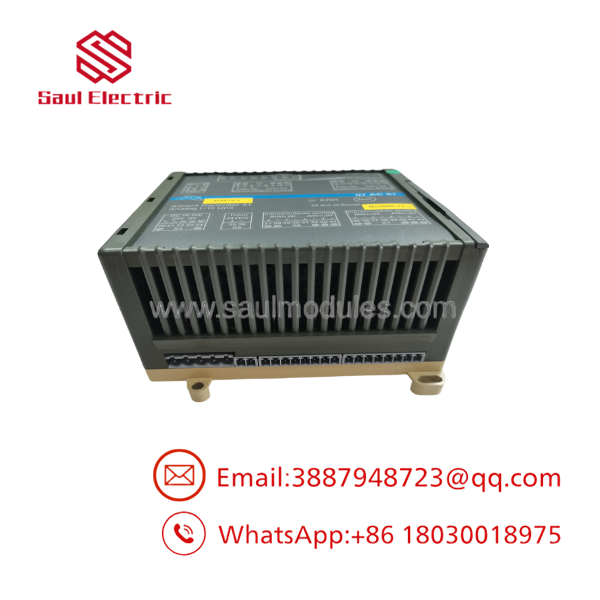
- 07AC91F GJR5252300R3101
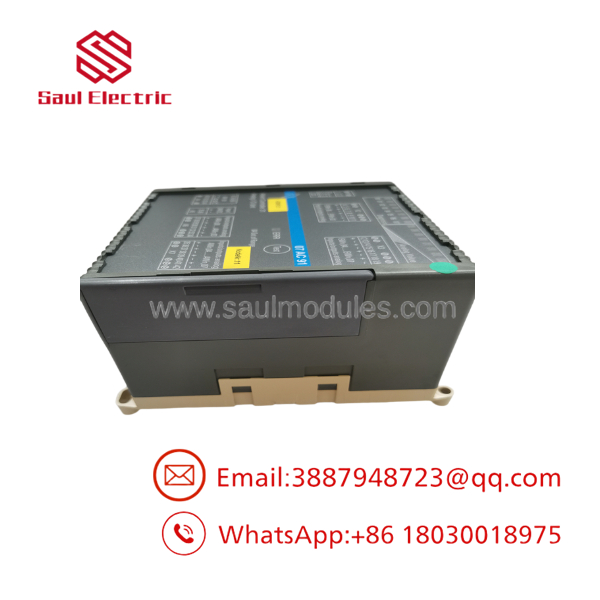
- 07AC91F GJR5252300R3101
Field Application & The “Trench” Experience
The Trench Story
During a scheduled shift change at a wastewater treatment plant, a primary sludge pump station lost speed reference control, causing the sump level to rise rapidly. The local panel reported a “CS31 Bus I/O Timeout” on node address 12. Troubleshooting the remote control panel showed that the 07AC91 analog card had lost power on its internal A/D converter sub-circuit following a thunderstorm surge.
Because the facility was still running an older AC31 controller platform, a full system migration was out of the question. The shift engineer swapped out the blown module with a pre-tested 07AC91F unit, set the node address switch to match node 12, and landed the removable terminal strips. The CS31 bus link LED turned solid green immediately, re-establishing 4-20mA speed control to the variable frequency drives in under fifteen minutes.
Specific Niche Applications
- Municipal Water Sump Station Control: Gathering analog level transmitter data and driving 4-20mA pump speed reference signals over long bus runs.
- Industrial Furnace Temperature Loops: Interfacing multivariable analog thermal sensors in metal heat-treatment plants.
- Paper Mill Sectional Tension Control: Transmitting fast analog dancer-arm feedback back to a central AC31 processor.
Transparency SOP: QA & Testing
- Visual & Mechanical Verification: Check terminal block screws, housing latches, and backplane bus pins under magnification for oxidation or thermal degradation.
- 24V DC Bench Power Test: Apply 24V DC supply voltage to verify internal power rails and confirm power LED indication.
- Bus Communication Check: Connect the unit to an AC31 test rack via the fieldbus. Verify address dip-switch reading and bus handshake stability.
- Analog Loop Signal Injection: Inject calibrated 4-20 mA and 0-10 V signals into all analog input channels while reading data registers on the test PLC to verify conversion accuracy within ±0.1%.
- Output Driving Test: Drive analog outputs from the test program across dummy load resistors and verify linear current output across the full span.
The Veteran’s Tech Trap Guide
- ⚠️ Set the Bus Address Before Powering Up: The fieldbus reads module address switches only upon cold boot. If you swap a 07AC91F card and change the address dial while the 24V DC power is connected, the module will continue to communicate on its previous node setting or throw a bus error.
- PRO TIP: Ground Your Shield Cable. The bus is susceptible to high-frequency plant noise. Ensure the twisted-pair cable shield is grounded at ONE end only—grounding both ends creates ground loops that corrupt analog input values.
- ⚠️ Check Hardware Suffix (07AC91 vs 07AC91F): The “F” suffix variant (GJR5252300R3101) often denotes specific customer or panel builder labeling (e.g., KBA/custom OEM branding). Always verify that pinouts and jumper/software configurations match your existing baseline 07AC91 installation.
Dynamic FAQ
Q: Is the ABB 07AC91F (GJR5252300R3101) directly compatible with standard 07AC91 modules?
A: Yes. Form factor, bus protocol, and terminal pinouts are functionally identical. The “F” / “R3101” designation typically indicates specific OEM labeling or regional batch production codes (such as KBA variants).
Q: Is the AC31 automation series still supported by ABB?
A: The AC31 product family is classified as obsolete by the OEM and has been superseded by the AC500 PLC platform. We provide legacy support with pre-tested New Surplus and Refurbished 07AC91/07AC91F units to keep active plant lines running without costly re-programming.
Q: Do I need special software to replace a faulty 07AC91F module?
A: No. Decentralized I/O modules store no user program code. Simply configure the hardware node address to match the card you are replacing, connect the wiring terminals, and the main controller will automatically recognize the node.
Q: What warranty is provided with surplus stock?
A: All of our new surplus and reconditioned ABB 07AC91F modules include a 1-year operational replacement warranty backed by full bench test reports.

 Start Chat


