





Description
Product Introduction
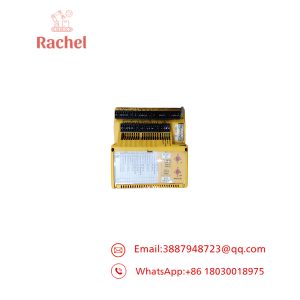
The Hartmann & Braun CONTRANS T TEU471 is a legacy industrial temperature-transmitter model associated with process instrumentation used to connect temperature measurement points to control and monitoring systems. ABB documentation identifies the TEU471 within the family of HART-capable field instruments supported by its device-management tools.
For replacement procurement, do not rely on the model name alone. Verify the nameplate, full order number, sensor input type, output and loop-power requirements, and communication configuration. Secondary listings describe the TEU471 as a DIN-rail temperature transmitter with a 4–20 mA output, but the detailed electrical specifications should be confirmed from documentation matching the actual unit.
Key Technical Specifications
| Parameter | Available information |
|---|---|
| Model | TEU471 |
| Product family | CONTRANS T |
| Original manufacturer | Hartmann & Braun |
| Associated legacy portfolio | ABB instrumentation |
| Device function | Temperature measurement signal conditioning / transmission |
| Sensor inputs | Verify exact variant; secondary listings describe thermocouple and RTD inputs |
| Output signal | Secondary listings describe 4–20 mA |
| Communication | HART support indicated in ABB device-management documentation |
| Power supply | Confirm from the unit nameplate and matching datasheet |
| Isolation rating | Not conclusively verified; published reseller descriptions differ |
| Mounting | DIN-rail mounting is reported by secondary listings |
| Operating temperature | Confirm the exact variant’s datasheet |
| Configuration method | ABB documentation identifies PC-based HART device-management support for TEU471 |
Sources: ABB device-management documentation and secondary product listings.
Specification caution: Published secondary listings disagree on isolation voltage and several electrical details. Do not use unverified values for loop design, hazardous-area compliance, or safety-critical instrumentation.
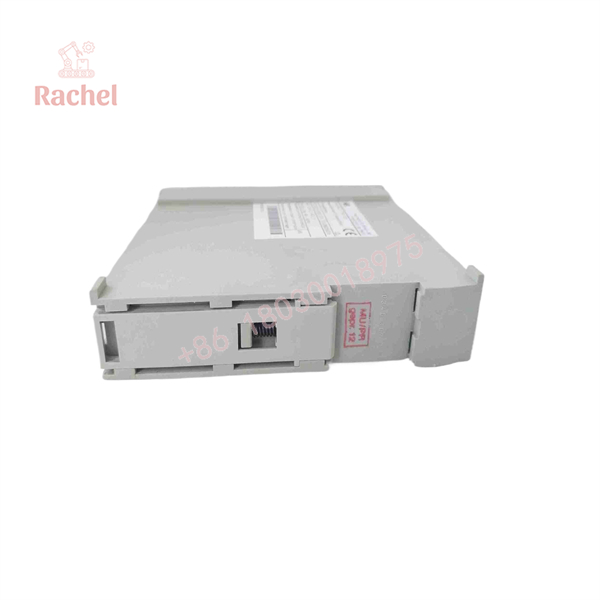
TEU471
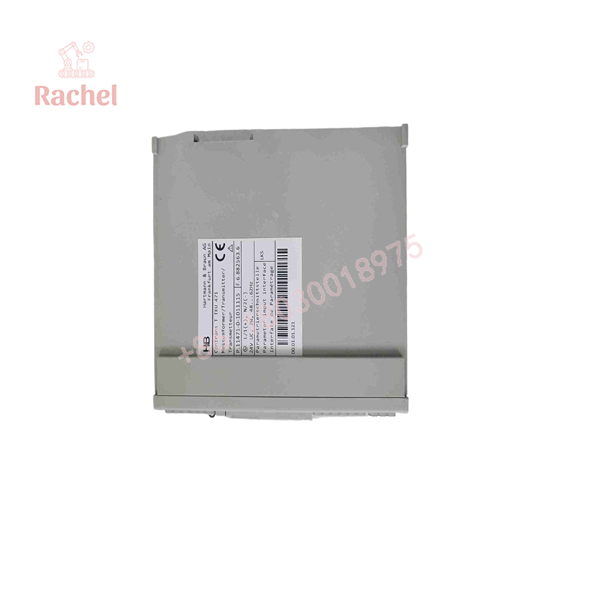
TEU471
Application Scenarios & “Trench” Experience
Typical application areas
- Process temperature monitoring: Transmitting temperature measurements from compatible sensors to control-system inputs.
- Boiler and thermal equipment: Supporting temperature measurement in industrial heating and utility processes.
- Chemical and petrochemical plants: Integrating field temperature measurements into legacy process-control installations, subject to the unit’s approvals and configuration.
- Manufacturing lines: Supporting temperature monitoring where the existing instrumentation architecture uses compatible analog signals.
- Legacy DCS and PLC systems: Maintaining installed instrumentation where replacing the transmitter would otherwise require panel rewiring or control-system changes.
Common maintenance problem
A transmitter may appear identical to the installed unit while having different input settings, output scaling, or communication parameters. Replacing it without checking the configuration can produce incorrect process readings or a mismatch with the control-system input.
Hypothetical case study: During a planned maintenance outage, a plant replaces a failed TEU471. The replacement powers up, but the control-room temperature reading does not match the local reference instrument. The maintenance team checks the sensor type, configured measurement range, loop wiring, and analog input scaling before making further changes. This avoids treating a configuration mismatch as a sensor failure.
Transparency SOP: Quality Assurance & Testing
For a used, refurbished, or surplus TEU471, request evidence for these inspection steps. They are recommended procedures, not claims that a particular unit has passed testing.
- Inbound inspection: Photograph the nameplate and inspect the housing, terminals, connectors, and signs of corrosion or repair.
- Live rig testing: Test with a compatible sensor simulator or calibrated input source across the required measurement range.
- Electrical checks: Verify supply and loop requirements, output current, wiring polarity, and signal stability against the correct documentation.
- Configuration verification: Check sensor type, range, output scaling, and HART communication where applicable.
- Final QC and ESD packaging: Record the test results, label the unit’s condition, and protect it against handling and transport damage.
For critical process applications, request a unit-specific test report and confirm that the replacement’s configuration matches the original installation.
Veteran’s Tech Trap Guide
- Trap 1 — Ordering by model number alone: Confirm the complete order code and nameplate details. Legacy instrumentation may have configuration-specific variants.
- Trap 2 — Assuming every sensor type is supported: Verify the actual thermocouple or RTD type, wiring arrangement, and measurement range before connecting the sensor.
- Trap 3 — Confusing HART capability with configuration compatibility: HART support does not guarantee that the replacement’s range, device revision, or parameter set matches the existing installation.
- Trap 4 — Trusting unverified isolation and hazardous-area ratings: Check the original technical documentation and applicable approvals before using the device in a regulated or hazardous location.
FAQ
Q1: What is the CONTRANS T TEU471 used for?
It is a legacy industrial temperature-transmitter model used in process measurement applications. The exact supported input and output configuration should be confirmed from the unit’s documentation.
Q2: Does the TEU471 support thermocouples and RTDs?
Secondary product listings describe both input types, but the supported sensor types depend on the actual version. Verify the original datasheet and order code before connecting a sensor.
Q3: Does it provide a 4–20 mA output?
Secondary listings describe a 4–20 mA output. Confirm the output arrangement, loop supply requirements, and load limits for the specific unit before installation.
Q4: Can the TEU471 be hot-swapped?
Do not assume that it can. Follow the plant’s isolation procedure and determine whether removing the transmitter could interrupt a live control loop or affect process operation.
Q5: Can it communicate with HART tools?
ABB documentation includes TEU471 in its HART device-management context. Confirm the communication interface, adapter, software compatibility, and device configuration before attempting parameter access.
Q6: What warranty applies to a surplus TEU471?
Warranty terms depend on the supplier and the unit’s condition. Request written confirmation of coverage, return eligibility, and whether the warranty includes functional testing.
Q7: How should I verify authenticity before buying?
Request clear photographs of the original nameplate, full order number, terminals, and any revision markings. Ask for a test report tied to the supplied unit, and verify that the reported specifications match authoritative documentation.

 Start Chat


