





Description
Product Introduction
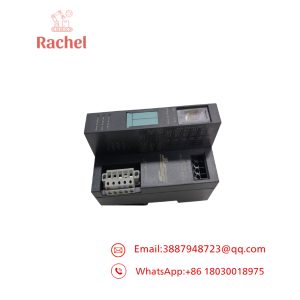
The Pilz 301130 (PSS SB DI16) is a high-integrity, fail-safe digital input module designed for decentralized safety architectures utilizing Pilz SafetyBUS p communication networks. Functioning within the PSS 3000 programmable safety system ecosystem, this compact terminal module evaluates up to 16 safe digital inputs from devices such as E-stop buttons, safety gates, light curtains, and two-hand controls.
By processing safety logic locally and transmitting high-integrity status data back to a central PSS master controller via SafetyBUS p, the 301130 eliminates long, complex multi-conductor field cable runs. Its dual-channel internal architecture ensures continuous cross-monitoring and short-circuit detection, allowing implementation in applications requiring compliance up to SIL CL 3 (EN 62061) and PL e (EN ISO 13849-1).
Key Technical Specifications
| Parameter | Value |
| System Compatibility | Pilz PSS 3000 / SafetyBUS p Network |
| Input Quantity | 16 Safe Digital Inputs (24 VDC) |
| Power Supply Voltage | 24 VDC nominal (16.8 VDC to 30.0 VDC operational range) |
| Safety Integrity Rating | SIL CL 3 (EN 62061), PL e (EN ISO 13849-1), Cat 4 |
| Communication Protocol | SafetyBUS p (Sub-node connection via 9-pin D-sub or terminals) |
| Test Pulse Outputs | Onboard test pulse outputs for cross-circuit detection |
| Diagnostics | Front-panel LEDs for Power, Fault, Bus Status, and Input status |
| Mounting Style | 35mm DIN Rail Mount |
| Operating Temperature | 0°C to +60°C (32°F to 140°F) |
Application Scenarios & The “Trench” Experience
During a line expansion at an automotive stamping facility, an interlock door switch cable suffered mechanical crushing inside a cable tray, creating a cross-circuit between channel wires. Rather than passing a false “door closed” signal to the main PLC, the PSS SB DI16 detected the short-circuit condition instantly via its pulsed output testing loop, dropped the safety output to a safe state, and broadcast a specific channel fault code over SafetyBUS p to the operator station.
- Automotive Assembly Lines – Interfaces distributed E-stop buttons and light curtains along multi-station transfer lines.
- Packaging Machinery – Reads safety door interlocks, perimeter guarding switches, and emergency stop circuits.
- Robotic Work Cells – Handles high-integrity zone monitoring and door lock status signals.
Transparency SOP: Quality Assurance & Testing
- Visual & Enclosure Inspection: We examine the yellow housing, DIN rail locking tabs, and terminal block connectors under magnification for cracking, heat discoloration, or contact pin damage.
- SafetyBUS p Network Boot Test: The module is assigned a bus address and integrated into a live PSS 3000 test rack to confirm network handshake and protocol startup.
- 16-Channel Logic & Test Pulse Verification: Each of the 16 inputs is triggered using calibrated 24 VDC signal generators to test dual-channel switching thresholds, response times, and front-panel status LEDs.
- Cross-Circuit Fault Simulation: Shorts to ground and cross-channel wire bridges are intentionally introduced across input pairs to verify that the internal diagnostic logic trips appropriately.
- Anti-Static ESD Packaging: Cleared modules are cleaned, sealed in ESD static-shielding bags, and encased in high-density foam shipping boxes.
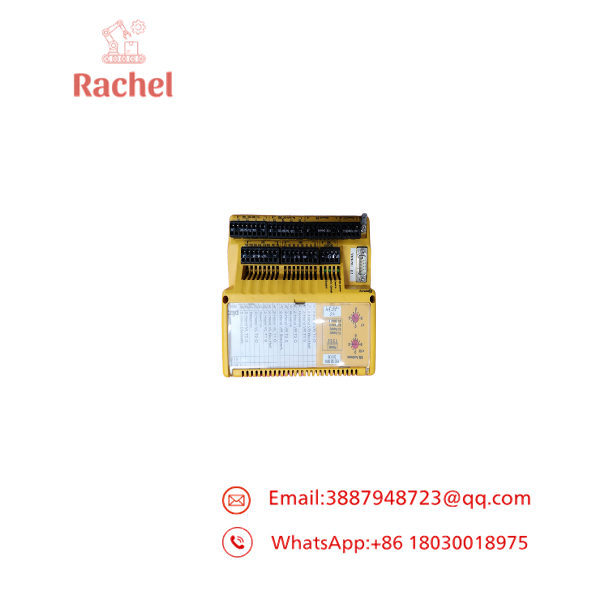
301130
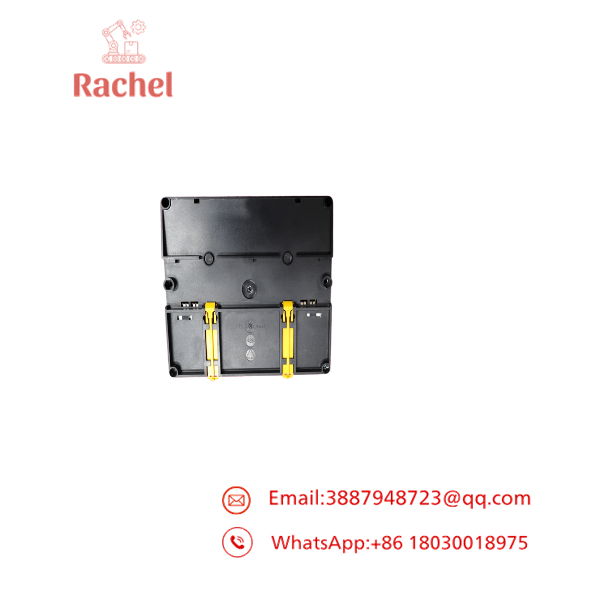
301130
The Veteran’s Tech Trap Guide
- ⚠️ Verify the SafetyBUS p rotary address switch. Before mounting a replacement 301130, ensure the hardware address switches on the module match the exact node address assigned in PSS WIN-PRO / PSSvision software. An address mismatch will prevent the master controller from establishing network communication.
- ❗ Double-check single vs. dual-channel wiring parameters. If wiring a single-channel safety device, ensure the input is parameterised correctly in the configuration tool. Connecting a single contact to a channel configured for dual-channel evaluation will trigger continuous fault codes.
- ⚠️ Maintain proper shield landing on SafetyBUS p cable. Connect the field bus cable shield firmly to the functional earth terminal. Incomplete shielding leaves the SafetyBUS p transceiver vulnerable to high-frequency EMC noise from nearby variable frequency drives (VFDs).
Frequently Asked Questions
- Q: Can the Pilz 301130 be used as a standalone safety relay?
A: No. The PSS SB DI16 is a SafetyBUS p field node/input module. It requires a SafetyBUS p network master (such as a PSS 3000 CPU) to process the input logic and execute safety output functions.
- Q: What is the difference between single-channel and dual-channel wiring on the 301130?
A: Single-channel wiring provides safety evaluation suitable for lower risk categories, whereas dual-channel wiring uses two independent input channels (and typically test pulse outputs) to achieve PL e / Category 4 safety integrity.
- Q: Are these units genuine original Pilz hardware?
A: Yes, 100%. We only supply authentic, OEM Pilz hardware fully inspected and bench-tested prior to shipment.

 Start Chat


