





Description
- Key Technical Specifications
- Model: CS3107KT93
- Brand: ABB
- Series: Procontic CS31
- Product type: Controller module / CPU
- System role: Main control and communications
- Platform: Legacy ABB CS31 automation system
- Compatibility note: Verify exact base unit, bus master, and firmware match before use
- Replacement note: Best suited for like-for-like legacy retrofit
- Condition: New Original / New Surplus
- Availability note: Limited stock expected for obsolete CS31 hardware
- Product Introduction
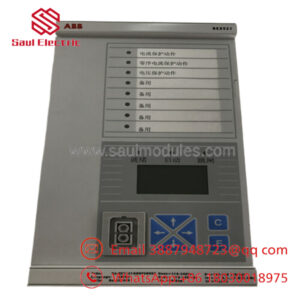
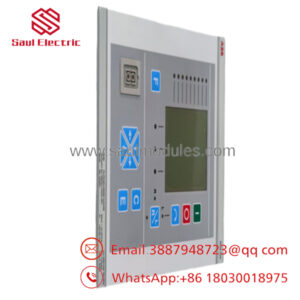
ABB CS3107KT93 is a controller module for the ABB Procontic CS31 distributed automation platform. It handles logic execution, system coordination, and communications in legacy CS31 installations.
This part is typically sourced for maintenance, repair, and like-for-like replacement. For field swaps, the main risks are firmware mismatch, bus configuration errors, and outdated system documentation.
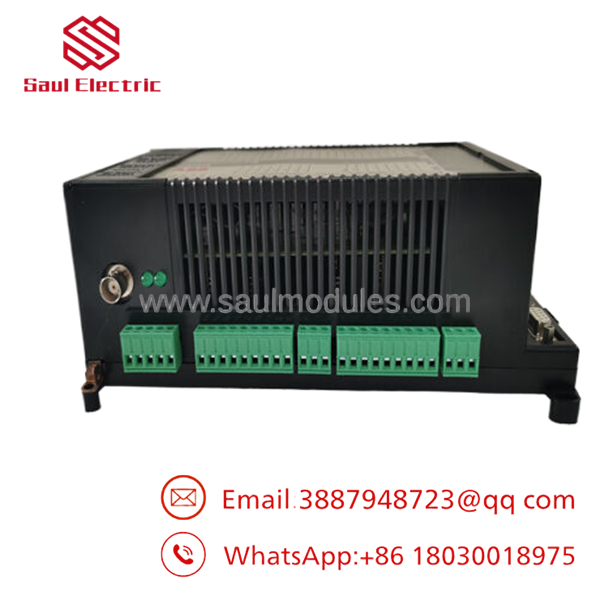
- CS3107KT93
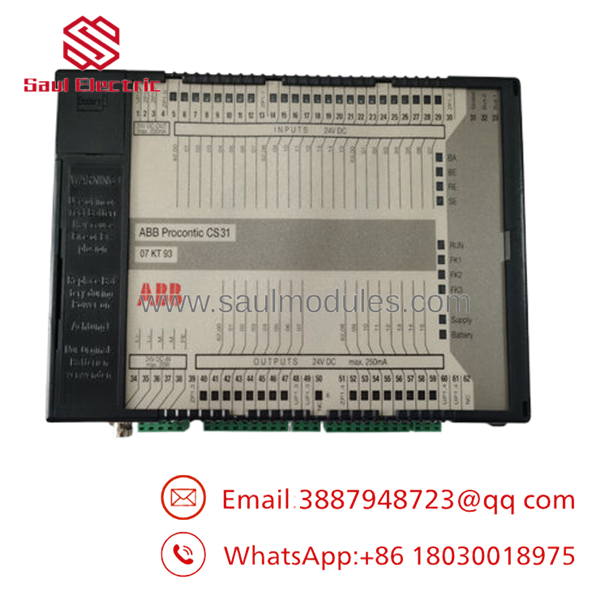
- CS3107KT93
- Installation & Configuration Guide
Stage 1: Pre-Installation Preparation
⚠️ Safety first: Notify operations, verify the process is in a safe state, lock out/tag out power, and wait at least 5 minutes for capacitor discharge.
Tools required: ESD strap, PH1 screwdriver, multimeter, wire labels, smartphone for photos.
Data backup: Export the running logic, note IP or station addresses if applicable, and photograph any DIP switches, jumpers, and terminal wiring before removal.
Estimated time: 5-10 minutes.
Stage 2: Removing the Old Module
- Remove the front cover or bezel.
- Label and disconnect all wiring. Do not force terminals.
- Release the rack or DIN rail locking tabs and pull the module straight out.
- Inspect the backplane and connector area for bent pins, dust, or heat marks.
⚠️ Keep the old module until the replacement is fully validated.
Estimated time: 5-8 minutes.
Stage 3: Installing the New Module
- Put on ESD protection and verify the exact model number.
- Clone the old configuration from the photo. Match all DIP switch and jumper settings exactly.
- Insert the module until it seats fully and locks.
- Reconnect wiring with the correct terminal order and torque.
Self-checklist: [] DIPs match, [] wiring secured, [] tabs locked.
Estimated time: 8-10 minutes.
Stage 4: Power-On & Testing
- Use a multimeter to check for shorts on the supply rail before energizing.
- Power up the rack first, not the field devices.
- Watch the status LEDs. Green RUN is normal; red ERR needs investigation.
- Connect the programming tool, confirm the bus address and firmware version, and restore the backup logic if required.
- Run a dry test on the I/O and communications.
⚠️ Troubleshooting note: If ERR stays solid red, check for firmware or address mismatch first. If there is no comms, confirm the bus configuration and master-side settings.
Estimated time: 10-15 minutes.
- Frequently Asked Questions
Q: Can I hot-swap this module under power?
No. Treat it as a power-down replacement unless the site manual explicitly allows hot-swap. Pulling it live can damage the module or the backplane.
Q: Is this model obsolete?
Yes, this is legacy CS31 hardware, so stock is usually limited. That is normal for this platform, and the condition should be verified before purchase.
Q: Will my programming stay intact when I replace it?
Usually the control program lives in the controller or master, not the replacement module. Still, back up the full system before touching hardware.
Q: What is the direct replacement if this exact part is unavailable?
That depends on the installed base, bus master, firmware, and wiring. I would not guess a substitute without checking the exact site hardware.
Q: Why is the price lower than OEM list pricing?
Legacy surplus stock often sells below factory list price. The tradeoff is lead time, stock variability, and the need to verify condition and traceability.
Q: What condition should I expect?
For this type of part, the common offers are New Original, New Surplus, or Refurbished. For procurement, insist on a clear condition statement and test record.
Q: What usually causes replacement failure?
The usual causes are wrong addressing, mismatched wiring, and missed bus termination. Those are the mistakes that waste hours in the field.

 Start Chat


