





Description
Product Introduction & Engineering Value
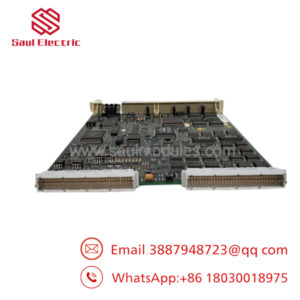
Signal dropouts on critical field switches stall entire process loops. The ABB DI801 digital input module provides high-density 24V DC discrete monitoring across 16 current-sinking channels, making it a workhorse for ABB 800xA and Compact Product Suite architectures.
Featuring built-in optical isolation barriers and selectable digital filter times (2 ms to 16 ms), it shields your ModuleBus backplane from severe field noise and ground loops. Channel 16 doubles as an integrated process voltage supervision node, giving instant diagnostic insight when field power trips.
Technical Specifications
- Operating Voltage Range: 18 V DC to 30 V DC (Nominal 24 V DC)
- Signal Type: Current sinking, 6 mA @ 24 V DC
- Logic Levels: “0” State: -30 V to +5 V DC | “1” State: +15 V to +30 V DC
- Isolation Grouping: 1 isolated group of 16 channels (50 V rated insulation voltage)
- Input Filter Time: Selectable 2 ms, 4 ms, 8 ms, or 16 ms
- Input Impedance: 3.5 kΩ nominal
- Power Dissipation: 2.2 W typical
- ModuleBus Current Draw: 70 mA @ +5 V DC, 0 mA @ +24 V DC
- Field Connection Options: Compatible with TU805 termination units and S800L detachable connectors
- Diagnostics: Front-panel status LED (S) plus individual LEDs for channels 1 through 16
Field Application & The “Trench” Experience
The Trench Story
During a winter turnaround at an offshore gas processing platform, an old DI801 on an S800L station experienced a partial failure on channel 16 following a brownout. Channel 16 was wired to monitor the 24V auxiliary power distribution loop for emergency shutdown valves. Because the DI801 uses channel 16 for automatic process voltage supervision, the ModuleBus controller flagged a persistent “Module Warning/Process Power Loss” flag, halting the restart sequence.
The technician swapped the faulty card out with a pre-tested replacement unit. Once clipped into the ModuleBus rail and terminated, the module instantly cleared the fault without needing a full controller cold boot, restoring valve status feedback in under ten minutes.
Specific Niche Applications
- Wet-Gas Scrubber Isolation Valve Feedback: Monitoring limit switch contacts in harsh, high-vibration chemical environments where optical isolation protects system electronics.
- Centrifugal Compressor Auxiliary Oil Skid: Interlocking oil level switches and lube pump run contacts into an AC 800M controller.
- Marine Thruster Control System: Collecting discrete status indicators from local hydraulic power packs under ABS/DNV marine certifications.
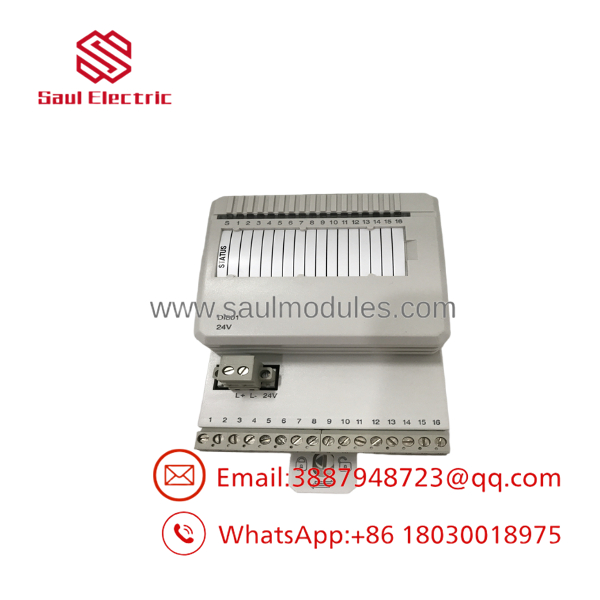
- DI801
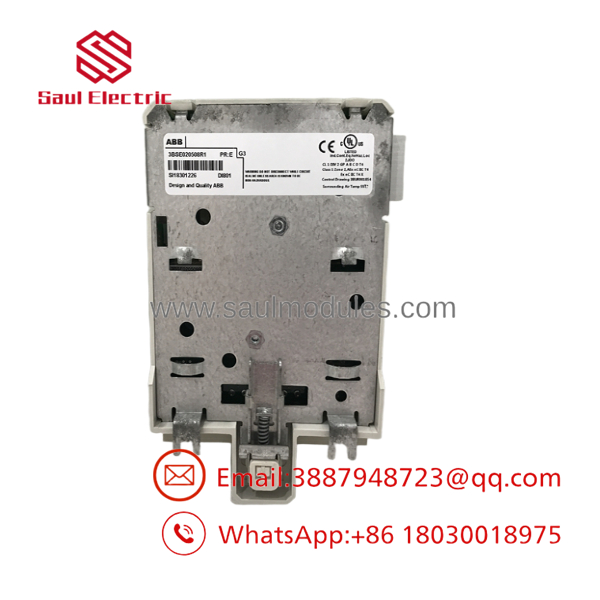
- DI801
Transparency SOP: QA & Testing
- Visual & Mechanical Inspection: Verify board traces, backplane gold fingers, and terminal connection pins for corrosion, bent contacts, or thermal stress under magnification.
- Backplane & ModuleBus Power Up: Seat the DI801 onto an active S800 test rack. Verify +5V DC logic power draw stays at expected parameters (~70 mA).
- Channel-by-Channel Signal Injection: Apply a regulated 24V DC test source across all 16 channels independently. Confirm transition points at 5V (OFF) and 15V (ON).
- Voltage Supervision Testing: Drop voltage on Channel 16 below threshold to verify that the front status LED flashes warning mode and sends the proper process power error byte over ModuleBus.
- 24-Hour Thermal Burn-in: Run the card under full load inside an environmental test chamber elevated to 50°C to guarantee zero signal drift or memory loss under stress.
The Veteran’s Tech Trap Guide
- ⚠️ Channel 16 Is Not Just Another Input: Channel 16 functions as the internal voltage supervision pin for the entire 16-channel bank. If you leave channel 16 floating or unpowered while utilizing other channels, the module may report a process voltage fault back to the 800xA software.
- PRO TIP: Check Your Sinking vs. Sourcing Logic. The is strictly a current-sinking input card (the field device switches positive +24V DC into the module terminal). If your field devices use PNP/NPN sinking switches incorrectly, the optical isolators will not trigger.
- ⚠️ ModuleBus Cluster Distance Limits: When adding or swapping units on extended ModuleBus clusters, keep cable lengths under ABB’s maximum line specs. Long ribbon drops cause bus noise, resulting in intermittent channel status flickering.
Dynamic FAQ
Q: Is the ABB hot-swappable in a live S800 cluster? A: Yes. Provided the ModuleBus station supports hot-configuration and the target termination unit allows live removal, you can swap the without interrupting power to neighboring cards on the same bus rail.
Q: What is the primary difference between the and the DI810? A: Mechanics and channel grouping. The uses S800L compact mechanics with 1 isolated group of 16 channels. The DI810 uses standard S800 form-factor mechanics with 2 isolated groups of 8 channels.
Q: What happens if field power drops below 15V DC on a channel? A: The recognizes anything below 5V DC as a true logic “0” and anything above 15V DC as a logic “1”. Voltages sitting between 5V and 15V DC fall into an indeterminate state where the channel LED may turn off and field data becomes unreliable.
Q: Do you offer original OEM units, and what warranty covers surplus stock? A: We supply both direct new-surplus and fully reconditioned original ABB stock (3BSE020508R1). Every unit carries our standard 1-year operational warranty and undergoes rigorous bench testing before dispatch.
Q: Can I adjust the digital input response time on this card? A: Yes. Filter time settings (2 ms, 4 ms, 8 ms, or 16 ms) can be set directly through your controller software configuration tools (such as Control Builder M).

 Start Chat


