





Description
Key Technical Specifications
| Parameter | Value |
| Number of Channels | 16 differential inputs |
| Input Signal Ranges | ±10 V, ±20 mA |
| Hardware Conversion Time | 20 ms |
| Typical Measurement Accuracy | 0.025% |
| Internal Filter Settings | 4 selectable cut-off frequencies (10 Hz, 30 Hz, 100 Hz, 300 Hz) |
| Common Mode Voltage (CMV) | Optimized for systems with CMV greater than 50 V |
| Resolution | 12-bit bipolar |
| Backplane Compatibility | S100 I/O subrack assemblies |
| Dimensions | 14.4 mm x 236.7 mm |
| Weight | 0.52 kg |
| Country of Origin | Sweden |
Product Introduction
The ABB DSAI130 (57120001-P) is a high-performance 16-channel analog input board engineered for the S100 I/O subrack subsystem, operating under Advant OCS with Master software, MasterPiece 2×0, and Safeguard safety controllers. Utilizing a fully differential configuration, this board isolates field loop noise and accurately measures low-level ±10 V voltage and ±20 mA current loops from temperature sensors, pressure transmitters, and flow meters. With a hardware conversion speed of 20 ms and a precise 0.025% accuracy threshold, it delivers stable data acquisition within demanding process control networks.
This board is specifically designed for safety-critical environments and systems experiencing high common-mode voltages (CMV greater than 50 V). Plant operators choose the DSAI130 as an essential spare part to maintain the validation status and operational longevity of legacy refining, chemical processing, and power generation infrastructure. By providing reliable hardware-level signal filtering across four selectable cutoff frequencies, the module eliminates localized high-frequency electrical interference before it can corrupt downstream control loops or trigger false safety shutdowns.
Technical Pitfall & Survival Guide
- Common Mode Voltage (CMV) Application Trap
❗ Risk: Using the wrong module variant for your specific rack configuration. The standard DSAI130 is engineered specifically for safety setups like Safeguard or high-induction environments where CMV exceeds 50 V. Installing it on a standard process controller running low CMV can cause scaling errors or communication timeouts.
- Avoidance: Check your controller line before buying. For standard process controllers (like MasterPiece 200/1, AC410, or AC450) where CMV is less than or equal to 50 V, ABB specifies the revitalized DSAI130A (3BSE018292R1) instead.
- The Controller Hardware License Lock
❗ Risk: Assuming the system will immediately read the newly installed board as a generic plug-and-play card. Legacy Advant and MasterPiece controllers require strict hardware license allocations to recognize new hardware addresses on the S100 backplane bus.
- Avoidance: When replacing this board, verify your controller’s existing configuration database. Ensure you have the hardware license number of the target controller ready when ordering or commissioning to properly map the slot topology.
- Solder Jumper Settings Overlook
❗ Risk: Dropping the board straight into the rack without matching physical configuration jumpers to field transmitters. If the previous board was jumpered for a 4-20 mA current loop and the new board retains factory default voltage settings, your instrumentation readouts will flatline or saturate.
- Avoidance: Take a physical photo of the component side of the old board before sliding it out. Match the onboard solder trace configurations or physical jumpers exactly on the replacement card before inserting it into the live rack cage. I once watched an instrument technician swap a board in the dead of winter, forget to match the analog input jumper links, and spend two full shifts chasing a nonexistent field grounding problem. Check the jumpers first.
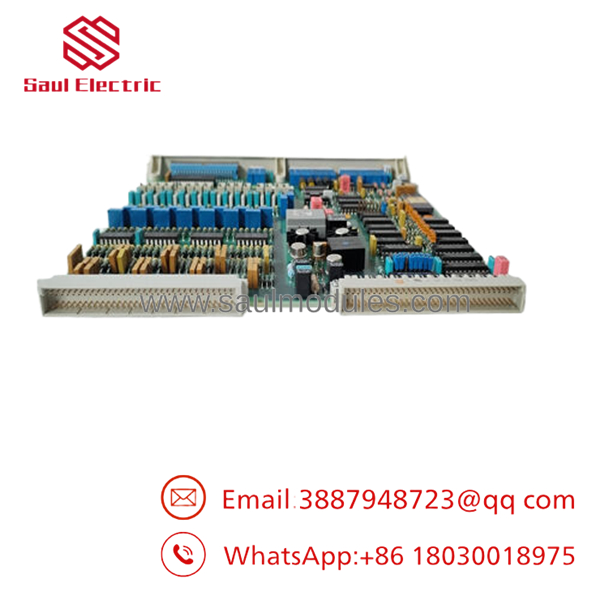
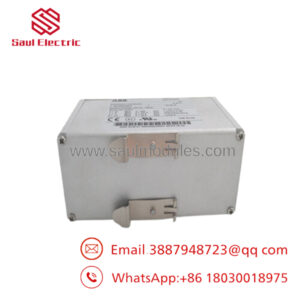
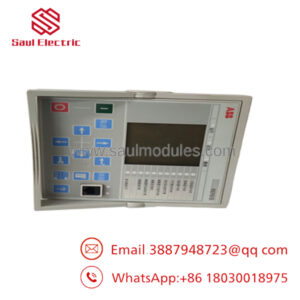
- DSAI130
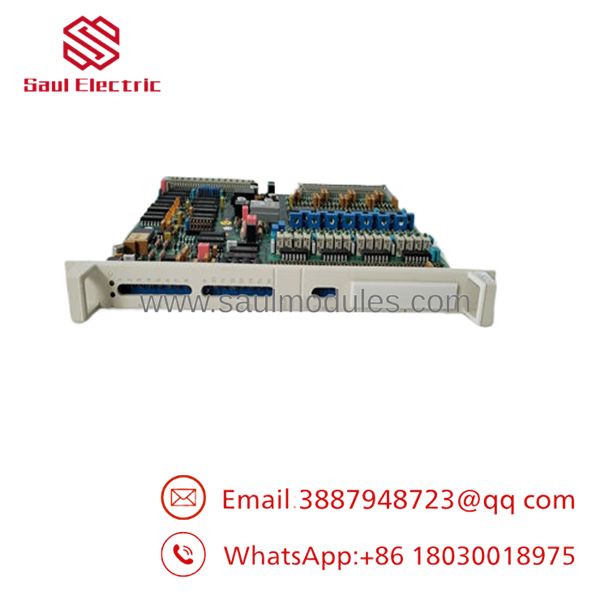
- DSAI130
Troubleshooting Quick Reference
| Symptom | Possible Cause | Relevance to this Part | Quick Check Method | Recommendation |
| All 16 channels read zero or erratic values | Subrack backplane power rail dead or bus extender failure. | ❌ Low | Measure the main 5 V DC and 24 V DC backplane distribution pins inside the S100 subrack card cage. | The fault is typically a power supply module or a loose ribbon connection on the bus extender rather than this input card. |
| Single channel reading fluctuates or saturates | Damaged shield ground, broken field wire, or bad input channel component. | 🟡 Medium | Disconnect the field wires for that channel. Inject a known 10 V or 12 mA signal using a handheld calibrator directly at the terminal strip. | If the reading stabilizes in the software during local injection, the field wiring or transmitter is at fault. If it remains erratic, that channel’s differential amplifier is damaged. |
| PLC reports “Module Missing” or bus fault | Bad backplane connector pin alignment or board logic failure. | ✅ High | Inspect the physical gold-plated fingers on the rear connector of the DSAI130 for cracks, corrosion, or bent pins. | Clean the contacts with an approved contact cleaner. If the error persists after re-seating the board firmly into the slot, replace the module. |
| Signal lag or attenuation on rapid process changes | Wrong onboard cutoff frequency filter setting selected. | ✅ High | Verify the current software filter configuration settings and match them against the hardware cutoff selection (10 Hz to 300 Hz). | Readjust the internal software system constants to match your actual loop dynamics; a 10 Hz cutoff will damp out high-frequency process noise but slow down system response. |
Frequently Asked Questions (FAQ)
Why must I know my system’s Common Mode Voltage (CMV) rating before choosing this board?
The (57120001-P) is specialized hardware optimized for applications where the common-mode voltage exceeds 50 V, making it standard for Safeguard systems and MasterPiece 2×0 platforms. If your system runs on standard process control loops with a CMV less than or equal to 50 V, you should install the DSAI130A (3BSE018292R1) variant to ensure proper signal scaling and prevent module mismatch faults.
Can I pull and replace the module while the S100 I/O rack is powered up?
No. The S100 I/O architecture does not support live hot-swapping of legacy analog boards without risking a momentary bus drop or voltage dip that can trip the master controller (e.g., PM510/PM511). Power down the specific subrack chassis before extracting or inserting any boards to avoid throwing the entire controller into a hard system failure.
How are the 4 different filter times configured on this analog board?
The cut-off frequencies (10 Hz, 30 Hz, 100 Hz, and 300 Hz) are handled via hardware filtering circuits integrated into the board’s frontend and are selected during software configuration setup. Ensure your system application database constants match the signal dynamics of the physical transmitter connected to prevent signal distortion or process lag.
Are the terminal blocks for field wiring included with this specific part number?
No. The part number represents the internal plug-in analog input board assembly only. The field wiring terminates onto separate front-facing connection units or terminal strips attached directly to the rack enclosure frame. You can slide your old board out and plug this replacement directly into the existing housing slot without altering your field terminations.
What does the 0.025% accuracy specification mean for real-world measurements?
This high typical accuracy means that for a standard ±10 V input range, the board introduces minimal hardware-level variance, ensuring tight process loop control. This makes it ideal for critical custody transfer, high-precision thermal monitoring, and emergency safety shutdown systems where loose tolerances could cause process instability or premature trip sequences.

 Start Chat


