





Description
Core Product Summary (Brand / Model / Key Attributes)
The ABB ETP90H-4G50 is an ETP90H digital differential-pressure transmitter for industrial pressure, level, and flow measurement. It uses a piezo-resistive sensor, provides a 4–20 mA output with HART communication, and is configured through local keys and switches, a HART hand terminal, or ABB DOX9 software.
In the ordering code, H identifies HART electronics, 4 identifies a 50 mm / 2 in flange process connection, G identifies a differential-pressure transmitter with threaded process connection, and 50 is the transmitter range/order designation. The calibrated measuring range must be confirmed from the transmitter nameplate or configuration record. The ETP90H uses a stainless-steel IP67 housing, is approved for EEx ia IIC T4 hazardous areas, and is CE marked for EMC and the Pressure Equipment Directive.
Key Technical Specifications
| Attribute | Value |
|---|---|
| Brand | ABB |
| Model | ETP90H-4G50 |
| Product family | ABB ETP90 digital transmitter |
| Product type | Differential-pressure transmitter |
| Electronics type | ETP90H |
| Output signal | 4–20 mA |
| Digital communication | HART |
| Measuring principle | Piezo-resistive pressure sensor with diaphragm and silicon-oil-filled capillary system |
| Process connection | Flange 50 mm / 2 in |
| Differential-pressure connection | Threaded, type G |
| Measuring-range designation | 50 |
| Calibrated range | Determined by transmitter configuration/nameplate |
| Transfer functions | Linear, square root; ETP90H also supports curves and formulae |
| Accuracy | ±0.1% of span, including linearity, hysteresis, and repeatability |
| Optional accuracy | ±0.05% available on request |
| Ambient temperature | −20 to +80 °C |
| Media temperature | Up to 150 °C continuously; short-term up to 200 °C |
| Supply voltage | 11–55 V DC |
| Load resistance | 250 Ω minimum |
| Output current limit | 22.5 mA maximum |
| Housing | Stainless steel, IP67 |
| Electrical connection | Pg13.5 cable gland |
| Cable entry | 5–12 mm round cable |
| Hazardous-area approval | EEx ia IIC T4 |
| Certification body | NEMKO |
| Compliance | CE, EMC and PED |
| Filling fluid | FDA-approved silicon oil |
| Configuration tools | Local keys/switches, HART hand terminal, ABB DOX9 |
| Optional accessories | Digital display, integrated lightning protection |
Detailed Product Overview
The ABB ETP90H-4G50 belongs to the ETP90 transmitter family, which measures gauge pressure, absolute pressure, differential pressure, and liquid level. The H electronics version combines a 4–20 mA analog output with HART digital communication, allowing configuration, calibration, diagnostics, and process-value readback through a HART hand terminal or ABB’s DOX9 PC software.
The transmitter uses a piezo-resistive sensor isolated from the process by a diaphragm, capillary tube, and silicon-oil fill. Process pressure acts on the diaphragm and is transferred through the oil-filled system to the sensor. This construction limits diaphragm movement, helps protect the sensor from pressure surges, and avoids the temperature-drift issues associated with external pressure-transfer media. For differential-pressure measurement, two process pressures act on separating diaphragms, while an overload diaphragm protects the sensor against excessive one-sided pressure.
The ETP90H electronics digitize the sensor signal, compensate for sensor temperature drift and nonlinearity, apply the selected transfer function, and convert the result to the 4–20 mA loop signal. HART communication can report the measured value in engineering units, percentage, or current. Configuration options include linear or square-root transfer functions, and the H version can also use curves and formulae.
The 4G50 designation identifies a flange-mounted differential-pressure transmitter: the 4 process connection is a 50 mm / 2 in flange, and G identifies the differential-pressure threaded connection. The final 50 identifies the transmitter range/order designation; the actual calibrated span is not established by the model code alone and must be taken from the nameplate or configuration data.
The ETP90H is approved for explosion-proof areas as EEx ia IIC T4 and is CE marked for EMC and PED. Its stainless-steel IP67 housing supports installation in dusty or wet industrial environments. The transmitter can be configured locally to a limited extent, while full configuration and calibration are available through HART communication.
Engineering Selection Highlights
- ETP90H identifies HART-capable electronics, so the transmitter supports both a 4–20 mA loop signal and digital configuration/diagnostic communication.
- The 4 process connection identifies a 50 mm / 2 in flange, which must match the mating vessel or piping flange arrangement.
- The G designation identifies a differential-pressure transmitter with threaded connection, suitable for level measurement in pressure vessels, gas/liquid/vapor flow measurement, and differential-pressure applications across filters or heat exchangers.
- The 50 range designation does not by itself define the calibrated span, so the nameplate range and engineering units must be verified before replacement or loop checkout.
- The piezo-resistive sensor and oil-filled capillary system provide surge protection and low temperature influence, supporting direct process connection without external pressure intermedia.
- The stainless-steel IP67 housing and EEx ia IIC T4 approval determine environmental and hazardous-area suitability.
- DOX9 and a HART hand terminal provide full configuration, calibration, documentation, self-test, and configuration-copy functions.
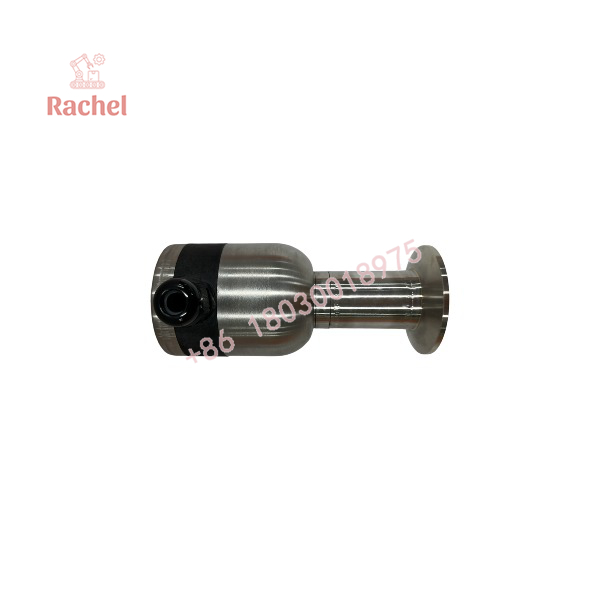
ETP90H-4G50
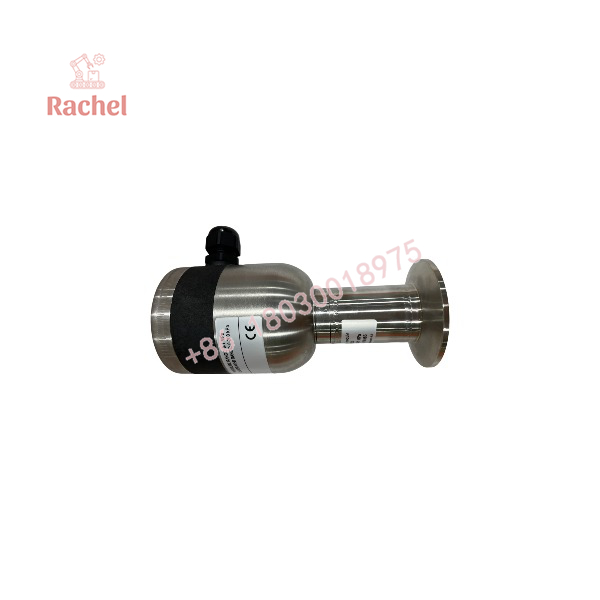
ETP90H-4G50
System Compatibility & Integration Requirements
| Item / Dependency | Verified Compatibility or Requirement | Practical Note |
|---|---|---|
| Analog control loop | 4–20 mA, two-wire connection | Minimum loop resistance is 250 Ω. |
| Digital communication | HART | Supports configuration, calibration, diagnostics, and process-value readback. |
| Configuration software | ABB DOX9 | Used for transmitter configuration, calibration, documentation, backup, and self-test. |
| Configuration terminal | Standard HART hand terminal | Provides full configuration and calibration capability. |
| Local configuration | Keys and switches in the connection space | Limited local configuration; full configuration requires HART. |
| Process connection | 50 mm / 2 in flange | Confirm flange type, rating, gasket, and bolting arrangement. |
| Differential-pressure connection | Threaded type G connection | Use appropriate impulse piping and verify static-pressure limits. |
| Power supply | 11–55 V DC | Confirm loop power supply and load resistance. |
| Display option | Digital display connected in series with the 4–20 mA output | Requires the display-window cap when fitted. |
| Hazardous-area installation | EEx ia IIC T4 approval | Follow the applicable certificate, system design, and installation requirements. |
Dimensions, Mounting & Connection Notes
- The transmitter uses a stainless-steel IP67 housing.
- The electrical connection is a Pg13.5 cable gland accepting 5–12 mm round cable.
- The transmitter is intended for direct process connection; the measuring diaphragm contacts the process media through the selected flange arrangement.
- The standard diaphragm material is Hastelloy C276, with optional tantalum or stainless steel 1.4462/1.4435 materials.
- The transmitter can withstand continuous media temperatures up to 150 °C; for higher temperatures, most connections can be supplied with remote seals.
- ABB specifies a weight of approximately 0.7–1.5 kg, depending on the process connection.
- The transmitter supports an optional digital display mounted beneath the transmitter cap and connected in series with the 4–20 mA output.
- For threaded transmitters operating above 90 °C media temperature, ABB specifies use of a cooling pipe to protect the sensor.
FAQ
What is the ABB -4G50?
It is an ABB ETP90H digital differential-pressure transmitter with a 4–20 mA output and HART communication.
What does the “H” in ETP90H mean?
It identifies the ETP90H electronics version, which provides HART communication in addition to the 4–20 mA analog signal.
What process connection does the 4G50 code identify?
The 4 identifies a 50 mm / 2 in flange connection, and G identifies a differential-pressure transmitter with threaded connection.
What is the measuring range of ETP90H-4G50?
The final 50 is the range/order designation; the actual calibrated span must be confirmed from the transmitter nameplate or configuration record.
How is the transmitter configured?
It can be configured locally with keys and switches, or fully configured and calibrated using a HART hand terminal or ABB DOX9 software.
What output and communication does it provide?
It provides a 4–20 mA signal and HART digital communication.
What hazardous-area approval applies?
The ETP90H is approved for EEx ia IIC T4 hazardous areas according to ATEX, with certification by NEMKO.
What media temperatures can it handle?
It withstands media temperatures up to 150 °C continuously and up to 200 °C for short periods.
Verification & Troubleshooting Notes
- Confirm the complete nameplate data: model, calibrated range, engineering units, output configuration, serial number, and hazardous-area marking.
- Verify that the installed 50 mm / 2 in flange, gasket, and bolting arrangement match the process design.
- Check the 4–20 mA loop supply, loop resistance, polarity, and HART communication before changing transmitter calibration.
- For differential-pressure service, inspect both impulse lines for blockage, leakage, condensate accumulation, or incorrect isolation-valve position.
- Use the transmitter’s zero and span functions only after confirming that the process is safely isolated and that the reference conditions are known.
- If output is saturated at 22.5 mA, check for overrange, incorrect range configuration, loop-power issues, or a process-condition change.
- Do not apply pressure above the documented overload limit for the selected range and process connection.
- For hazardous-area installations, maintain the certified enclosure, cable-gland, and intrinsic-safety arrangements; do not modify the transmitter or its associated safety barriers without an approved hazardous-area design change.

 Start Chat


