





Description
Key Technical Specifications
| Parameter | Value |
|---|---|
| Manufacturer | ABB |
| Model | LC1000-SSP7 |
| Product Type | Programmable Controller |
| Power Supply | 24 V DC |
| Current Consumption | 25 mA |
| Analog Inputs | 0–10 V DC, 0–20 mA |
| Analog Outputs | 0–10 V DC, 0–20 mA |
| Digital Inputs | 4 |
| Digital Outputs | 4 |
| Display | 4-digit 7-segment LED |
| Operating Temperature | -10 °C to +55 °C |
| Storage Temperature | -20 °C to +70 °C |
| Humidity | 10–95% RH, non-condensing |
| Dimensions | 120 × 90 × 32 mm |
| Weight | Approximately 0.25 kg |
Product Introduction & Supply Chain Strategy
The ABB LC1000-SSP7 is a programmable industrial controller designed for machine automation and process control applications. It combines analog and digital I/O with a local LED display, providing dependable monitoring and control for industrial equipment.
This product is a Brand New Surplus unit. It is not used, not pulled from a decommissioned plant, and not refurbished. All modules undergo rigorous quality verification to ensure OEM-level reliability. Maintaining 1–2 LC1000-SSP7 controllers as buffer stock minimizes lead time variability, reduces unplanned downtime, and lowers Total Cost of Ownership (TCO). Although New Surplus inventory may cost more than refurbished hardware, it eliminates the hidden risks associated with repaired electronic assemblies.
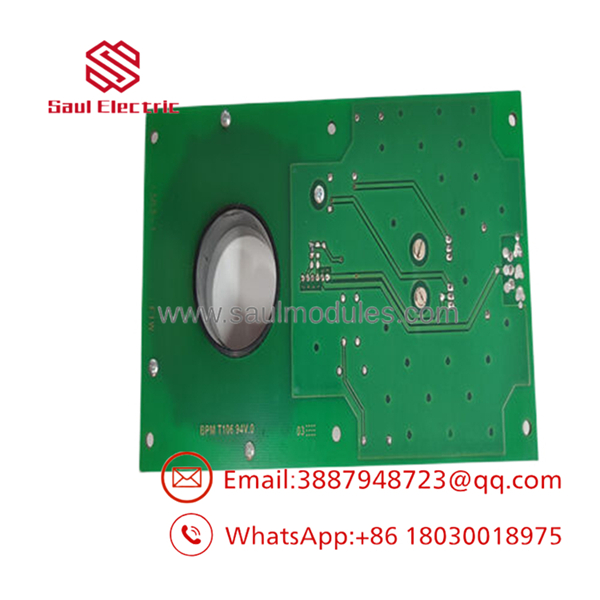
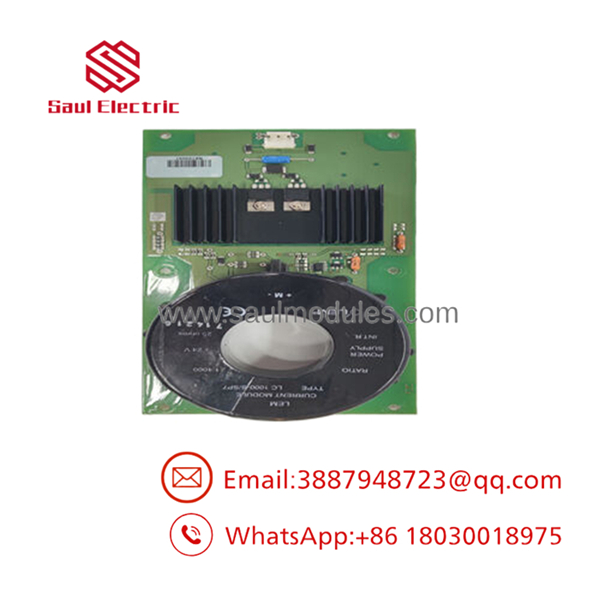
- LC1000-SSP7
Installation & Configuration Guide
Stage 1: Pre-Installation (Prep & Safety)
- Perform Lock-Out/Tag-Out (LOTO).
- Disconnect all control power.
- Wear a grounded ESD wrist strap.
- Photograph:
- Terminal wiring
- I/O connections
- Controller mounting
- Configuration switches (if applicable)
- Back up the controller program and configuration before replacement.
Stage 2: Removal
- Disconnect field wiring and communication cables.
- Release the mounting hardware.
- Remove the controller carefully to avoid damaging connectors.
- Inspect terminals for corrosion or loose contacts.
Stage 3: Installation (Clone & Seat)
- Verify the replacement model is ABB LC1000-SSP7.
- Mount the controller securely.
- Restore all wiring according to the original documentation.
- Confirm power polarity and I/O terminal assignments.
- Verify cabinet grounding before energizing.
Stage 4: Power-On & Testing
- Restore 24 V DC power.
- Verify the LED display initializes correctly.
- Confirm analog and digital I/O operate normally.
- Validate communication with connected equipment.
- Perform functional testing before returning the machine to production.
Firmware/Software Versions & Upgrade Notes
- Record the existing controller firmware and application before replacement.
- Back up all configuration parameters and user programs.
- Install a replacement with the same firmware revision whenever possible.
- Avoid firmware upgrades during emergency maintenance unless compatibility has been verified.
- Verify analog input scaling and output calibration after commissioning.
- Confirm all field I/O operates correctly before returning the controller to service.
Engineering Note: Public ABB documentation for the LC1000-SSP7 is limited. Firmware compatibility and supported software revisions should be confirmed against the installed system documentation before deployment.
Frequently Asked Questions (FAQ)
Q1. Is this controller genuinely new?
Yes. This is a New Original / New Surplus ABB controller. It is not used, repaired, or refurbished. Every unit undergoes OEM serial verification, visual inspection, electrical verification, and ESD-safe packaging before shipment.
Q2. Why is New Surplus priced below OEM factory supply but above refurbished products?
Our pricing reflects the cost of sourcing genuine New Surplus inventory globally. While it typically costs more than refurbished hardware, it avoids hidden component aging, undocumented repairs, and premature failures that can result in costly production downtime.
Q3. Is the considered obsolete?
Market availability is limited, making proactive inventory planning advisable. Plants relying on this controller should classify it as an A-Class critical spare, maintain 1–2 units on-site, and evaluate a planned last-time-buy strategy if long-term operation is expected.
Q4. Can the be hot-swapped?
No. Always isolate system power before removing or installing the controller. Hot-swapping may damage electronic components or interrupt the control process.
Q5. Will replacing the controller require software changes?
Normally, no. When replacing the controller with the identical model and restoring the original application and configuration, additional programming is typically unnecessary. Verify all I/O functions during commissioning.
Q6. What quality verification is completed before shipment?
Every New Surplus follows a documented SOP including:
- OEM serial number verification
- Inbound traceability inspection
- Visual inspection
- Power-on verification
- Analog and digital I/O verification
- Electrical continuity testing
- QC inspector approval
- ESD-safe packaging
- Heavy-duty export shipping preparation
Q7. What inventory strategy provides the lowest Total Cost of Ownership (TCO)?
Classify the as an A-Class critical spare if it supports production-critical machinery. Maintain 1–2 units as buffer stock, implement vendor consolidation, standardize hardware revisions across production lines, and use cross-site inventory sharing whenever practical. If the installed platform is approaching end-of-life, execute a planned last-time-buy before worldwide inventory declines. This strategy minimizes lead time variability, reduces stock-out incidents, controls carrying costs, and delivers a lower Total Cost of Ownership (TCO).

 Start Chat


