





Description
Key Technical Specifications
| Parameter | Value |
|---|---|
| Manufacturer | ABB |
| Model | NDBU-95 |
| Order Number | 64008366 |
| Product Type | Star Connection Branching Unit |
| Communication Network | ABB DDCS Fiber Optic |
| Transmission Speed | 10 MBd |
| Optical Configuration | 1 Input / 9 Outputs |
| Communication Medium | Plastic Optical Fiber (POF) for compatible systems |
| System Compatibility | ABB ACS800, DCS800 MultiDrive systems |
| Mounting | Control cabinet / Drive enclosure |
| Power Requirement | Passive optical device (no external power required) |
| Application | Multi-drive fiber optic communication distribution |
Important: ABB specifies that 5 MBd and 10 MBd DDCS optical components should not be mixed within the same communication network, as this can cause communication failures.
Product Introduction & Supply Chain Strategy
The ABB NDBU-95 64008366 is a passive DDCS fiber optic branching unit designed for ABB ACS800 and DCS800 multi-drive systems. It creates a star communication topology by splitting one incoming optical communication channel into nine outgoing branches, enabling synchronized communication between a master controller and multiple drive units.
Purchasing this unit as New Surplus provides genuine OEM hardware while avoiding the uncertainty associated with refurbished communication components. Since the branching unit is a single point of communication distribution, maintaining buffer stock, reducing lead time variability, implementing vendor consolidation, and planning last-time-buy purchases can significantly reduce Total Cost of Ownership (TCO) and prevent extended production downtime.
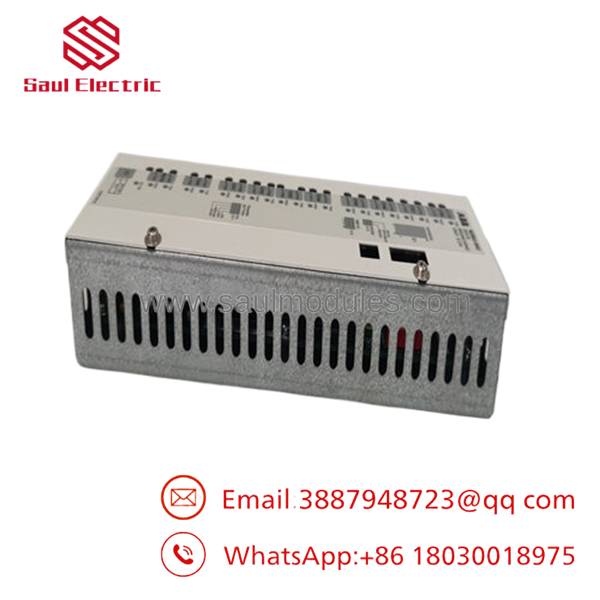
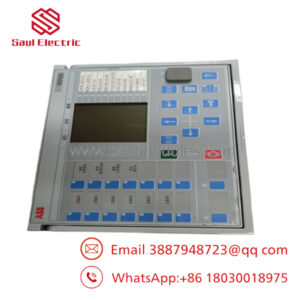
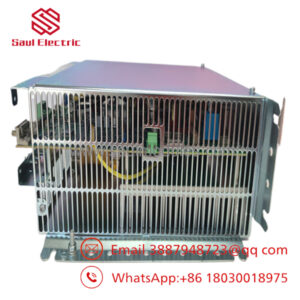
- NDBU-95 64008366
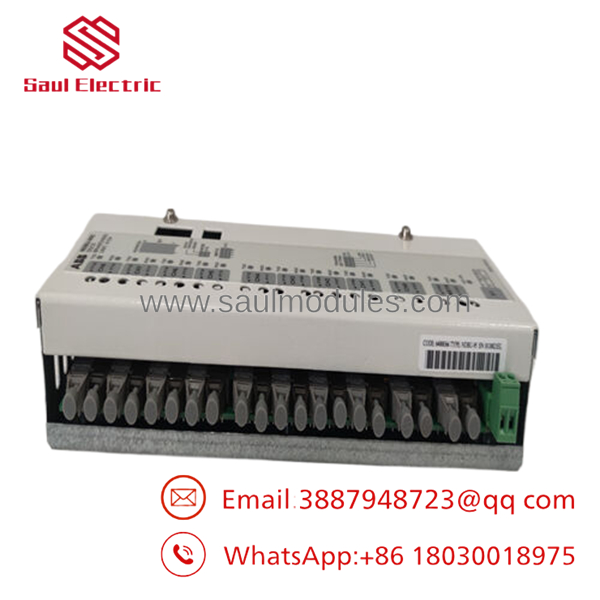
- NDBU-95 64008366
Installation & Configuration Guide
Stage 1 – Pre-Installation (Prep & Safety)
- Perform Lock-Out/Tag-Out (LOTO).
- Shut down all connected drives.
- Wear a grounded ESD wrist strap.
- Record the complete DDCS network topology.
- Label every fiber optic cable before removal.
Stage 2 – Removal
- Verify all drive systems are powered down.
- Disconnect optical fiber cables carefully.
- Protect fiber connectors with dust caps.
- Remove the mounting hardware.
- Inspect every fiber connector for scratches or contamination.
Stage 3 – Installation (Clone & Connect)
- Verify the replacement model is ABB NDBU-95 64008366.
- Mount the branching unit securely.
- Connect the incoming optical fiber to the input port.
- Reconnect each outgoing fiber to its original output.
- Clean every optical connector before insertion.
Stage 4 – Power-On & Testing
- Restore power to the drive network.
- Verify all connected drives establish communication.
- Confirm DriveWindow or engineering software recognizes every node.
- Check for communication alarms.
- Verify synchronized operation of all connected drives before returning the system to production.
Firmware/Software Versions & Upgrade Notes
- The NDBU-95 is a passive optical branching device and contains no programmable firmware.
- Verify compatibility with the installed ABB DDCS communication architecture before replacement.
- Do not mix 5 MBd and 10 MBd DDCS optical components in the same network.
- Inspect fiber optic cables for excessive attenuation before replacing the branching unit.
- Verify DriveWindow communication after installation and confirm all drives are visible on the network.
Frequently Asked Questions (FAQ)
Q1. Is this unit genuinely new?
Yes. This product is supplied as New Original / New Surplus. It is not used, not repaired, and not refurbished. Every unit undergoes quality verification before shipment.
Q2. Why is New Surplus priced below OEM list price?
New Surplus inventory originates from excess project inventory and authorized surplus channels. It provides genuine ABB hardware while avoiding the reliability concerns commonly associated with refurbished communication equipment.
Q3. What is the primary function of the ?
The is a passive DDCS fiber optic branching unit. It distributes one incoming optical communication channel into nine outgoing channels, allowing multiple ABB drives to communicate with a central controller using a star network topology.
Q4. Does the require external power?
No. The is a passive optical distribution device and does not require a separate power supply for operation. Its function is to distribute optical communication signals within the DDCS network.
Q5. Can I mix 5 MBd and 10 MBd DDCS components?
No. ABB recommends not mixing 5 MBd and 10 MBd optical communication components, as doing so can result in communication failures and unreliable network performance.
Q6. What quality inspections are completed before shipment?
Each New Surplus unit undergoes:
- OEM part number verification
- Serial number traceability
- Optical connector inspection
- Housing inspection
- Mechanical integrity verification
- ESD-safe packaging
- Final QC approval documentation
Q7. What inventory strategy is recommended?
For facilities operating ABB ACS800 or DCS800 multi-drive systems:
- Maintain as on-site buffer stock.
- Use vendor consolidation to simplify spare parts procurement.
- Implement cross-site inventory sharing where multiple facilities use DDCS drive networks.
- Plan a last-time-buy if lifecycle notices indicate declining availability, reducing lead time variability and lowering long-term Total Cost of Ownership (TCO).

 Start Chat


