



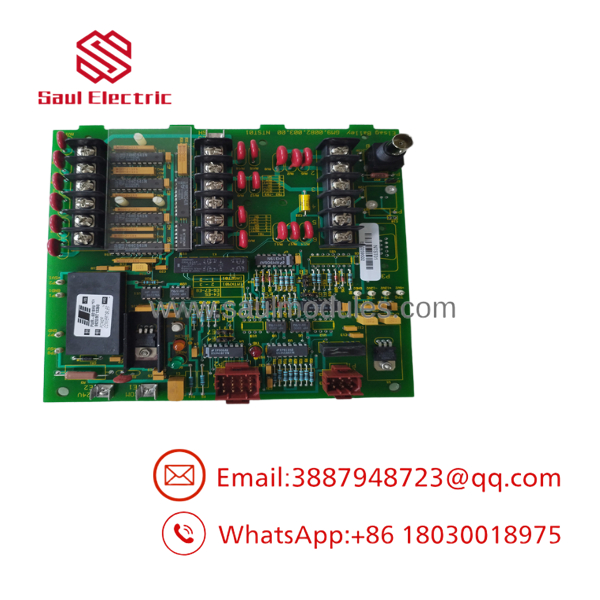
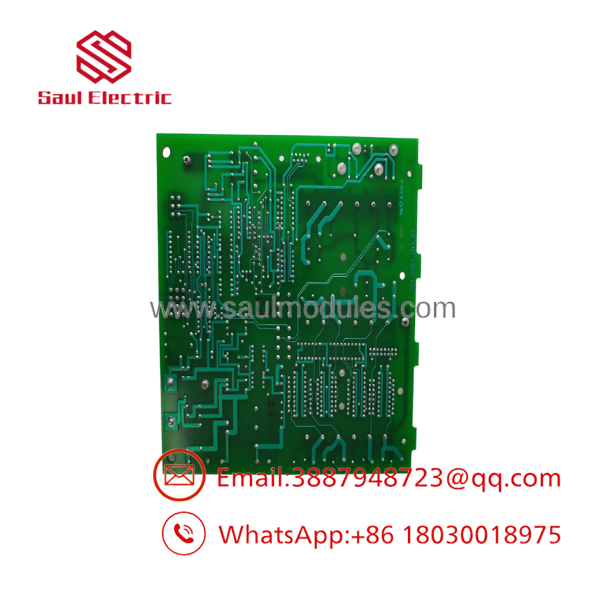


Description
Product Introduction & Engineering Value
When investigating a plant trip, knowing what happened is only half the story. Knowing exactly when it happened is what allows engineers to identify the root cause. The ABB NTST01 provides the physical interface that distributes accurate time synchronization throughout the Symphony and Bailey Sequence of Events (SOE) system.
Rather than processing I/O, the NTST01 serves as the termination unit between the TKM01 Time Keeper Module, SET01 Sequence of Events Timing Module, and the plant synchronization network. Accurate event timestamps depend on proper installation and configuration of this unit.
Technical Specifications
| Parameter | Specification |
|---|---|
| Manufacturer | ABB Bailey |
| Model | NTST01 |
| Product Type | Time Synchronization Termination Unit (TU) |
| System Platform | Symphony / INFI 90 / Network 90 |
| Compatible Modules | TKM01, SET01 |
| Time Synchronization Input | IRIG-B (DC Level Shift) |
| Time Synchronization Output | RS-485 Synchronization Link |
| Network Topology | Sequential or Star Configuration |
| Isolation | Channel-to-channel and system isolation for industrial environments |
| Installation | Field Termination Panel |
| Function | Time synchronization distribution for SOE systems |
| Typical Application | Distributed Sequence of Events recording |
Field Application & The “Trench” Experience
Following an unexpected generator trip at a combined-cycle power station, the maintenance team discovered that several protective relays had operated within milliseconds of each other. Unfortunately, different SOE cabinets displayed slightly different timestamps, making fault reconstruction almost impossible.
Inspection revealed an improperly configured NTST01 that interrupted synchronization on one branch of the RS-485 time network. After correcting the jumper configuration and restoring synchronization from the TKM01 master, all SET modules reported identical event times, allowing engineers to identify the initiating protection relay within minutes.
Typical applications include:
- Generator protection Sequence of Events recording
- High-voltage substation breaker event analysis
- Emergency Shutdown (ESD) systems for LNG compressor stations
- Boiler trip investigation in thermal power plants
Transparency SOP: QA & Testing
Every New Surplus or professionally Refurbished NTST01 undergoes a documented verification procedure before shipment.
- Confirm ABB model number and hardware revision.
- Inspect terminal blocks, PCB traces, optical isolators, and jumper positions.
- Verify IRIG-B input circuitry using calibrated timing equipment.
- Test RS-485 synchronization output with compatible SET01/TKM01 hardware.
- Inspect isolation circuitry and power regulation components.
- Complete final visual inspection before ESD-safe packaging and traceable inventory labeling.
The Veteran’s Tech Trap Guide
⚠️ Don’t ignore jumper settings. The NTST01 uses different jumper configurations depending on whether it is installed as a primary or secondary termination unit and whether the synchronization network is wired in a sequential or star topology. Incorrect settings can prevent proper time distribution.
⚠️ A missing synchronization signal doesn’t always indicate a failed SET01 module. Before replacing expensive electronics, verify the IRIG-B source, RS-485 cabling, and termination wiring.
PRO TIP: During plant outages, verify timestamp consistency between multiple SOE cabinets before returning the system to service. Small synchronization errors are much easier to correct during commissioning than after a plant trip.
PRO TIP: Label every synchronization cable before removal. Misplaced RS-485 connections often produce intermittent synchronization faults that resemble hardware failures.
Dynamic FAQ
Q1. What is the primary function of the ABB ?
The is a Time Synchronization Termination Unit that distributes timing information between the TKM01 Time Keeper Module, SET01 Sequence of Events modules, and the plant synchronization network.
Q2. Which ABB modules work with the ?
The is designed primarily for TKM01 and SET01 modules used in the Symphony and Bailey INFI 90 Distributed Sequence of Events architecture.
Q3. Does the generate synchronization signals?
No. The functions as the interface and distribution unit. Time synchronization is generated by the using an external IRIG-B reference and distributed through the to connected SET modules.
Q4. Can multiple units be installed in one system?
Yes. The SOE architecture supports both sequential and star network topologies, allowing primary and secondary termination units where additional synchronization branches are required.
Q5. How is New Surplus authenticity verified?
Every unit is inspected for correct part identification, hardware revision, connector integrity, isolation performance, and synchronization functionality before shipment. Functional testing is performed using compatible ABB SOE hardware whenever available.
Q6. What warranty is typically available?
Warranty coverage depends on the supplier. Most reputable industrial automation distributors provide a functional warranty for New Surplus and professionally refurbished units after documented inspection and operational testing.

 Start Chat


