





Description
Key Technical Specifications
| Parameter | Value |
|---|---|
| Manufacturer | ABB |
| Model | PCD232A |
| Product ID | 3BHE022293R0101 |
| Product Type | PEC80-CIO Combined Communication & I/O Module |
| Product Family | UNITROL 6000 X-power |
| Digital Inputs | 12 isolated channels (24 VDC / 48 VDC) |
| Relay Outputs | 16 channels (up to 250 VAC, 10 A) |
| Analog Inputs | 3 channels (±10 V or ±20 mA) |
| Analog Outputs | 3 channels (±10 V) |
| Communication Interfaces | 4-Port Ethernet, CAN, RS-232, RS-485, CANopen, Modbus RTU/TCP |
| Optical Interfaces | 3 Fiber Optic Ports |
| Power Supply | Redundant 24 VDC |
| Redundancy | Dual-module Hot-Standby Support |
| Operating Temperature | −25 °C to +70 °C |
| Mounting | Control cabinet / PEC80 rack |
| Typical Application | Generator excitation and power plant control |
Product Introduction & Supply Chain Strategy
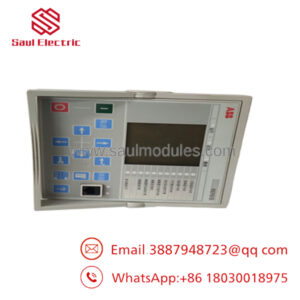
The ABB PCD232A 3BHE022293R0101 is a PEC80-CIO combined communication and I/O module developed for ABB UNITROL 6000 X-power excitation systems. It integrates digital and analog I/O with industrial communication interfaces, allowing real-time monitoring, excitation control, protection functions, and data exchange between the excitation system and the plant Distributed Control System (DCS).
Purchasing this module as New Original / New Surplus provides genuine OEM hardware while eliminating the reliability concerns associated with refurbished electronics. Because generator excitation systems are production-critical assets, maintaining buffer stock, reducing lead time variability, implementing vendor consolidation, and planning last-time-buy purchases where appropriate can significantly reduce Total Cost of Ownership (TCO) and prevent costly generator outages.
Installation & Configuration Guide
Stage 1 – Pre-Installation (Prep & Safety)
- Perform Lock-Out/Tag-Out (LOTO).
- De-energize the excitation cabinet.
- Wear a grounded ESD wrist strap.
- Record:
- Firmware version
- Ethernet configuration
- CAN/RS-485 communication parameters
- I/O assignments
- Photograph all terminal and fiber-optic connections.
Stage 2 – Removal
- Verify complete power isolation.
- Disconnect Ethernet, serial, fiber-optic, and field wiring.
- Release the retaining mechanism.
- Remove the module evenly without stressing the backplane connector.
- Inspect connectors and optical interfaces for contamination or damage.
Stage 3 – Installation (Clone & Seat)
- Verify the replacement part number is 3BHE022293R0101.
- Install the module into the original slot.
- Reconnect all communication and I/O wiring.
- Verify redundant communication links where applicable.
- Confirm proper grounding and cable shielding.
Stage 4 – Power-On & Testing
- Restore redundant 24 VDC power.
- Verify the RUN indicator is normal and no FAULT alarms are present.
- Confirm communication with the UNITROL controller and plant DCS.
- Test digital inputs, relay outputs, and analog I/O.
- Verify generator excitation control and system diagnostics before returning the unit to service.
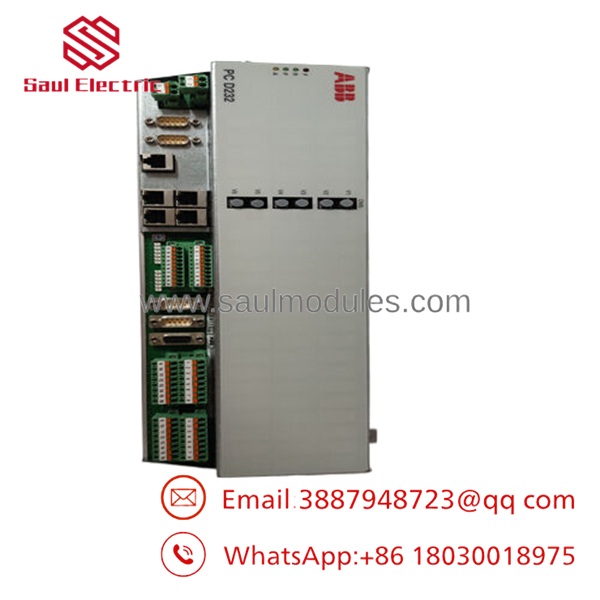
- PCD232A 3BHE022293R0101
-
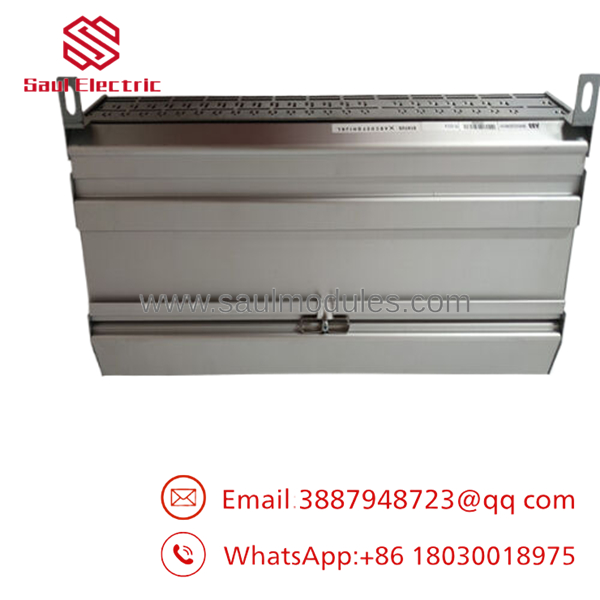
- PCD232A 3BHE022293R0101
Firmware/Software Versions & Upgrade Notes
- Verify compatibility with the installed UNITROL 6000 X-power firmware before replacement.
- Back up all controller parameters before removing the original module.
- Record Ethernet addresses, communication settings, and redundancy configuration.
- Avoid upgrading firmware during hardware replacement unless required by ABB service procedures.
- If operating in a redundant configuration, verify synchronization between the primary and standby modules after commissioning.
- Confirm communication with the DCS, excitation regulator, and protection systems before returning the generator to operation.
Frequently Asked Questions (FAQ)
Q1. Is this module genuinely new?
Yes. This product is supplied as New Original / New Surplus. It is not used, not repaired, and not refurbished. Every module undergoes comprehensive quality verification before shipment.
Q2. Why is New Surplus priced below OEM list price?
New Surplus inventory originates from surplus project inventory and authorized supply channels. It delivers genuine OEM hardware at a lower acquisition cost while avoiding the risks associated with refurbished modules.
Q3. What is the primary function of the PCD232A?
The PCD232A is the PEC80-CIO communication and I/O module used in ABB UNITROL 6000 X-power excitation systems. It combines digital I/O, analog I/O, Ethernet, serial communications, and fiber-optic interfaces into a single module for excitation control and plant integration.
Q4. Does the module support redundancy?
Yes. The supports dual-module hot-standby redundancy, allowing a standby module to assume control if the primary module fails, improving system availability for critical power generation applications.
Q5. Can the module be replaced while energized?
No. Unless the installed excitation system explicitly supports online maintenance procedures, ABB recommends isolating power before replacing the module to prevent system interruptions or equipment damage.
Q6. What quality inspections are completed before shipment?
Each New Surplus module undergoes:
- OEM part number verification
- Serial number traceability
- Visual inspection
- Communication port verification
- Connector integrity inspection
- ESD-safe packaging
- Final QC approval documentation
Q7. What inventory strategy is recommended?
For power generation and heavy industrial facilities:
- Maintain as on-site buffer stock.
- Implement vendor consolidation to streamline spare parts procurement.
- Share inventory across multiple generating units where practical.
- Monitor lifecycle status and execute a last-time-buy before availability declines, reducing lead time variability and lowering long-term Total Cost of Ownership (TCO).

 Start Chat


