





Description
Key Technical Specifications
| Parameter | Value |
| Manufacturer | ABB |
| Model Number | PFTL101A 1.0KN |
| Product ID | 3BSE004166R1 |
| Measurement Direction | Horizontal |
| Nominal Load (Capacity) | 1.0 kN (225 lbs) |
| Overload Limit (Meas. Direction) | 5.0 kN (1,125 lbs) |
| Permitted Transverse Load | 10.0 kN (2,250 lbs) |
| Accuracy Class | 0.5% |
| Repeatability Error | Less than 0.05% |
| Deflection (At Nominal Load) | 0.015 mm (0.6 x 10⁻³ in) |
| Spring Constant | 65 kN/mm |
| Material Housing | Stainless Steel (SIS 2383 / Corrosion resistant similar to AISI430F) |
| Operating Temperature | -25°C to +90°C |
| Net Weight | 9.00 kg (approximate unit mass with housing) |
Product Introduction
The ABB PFTL101A 1.0KN (3BSE004166R1) is a rugged, heavy-duty horizontal PillowBlock load cell built specifically for high-speed web handling systems like paper machines, winders, coaters, and laminators. Operating on ABB’s proprietary Pressductor magneto-elastic principle, this sensor measures tension forces via internal magnetic field shifts rather than mechanical strain or physical deflection.
Because the unit relies on zero moving parts and features an exceptionally stiff spring constant (65 kN/mm), it introduces virtually no machine vibration even at maximum paper mill speeds. It is strictly engineered to isolate and record only the horizontal vector of the web force. This allows it to completely ignore massive vertical tare weights from heavy rolls and bearings, yielding precise, uncompromised signal tracking down to a repeatability error of less than 0.05%.
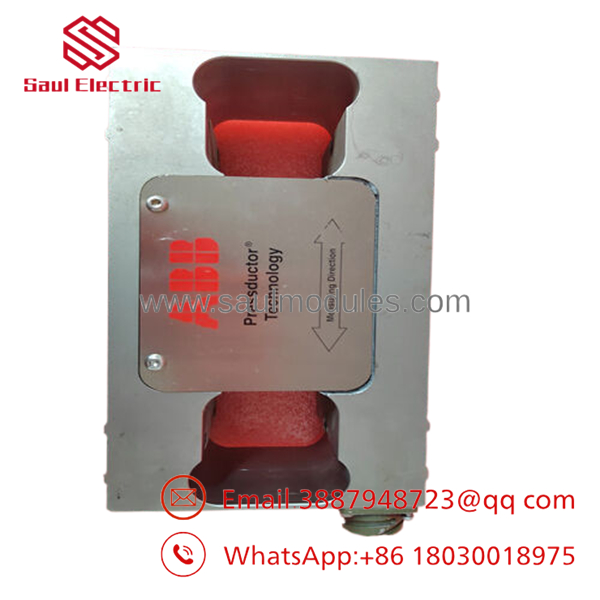
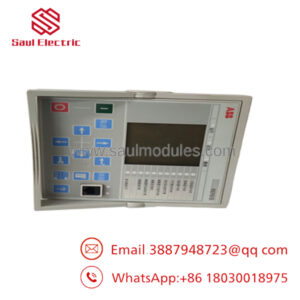
- PFTL101A 1.0KN 3BSE004166R1
Troubleshooting Quick Reference
| Symptom | Possible Cause | Relevance to this Part | Quick Check Method | Recommendation |
| No output signal or dead channel | Open excitation loop or severed cable connector | ❌ Low | Disconnect the pluggable cable. Verify 330 Hz excitation current is arriving from the PFEA/PFT board. | Check or replace the connection cable before blaming the load cell. |
| Drifting zero-point over time | Trapped debris or mechanical binding at the mounting base | ❌ Low | Visually inspect under the pillow block housing. Clear away paper dust or pulp buildup. | Clean mounting area and retorque base bolts to specification. |
| Clipped/Saturated tension peaks | Sensed horizontal force exceeds 10% of total tension profile | ✅ High | Re-calculate your web wraparound wrap angles (\alpha and \beta) to confirm horizontal resultant force. | If calculated force is outside the 0.1 kN to 1.0 kN range, switch to a matching capacity module. |
| Erratic or fluctuating readings | Internal winding short-circuit or heavy ground loop noise | ✅ High | Megger test the insulation resistance. Check resistance across the coils; ensure single-ended shield ground. | If internal coils are shorted to the stainless housing, replace the physical load cell. |
Note: For unexpected multi-channel cross-talk or synchronized noise patterns, isolate your panel grounds. Please contact our technical support division with site installation prints for further diagnostic help.
Frequently Asked Questions (FAQ)
Q: What makes Pressductor technology better than a standard strain-gauge load cell?
A: Strain-gauge sensors rely on physical deformation, making them susceptible to metal fatigue, mechanical overload shock, and moisture intrusion. ABB’s Pressductor design uses a solid block of steel. Mechanical force alters the steel’s magnetic permeability. This yields a high-power, low-impedance AC signal that is immune to normal vibrations and shrugs off massive overloads up to 500% of nominal capacity without shifting calibration.
Q: Can I use the PFTL101A in a wet-end or highly corrosive chemical environment?
A: The standard PFTL101A features standard pluggable connectors and is built from SIS 2383 stainless steel, making it ideal for the dry section of a paper line or general converting. If you are installing directly in a high-moisture wet-end or an acid-wash area, you should seek out the PFTL101AER or BER versions, which offer IP66/IP67 ratings and AISI 316L acid-resistant steel.
Q: Do I need to recalibrate this unit if I swap it out with another PFTL101A 1.0KN?
A: Yes. While the physical dimensions and core electrical properties are identical, every individual load cell must be matched to its specific mechanical mounting environment and roll tare weight. You will need to perform a zero-set and a calibration run (with or without hanging weights) inside your matching PFEA tension electronics module once the new cell is bolted down.
Q: Why does this model only measure horizontal force? How does that benefit my process?
A: By keeping the internal measurement axis strictly horizontal, the sensor becomes blind to vertical forces. In paper mills, the deflector roll and its bearing housings can weigh hundreds of pounds. If you use a vertical sensor, that massive “tare weight” drowns out the subtle tension of the web. The horizontal mounting orientation ensures that 100% of the sensor’s measurement resolution is dedicated to tracking actual material tension, completely ignoring roll weight.
Q: How critical are the bolt torque specifications when installing this replacement?
A: Extremely critical. Because the Pressductor measurement relies on uniform internal magnetic paths within the steel body, uneven mechanical stress from over-tightened or distorted mounting bolts will introduce false offsets. Always ensure the mounting foundation is perfectly flat, smooth, and torqued down evenly using a calibrated torque wrench to the exact foot-pounds noted in the ABB installation manual.
We keep these rugged 1.0 kN horizontal load cells in stock to help mills avoid multi-day downtime losses. Would you like me to verify our current ready-to-ship count and look up the exact torque specifications for your assembly?

 Start Chat


