





Description
Key Technical Specifications
| Parameter | Value |
| Processor Type | Motorola MPC866 (32-bit architecture running at 67 MHz) |
| On-Board Memory | 32 MB RAM total (23.521 MB available for application runtime) |
| Firmware Storage | 4 MB Flash PROM |
| Power Supply Requirements | 24 V DC (operational window: 19.2 to 30 V DC) |
| Current Consumption | 210 mA typical / 360 mA maximum load |
| Power Dissipation | 5.1 W typical / 8.6 W maximum |
| Ethernet Interfaces | 2x RJ45 ports (CN1, CN2), 10 Mbit/s, female 8-pole |
| Serial Communication | 1x RS-232C port with modem controls (COM3), 1x isolated configuration port (COM4) |
| CEX-Bus Expansion | Supports up to 12 single modules or 6 redundant pairs |
| Modulebus Capacity | Max 96 single I/O modules (1 electrical cluster plus 7 optical clusters) |
| Operating Temperature | +5 to +55 °C (+41 to +131 °F) |
| Relative Humidity | 5 to 95 %, non-condensing |
| Environmental Protection | IP20 rating, ISA 71.04 G3 compliant corrosion resistance |
Product Introduction
The ABB PM862 (specifically the PM862K01 kit containing the CPU and baseplate) is a 32-bit single-board processing unit designed for advanced process automation within the System 800xA control ecosystem. Acting as the core intelligence of the AC 800M hardware platform, this controller directly executes complex control applications, manages high-density I/O clusters via Modulebus, and interfaces with factory networks via built-in redundant Ethernet infrastructure. It is engineered to deliver highly stable, deterministic control for continuous processes, safety monitoring, and critical plant utilities.
Engineered as a direct, high-availability replacement for aging, classic-phase components like the PM861A and PM864A, the PM862 features expanded functionality and updated hardware safety footprints. It includes G3-compliant chemical corrosion protection by default, allowing stable mounting outside restrictive enclosures in harsher industrial environments. With its 67 MHz processing speed and 32 MB memory profile, this module easily runs up to 32 separate control applications simultaneously while maintaining precise time synchronization across controllers down to 1 ms using the CNCP protocol.
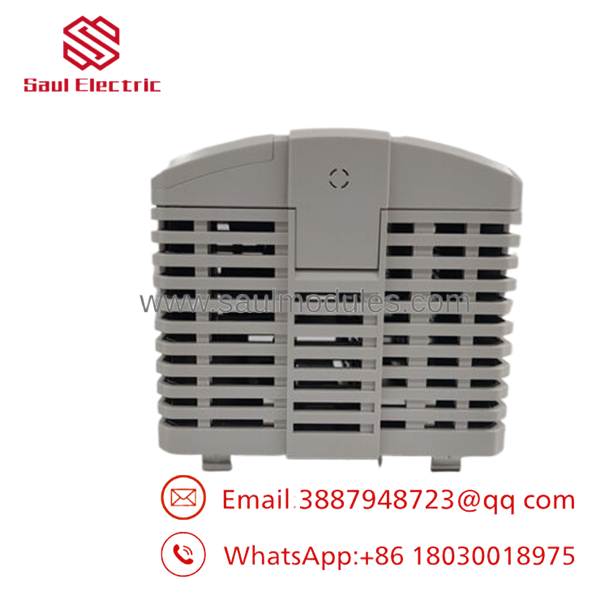
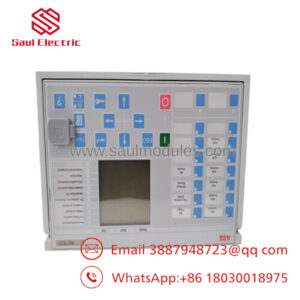
- PM862
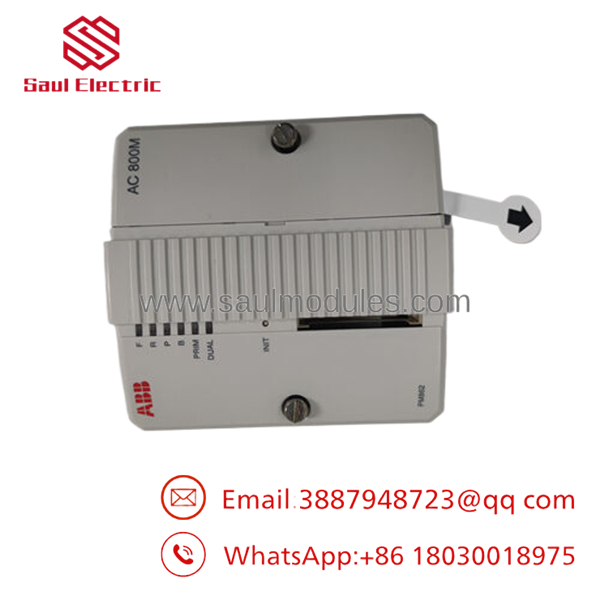
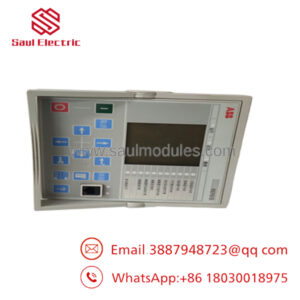
- PM862
Troubleshooting Quick Reference
| Symptom | Possible Cause | Relevance to this Part | Quick Check Method | Recommendation |
| All LED indicators completely dark on power-up | Backplane or external 24 V DC supply failure | ❌ Low | Measure voltage at the 4-pole detachable power terminal block. Verify 24 V DC is present between inputs. | If power is stable and within 19.2–30 V DC, check the baseplate mating connection before assuming the CPU is dead. |
| ERR light flashing a steady 1 Hz pattern | Corrupted or missing firmware / application fault | ✅ High | Attempt a hardware reset via the front-facing INIT push button while monitoring via the COM4 tool connection. | Re-flash firmware via the Control Builder M service tool. If flash memory errors persist, replace the hardware. |
| Failing to connect to Control Network via CN1/CN2 | IP address conflict or duplex mismatch on the line | 🟡 Medium | Check Ethernet port link lights. Ping the distinct hardware MAC address printed on the TP830 baseplate label. | Verify that your network switch configuration locks the link at 10 Mbit/s if auto-negotiation fails to resolve. |
| Adjacent CEX-Bus modules show yellow fault status | CEX-Bus total current draw limit exceeded | ❌ Low | Sum up total module draw. Total CEX-Bus line current must not exceed 2.4 A. | Isolate modules to see if fault clears. Use BC810/BC820 bus extenders to break up the load across sections. |
| RUN light stays amber, never turns green | Controller locked in boot loader or failed initialization | ✅ High | Connect configuration tool to COM4 to inspect the hardware diagnostic buffer logs. | Check position of any physical configuration jumpers on the base plate. Re-download application file. |
If diagnostic software logs display unrecoverable system faults or physical RAM allocation errors, extract the complete error log file and forward screenshots of the LED fault pattern to our technical support team for warranty processing.
Frequently Asked Questions
Can I hot-swap this module while the system is under load?
No, you cannot hot-swap the single PM862 processor module if it is the only CPU on the rack. Pulling a live single CPU will instantly drop the backplane power rail, disconnect your Modulebus, and force all downstream I/O nodes into their failsafe or unmanaged states. If you are using a non-redundant configuration, you must cleanly halt the process, power down the 24 V DC supply, and then use the slide-and-lock mechanism on the DIN rail to replace the card.
Why should I choose the PM862 over the older PM861A or PM864A models?
The was engineered by ABB specifically as the modern lifecycle replacement for the PM861A and PM864A controllers, which entered their classic support phases years ago. The provides roughly 1.2 times the raw computational speed of a PM861, features standard G3 conformal coating for superior environmental resilience, and provides specialized support for BC820 bus extenders, enabling distributed physical redundancy lengths up to 200 meters. Note that the requires System 800xA version 6.0.2 or Compact Control Builder 6.0.0-1 and onwards.
How is the backup battery managed, and will I lose my program if it dies?
The contains an internal lithium 3.6 V (1/2 AA size) battery to preserve the volatile application RAM and keep the real-time clock running during an unpowered state. If power is removed and the battery is fully depleted or missing, the controller will lose its active application state and revert to a blank configuration. To prevent this, always monitor the low-battery warning bit in your control application software. The battery should be replaced on a preventive schedule every two to three years while the system is powered up to ensure memory retention.
What is the exact difference between a New Surplus and a Refurbished unit?
Our “New Surplus” units are authentic, original ABB hardware components that were purchased for plant expansion projects or critical warehouse backup pools but were never placed into active field service. They arrive factory sealed or in their open original boxes, complete with pristine hardware tags, and have zero operational hours. “Refurbished” units are parts harvested from decommissioned working environments that have gone through our extensive component-level teardown, isolation testing, and a continuous 24-hour heat-room soak test to verify total load capacity before earning a QC pass stamp.
Why does my configuration tool fail to talk to the module through the COM4 port?
The COM4 port on the base plate is specifically pinned out and opto-isolated to function exclusively as a local system configuration and service tool hookup, locked down by default to 9,600 baud. It does not support hardware RTS/CTS flow control handshaking like the COM3 port does. If you cannot establish a connection, ensure your RS-232 serial cable matches the specific RJ45-to-DB9 pinout diagram required by ABB service tools, and verify that your serial interface parameters in Control Builder match the 9,600 baud limit precisely.

 Start Chat


