





Description
Key Technical Specifications
| Parameter | Value |
| Model Number | PM864AK02 |
| ABB Part Number | 3BSE018162R1 |
| Processor Type | 32-bit RISC Motorola MPC860T running at 96 MHz |
| Onboard RAM Memory | 32 MB |
| Flash Memory (Firmware) | 16 MB |
| Input Voltage (Nominal) | 24 V DC |
| Power Consumption | 240 mA typical at 24 V DC (base processor only) |
| Redundancy Support | Yes (Requires identical matching firmware and hardware sub-revisions) |
| Communication Interfaces | 2 x RJ45 Ethernet ports (Control Network), 2 x RS-232C ports (MMS/Modbus RTU) |
| Backplane Module Width | 119 mm |
| Operating Temperature | +5 to +55 °C (+41 to +131 °F) |
| Storage Temperature | −40 to +70 °C (−40 to +158 °F) |
| Relative Humidity | 5% to 95%, non-condensing |
Product Introduction
The ABB PM864AK02 (3BSE018162R1) is a high-capacity processor kit designed for the AC 800M hardware platform within the System 800xA Distributed Control System (DCS). Operating on a 32-bit RISC architecture running at 96 MHz with 32 MB of non-volatile RAM, this CPU manages complex control loops, rapid binary logic execution, and high-density industrial I/O subsystems across chemical, oil and gas, power generation, and manufacturing plants.
Engineers select the PM864AK02 specifically for applications demanding high availability and system longevity. It features dedicated dual Ethernet ports for secure control network communication alongside native support for full CPU hardware redundancy. When paired with a matching secondary module on the backplane, it ensures glitch-free bumpless failover, preventing costly unplanned downtime if a primary processor fault occurs.
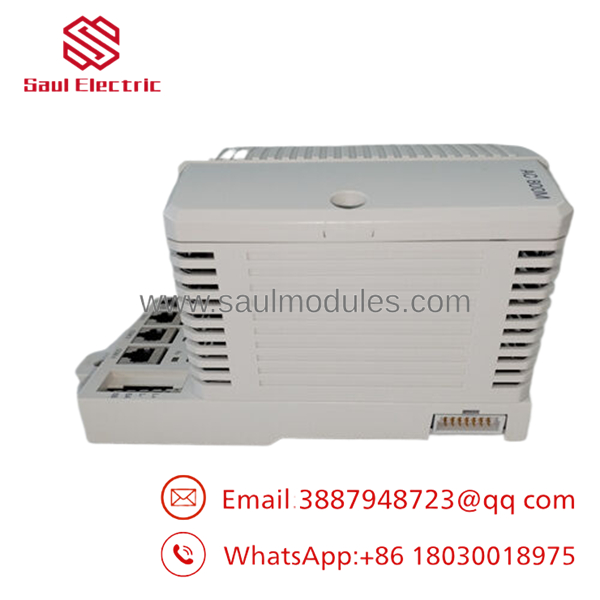
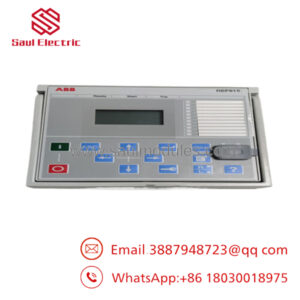
- PM864AK02
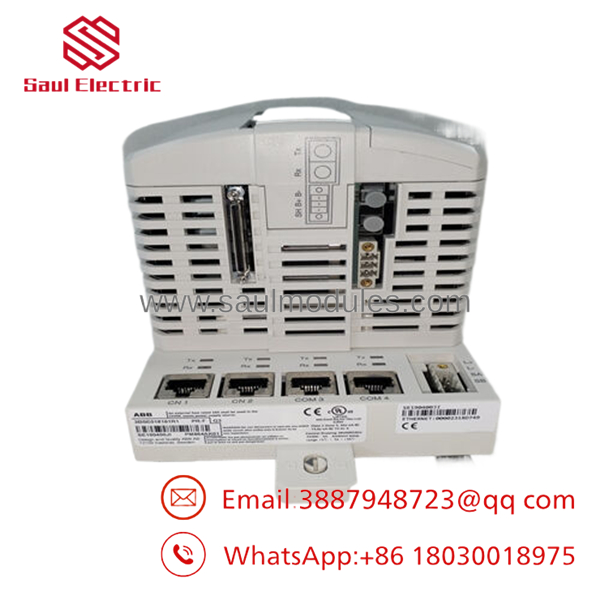
- PM864AK02
Comprehensive SOP Quality Control & Testing
To ensure absolute field reliability and eliminate the risks associated with surplus industrial hardware, every PM864AK02 unit undergoes a strict multi-stage quality control process before shipment.
1. Inbound Inspection & Traceability
- Source Verification: We verify all incoming serial numbers against original OEM packing lists and tracking databases to ensure absolute authenticity.
- Anti-Counterfeit Check: Every module is examined for authentic ABB holographic security labels, laser-etched compliance logos, and correct PCB layout markings.
- Visual Audit: Technicians inspect the housing under magnification for micro-cracks, pin corrosion, UV yellowing, or signs of previous component-level rework.
- Accessory Inventory: We verify the inclusion of essential mounting clips, base unit terminal connection guides, and factory certificates.
2. Live Functional Testing
- Test Environment: Testing is performed on a genuine, fully energized ABB AC 800M test rack powered by an ABB SD832 power supply.
- Power-On Self-Test (POST): The processor undergoes standard boot-up sequences while we monitor the physical LED matrix (RUN, ERR, FAULT, BATT) for proper initialization indicators.
- Communication Handshake: Using ABB Control Builder M software, we establish a connection over both Ethernet ports (CN1, CN2) to run continuous ping and MMS communication stability tests.
- I/O Simulation & Load Testing: The unit is mapped to a local S800 I/O rack. We run a 24-hour continuous cycle script simulating high-volume digital and analog signal toggling while monitoring internal CPU temperature stability.
- Report Generation: A formal QA Test Report is generated, logging the serial number, test duration, and electrical metrics.
3. Electrical Parameter Testing
- Insulation Resistance: Using a Fluke 1507 insulation tester set to 500 V DC, we verify the insulation barrier between the 24 V DC input terminals and the ground rail is >10 MΩ.
- Ground Continuity: We verify the path from the module’s grounding clip to the DIN rail connector reads under 0.1 Ω using a calibrated Fluke 115 multimeter.
4. Firmware & Configuration Verification
- Firmware Baselines: We read and document the existing firmware version. Upon request, we flash the module to match your target system (e.g., v5.1, v6.0) to ensure immediate out-of-the-box system integration.
- Hardware Settings: Technicians inspect and record any physical jumper configurations or switch settings on the base plate.
5. Final QC & ESD Packaging
- Sign-Off: The lead technician signs the QC compliance log.
- ESD Protection: The module is wrapped inside a heavy-duty, static-shielding ESD bag.
- Secure Boxing: We pack the sealed bag inside a multi-layer bubble wrap envelope and place it into a double-wall corrugated shipping box designed to withstand international transit vibration.
- Sealing: A dated “QC Passed” tamper-evident label is applied across the box closure.
Note: Full documentation, high-resolution photographs, and live functional testing videos for your assigned serial number are available upon request before shipping.
Technical Pitfall & Replacement Survival Guide
Swapping out a core DCS processor under tight scheduling constraints introduces distinct engineering risks. Avoid these five critical errors during your plant migration or maintenance turnaround.
1. Firmware Revision Mismatch
- ❗ The Risk: If your replacement has a factory-default firmware version (e.g., v6.1) but your active system runs Control Builder v5.1, the CPU will reject the application download and cause a protocol timeout.
- 🛠️ Mitigation: Identify and record your running software version before swapping hardware. Use the Control Builder M maintenance tool to flash the new processor to your plant’s specific firmware baseline on a bench test rack prior to installation.
- Field Anecdote: “I assisted an overseas mill that swapped an unverified surplus CPU into their main rack at 1 AM. The controller threw an immediate ‘Type Incompatibility’ fault, halting the entire line. It took three hours to locate the correct legacy firmware bin file and re-flash the unit over a serial link. Always verify firmware compliance first.”
2. Battery Module and Memory Retention
- ❗ The Risk: The relies on an external backup battery (typically housed in the TP830 baseplate assembly) to retain the running application program in SRAM during total power losses. Removing a module without a valid flash backup or a hot battery backup instantly clears the volatile memory.
- 🛠️ Mitigation: Ensure your application logic is compiled and backed up on your engineering workstation. Ensure the system’s backup battery is fresh before shutting down power to prevent the loss of cold-start variables and configuration parameters.
3. Backplane Baseplate Pin Alignment
- ❗ The Risk: The AC 800M system utilizes multi-pin backplane connectors. Forcing the onto the TP830 baseplate at an angle can bend or snap the communication pins, ruining the module or the backplane.
- 🛠️ Mitigation: Never force the unit. Position the module vertically over the alignment tracks, gently slide it downward until the connector seats fully, then engage the mechanical locking tabs securely. Inspect the female sockets on the baseplate for dust or debris before inserting the unit.
4. Redundant Pair Identification
- ❗ The Risk: When implementing full controller redundancy, the primary and backup CPUs must be absolute identical matches. Differences in hardware product revision sub-codes (found on the side sticker) can prevent successful synchronization.
- 🛠️ Mitigation: Check both units’ full part numbers and revision suffixes (e.g., -PR3). If the sub-revisions vary significantly, the redundancy data link may fail to initialize, leaving your secondary unit useless.
5. Electrostatic Discharge (ESD) In the Field
- ❗ The Risk: Industrial environments accumulate high levels of static electricity. Touching the lower exposed edge connector pins of the without grounding yourself can puncture the internal CMOS gate oxides, leading to latent, unpredictable field failures weeks after installation.
- 🛠️ Mitigation: Wear a properly grounded wrist strap connected to the cabinet frame before removing the module from its anti-static packaging. Always handle the module by its outer plastic enclosure.
Frequently Asked Questions (FAQ)
Can I hot-swap the processor while the rack is powered?
No. The processor module is not hot-swappable in a single (non-redundant) configuration. Removing the CPU while the backplane is energized can cause electrical arcing across the data pins, which risks corrupting active memory or damaging the underlying TP830 baseplate. You must completely isolate the 24 V DC power supply to the controller rack before extracting or inserting the module. If you are operating a fully redundant system, you can replace the inactive/failed secondary unit while the primary remains live, provided you follow standard ABB redundancy swap procedures exactly.
Is the completely obsolete? How can you guarantee this item is new?
While newer generations of the AC 800M family exist, the remains widely utilized worldwide due to its vast installed base. The units we provide are sourced from verified factory-overstock allocations, canceled system integration contracts, or strategic industrial reserves. They are genuine, unissued “New Surplus” hardware assets. Every unit remains sealed within original anti-static packaging until it undergoes our mandatory quality validation checks prior to dispatch.
If this specific unit is out of stock, what is the direct functional replacement?
The immediate direct upgrade pathway within the AC 800M series is the PM866K01 or PM866K02, which provides higher processing speeds and expanded memory capacity. However, moving up to a PM866 requires validating that your existing baseplate model (TP830) and current Control Builder M software version support the newer processor model. You cannot mix a PM864A and a PM866 in a redundant pair; they must be identical.
Will I lose my running application logic when I swap out the old CPU?
Yes, from the hardware perspective. The application program is stored in the volatile SRAM of the processor. Once you disconnect the module from its battery-backed baseplate, that specific hardware memory goes blank. To successfully restore your plant operations, you must reconnect your engineering workstation via ABB Control Builder M and download the compiled project architecture back into the replacement CPU module once it is securely seated and powered up.
Why is your price lower than the OEM factory list price?
Our pricing reflects our position as an independent distributor of new surplus industrial inventory. Because we purchase excess warehouse stock, over-ordered project supplies, and plant restructuring spares in bulk volume, we can offer original equipment to maintenance teams at significantly lower overhead costs than standard factory channels, bypassing traditional long manufacturing lead times.

 Start Chat


