





Description
Key Technical Specifications
| Parameter | Value |
|---|---|
| Manufacturer | ABB |
| Model | REF615 |
| Order Code | HCFKAEADABCZDAA11E |
| Product Series | Relion® 615 |
| Product Type | Feeder Protection & Control Relay |
| Primary Application | Medium-voltage feeder protection |
| Protection Functions | Directional & Non-directional Overcurrent, Earth Fault, Thermal Overload, Voltage/Frequency Protection |
| Communication Protocols | IEC 61850 Ed.1/Ed.2, GOOSE, Modbus, DNP3, IEC 60870-5-103 |
| Time Synchronization | IEEE 1588 v2 (PTP), SNTP (configuration dependent) |
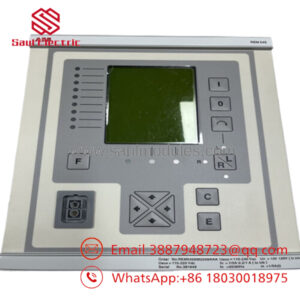
| HMI | Large Graphic LCD with Single-Line Diagram |
| Configuration Software | ABB PCM600 |
| Mounting | Withdrawable Plug-in Unit |
| Auxiliary Supply | Model-dependent 24–250 V AC/DC |
| CT Inputs | 1 A / 5 A (configuration dependent) |
| Operating Temperature | -40 °C to +70 °C |
| Protection Standard | IEC 60255 |
The HCFKAEADABCZDAA11E order code identifies a factory-configured variant within the ABB Relion® REF615 family, providing feeder protection, measurement, supervision, and IEC 61850-based substation automation capabilities.
Product Introduction
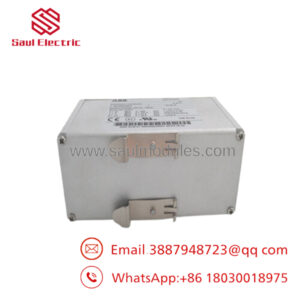
The ABB REF615 HCFKAEADABCZDAA11E is a digital feeder protection and control relay designed for utility substations and industrial distribution systems. It combines protection, measurement, breaker control, event recording, and communication functions in a compact withdrawable IED suitable for overhead lines and cable feeders.
As part of the Relion® 615 family, this relay supports IEC 61850 Edition 2, GOOSE messaging, PCM600 engineering tools, and modern Ethernet-based substation automation. It is widely deployed in power utilities, renewable energy facilities, petrochemical plants, mining operations, and heavy industrial electrical distribution networks.
Troubleshooting Quick Reference
| Symptom | Possible Cause | Relevance to this Part | Quick Check Method | Recommendation |
|---|---|---|---|---|
| Relay will not power on | Auxiliary supply failure | ❌ Low | Measure auxiliary voltage at power terminals | Verify DC/AC control supply before replacing relay |
| Self-supervision alarm | Internal hardware fault | ✅ High | Check relay diagnostics and self-test results | Hardware repair or replacement may be required |
| Unexpected feeder trip | CT polarity or protection setting error | ❌ Low | Compare CT wiring with drawings and relay settings | Correct wiring before replacing relay |
| GOOSE communication unavailable | Network or configuration issue | ❌ Low | Verify Ethernet ports, VLAN settings, and GOOSE subscriptions | Check network configuration first |
| Protection blocks not operating | Wrong application configuration | ⚠️ Medium | Compare PCM600 project with installed relay | Reload correct configuration |
| Breaker does not trip | Output contact or trip circuit fault | ❌ Low | Inject trip command and measure output contacts | Verify trip circuit before replacing relay |
| Relay restarts intermittently | Unstable auxiliary voltage | ⚠️ Medium | Monitor supply during load changes | Inspect station battery or power supply |
Technical Note
In actual commissioning work, REF615 hardware failures are uncommon. Most outages are caused by CT polarity mistakes, incorrect PCM600 engineering files, communication parameter mismatches, or unstable auxiliary power. Before replacing the relay, export the complete PCM600 project, event logs, disturbance records, and firmware information. Those files usually identify the root cause much faster than swapping hardware.
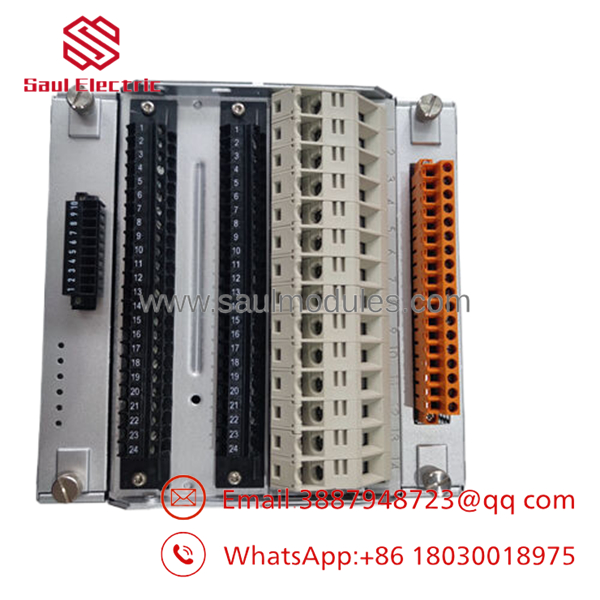
- REF615 HCFKAEADABCZDAA11E
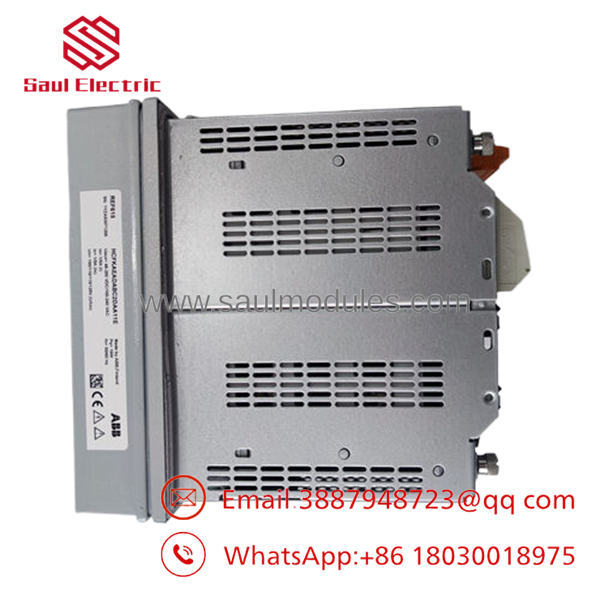
- REF615 HCFKAEADABCZDAA11E
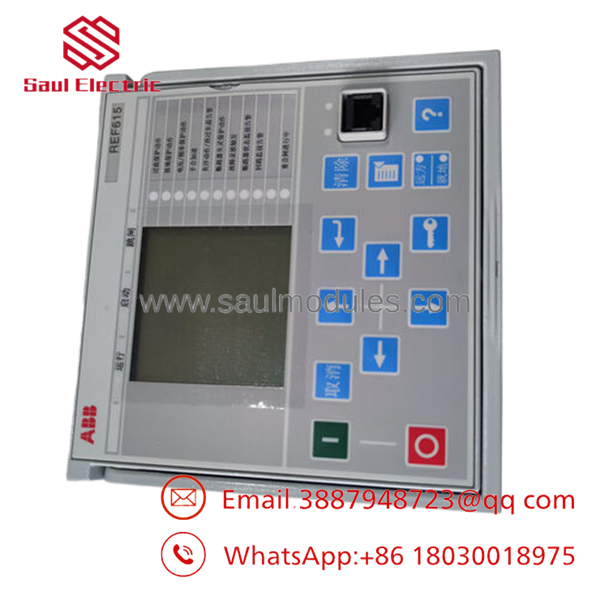
- HCFKAEADABCZDAA11E
Frequently Asked Questions (FAQ)
Q1. What is the designed for?
It is designed for feeder protection, control, measurement, and supervision in medium-voltage distribution systems. Typical applications include utility substations, industrial switchgear, renewable energy plants, and critical electrical infrastructure.
Q2. Does this relay support IEC 61850?
Yes. This configuration supports IEC 61850 communication, including GOOSE messaging, MMS, and engineering through PCM600. Depending on the hardware configuration, DNP3, Modbus, and IEC 60870-5-103 are also available.
Q3. Can I install the replacement relay without restoring the engineering file?
No. Always back up the complete project, CID/SCD files, protection settings, logic configuration, and communication parameters before removing the original relay. A factory-default relay is not ready for service.
Q4. Why won’t my replacement relay communicate with the SCADA system?
The most common causes are incorrect IP addressing, GOOSE dataset mismatches, protocol configuration differences, or firmware revisions. I’ve seen relays pass every self-test but fail to exchange GOOSE messages because the engineering file loaded into didn’t match the substation configuration. Verify the engineering project before suspecting hardware.
Q5. Why is New Surplus inventory less expensive than ordering directly from ABB?
New Surplus units generally come from canceled utility projects, unused substation spare inventories, or excess warehouse stock. They have never been energized in service but are distributed through secondary industrial supply channels, reducing procurement costs while retaining original OEM manufacturing quality.
Q6. What should I verify before replacing the relay?
Before installation:
- Back up the complete project.
- Save all protection settings and logic files.
- Record the firmware revision.
- Export IEC 61850 CID/SCD files.
- Photograph every terminal and communication connection.
- Verify CT/VT ratios and polarity.
- Label all Ethernet and fiber connections.
- Wear a grounded ESD wrist strap throughout installation.
One incorrect CT polarity or an outdated IEC 61850 configuration can easily add several hours to recommissioning. Taking a complete backup before removal is one of the best ways to avoid unnecessary downtime.
Q7. How is each inspected before shipment?
A professional inspection process typically includes:
- ABB model and serial number verification
- Visual inspection for PCB damage, connector wear, corrosion, and repair marks
- Relay self-diagnostic verification
- Digital input/output functional testing
- Ethernet and communication interface verification
- Secondary injection testing of protection functions
- Firmware version documentation
- Anti-static ESD packaging
- Final QC inspection and shipment approval
Functional test reports, relay self-test records, communication verification results, and inspection photographs should be available upon request from the supplier.

 Start Chat


