





Description
3. Product Introduction & Engineering Value
The APEX3013 is a fixed-frequency RF generator from Advanced Energy’s Apex series that supplies precise 13.56 MHz power for plasma-based processes.
It is commonly found on Applied Materials tools and other semiconductor equipment used for etch and deposition. High power density, stable output, and support for protocols such as RS-232, Profibus, and DeviceNet allow it to integrate into existing process control systems without extensive redesign. The unit is built for continuous industrial duty where consistent RF energy directly affects film quality and yield.
4. Technical Specifications
| Parameter | Value |
|---|---|
| Frequency | 13.56 MHz (fixed) |
| Output Power | Up to 3 kW |
| Input Power | Typically 208 V 3-phase, 50/60 Hz |
| Communication Interfaces | RS-232, RS-485, Profibus, DeviceNet |
| Cooling | Forced air (water-cooled options available on some variants) |
| Operating Temperature | Industrial range suitable for tool environments |
| Form Factor | Compact chassis designed for tool integration |
| Protection Features | Over-temperature, overload, and related safeguards |
| Typical Part Numbers | 3156113-xxx / 3156114-xxx series |
| Primary Applications | Semiconductor etch/deposition, plasma processing |
5. Field Application & The “Trench” Experience
A 300 mm etch tool in a Texas fab lost RF stability on the main chamber after the original generator drifted out of calibration. The process engineer swapped in a tested APEX3013, re-verified the matching network, and restored plasma ignition within a single shift. Film uniformity returned to specification and the tool was released for production the next morning. No software changes were required beyond updating the tool recipe power setpoints.
Niche scenarios:
- Oxide and metal etch chambers on Applied Materials platforms
- Plasma-enhanced chemical vapor deposition (PECVD) reactors
- High-density plasma systems requiring stable 13.56 MHz forward power
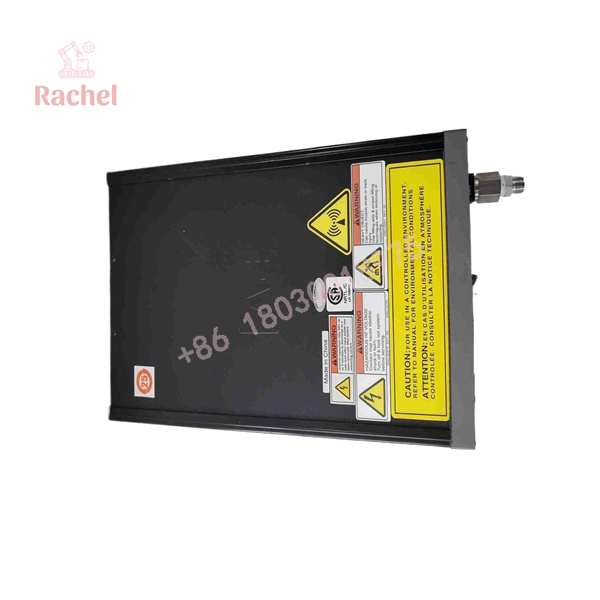
APEX3013
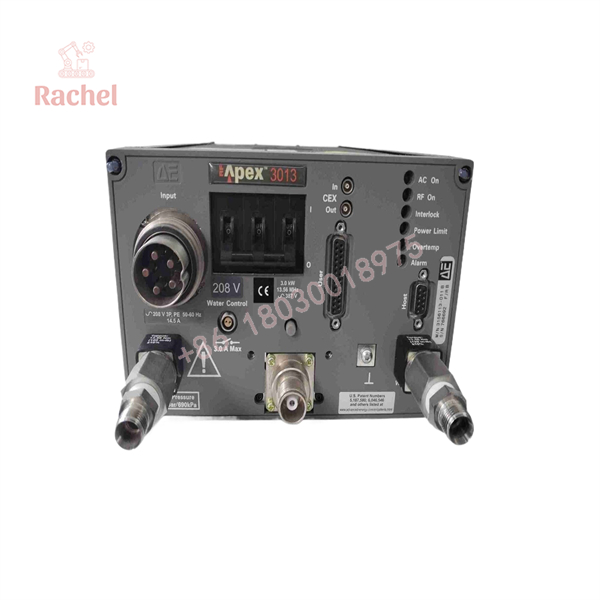
APEX3013
6. Transparency SOP: QA & Testing
- Visual and mechanical inspection of connectors, cooling paths, and chassis integrity.
- Power-up under controlled load at 13.56 MHz while monitoring forward and reflected power.
- Full-range power ramp test with verification of regulation and stability.
- Communication interface check (RS-232 / industrial bus) and status reporting.
- Thermal soak under load followed by re-measurement of output accuracy.
- Final functional sign-off and configuration reset to factory defaults before shipment.
7. The Veteran’s Tech Trap Guide
⚠️ Matching network must be confirmed. Installing a good APEX3013 into a mismatched or worn pin-diode network will still produce high reflected power and tool faults. Always verify the matchbox before blaming the generator.
PRO TIP: Note the exact firmware and hardware revision (e.g., 3156113-xxx vs 3156114-xxx). Tool software often expects a specific revision for proper interlock and power-limit behavior.
⚠️ Cooling airflow is non-negotiable. Restricted exhaust or clogged filters cause rapid thermal shutdowns that look like RF failures. Clean the path and confirm differential pressure before returning the tool to production.
8. Dynamic FAQ
Q: What frequency does the APEX3013 operate at?
A: Fixed 13.56 MHz, the industry-standard frequency for many plasma etch and deposition processes.
Q: Is it compatible with Applied Materials tools?
A: Yes. Multiple AMAT part numbers cross-reference to the APEX3013 series and it is commonly used on Producer and similar platforms.
Q: What warranty is typical on refurbished or new-surplus units?
A: Functional testing is standard. Confirm the exact coverage period with the supplier; many offer 90-day to one-year terms on verified generators.
Q: Does it support remote control and monitoring?
A: Yes. Industrial interfaces (RS-232, Profibus, DeviceNet, etc.) allow integration with the tool controller for setpoints, status, and diagnostics.
Q: Can multiple units be paralleled?
A: Certain Apex configurations support current sharing or multi-generator arrangements; verify the specific hardware revision and tool requirements.
Q: What is the primary failure mode seen in the field?
A: Thermal-related issues from restricted cooling or aging match networks. Regular maintenance of airflow and matching components prevents most early failures.

 Start Chat


